If you're serious about your window cleaning business, stepping up from a bucket and squeegee isn't just an upgrade—it's a complete business transformation. Using dedicated water tanks for window cleaning turns a manual chore into a professional, scalable operation. It’s how you start working faster and delivering the flawless, streak-free results that keep clients coming back. This investment is the bedrock of a truly profitable business.
Why a Professional Water Tank System Is a Game-Changer

Relying on a customer's garden tap is a gamble. You're at the mercy of their water pressure, and the time spent faffing around with hoses eats into your day. A van-mounted water tank system changes all that, turning your vehicle into a self-sufficient, mobile workhorse. You gain total control over your most critical resource: pure water.
Imagine pulling up to a job completely ready to go. No more hunting for a tap, no more dealing with weak flow. The immediate payoff is a massive boost in how many jobs you can get through in a day, which goes straight to your bottom line.
Unlock Speed and a Superior Finish
A dedicated tank lets you standardise your process. When you're feeding pure water directly from your tank through a water-fed pole, you're tapping into the secret of a perfect, spotless finish. This system cleans so effectively that it leaves windows gleaming without any detergents or the need to go back over them with a squeegee.
This isn't just about impressing homeowners. This level of quality is what lands you the bigger, more lucrative commercial contracts where a pristine finish is an absolute must. It sets you apart and marks you as a serious professional.
A professional water tank system isn't just about hauling water around. It’s about owning your entire process, guaranteeing a top-tier result every time, and building a reputation that wins you bigger and better work.
The window cleaning industry is certainly growing. As of 2025, there are around 2,391 businesses in the UK—a 2.9% increase on the previous year. To make your mark, professional kit is non-negotiable. While the equipment differs, the logistical challenges are similar to other mobile services; you can find some valuable insights from starting a pressure washing business that resonate here. You can also dive deeper into the tools of the trade by exploring our guides on professional window cleaning equipment.
How to Choose the Right Water Tank for Your Van
Picking the right water tank is one of those decisions you really want to get right from the start. It’s not just about holding water; it’s about defining how many jobs you can realistically get through in a day and how efficiently you can work. Making a smart choice now will save you a world of frustration and lost time down the road.
First up, let’s talk capacity. If you're a sole trader mainly doing residential rounds in a small van, a 250L tank will likely see you through the day just fine. It holds enough pure water for a good day's work without weighing your vehicle down unnecessarily. On the flip side, if you're running a team tackling big commercial jobs, you’ll need a much bigger setup – think 750L or even 1000L – to avoid the hassle of stopping to refill.
This decision tree gives you a good visual starting point for figuring out what you might need based on your typical workload.
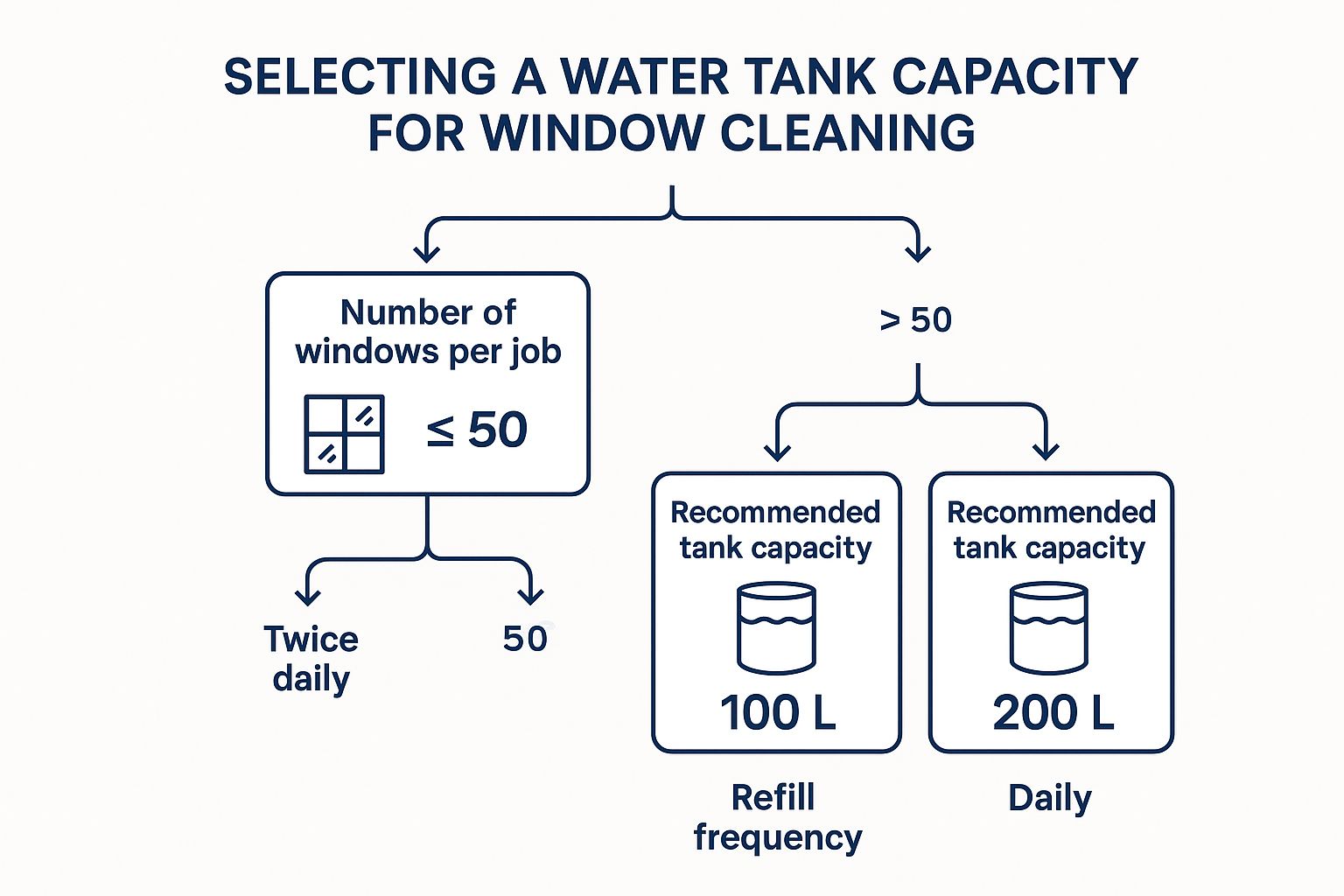
As you can see, the number of windows you're cleaning has a direct impact on your water consumption and how often you'll be heading back to base to top up.
Considering Tank Design and Material
Beyond just how much water it holds, the actual design and material of the tank are massively important for safety and day-to-day use. The vast majority of professional water tanks for window cleaning are made from a really tough polypropylene. It’s a durable plastic that can take the knocks of being in a working van. But what's inside is what really counts.
Always, always choose a baffled tank. These have internal walls that stop the water from sloshing around when you brake or take a corner. That surge of water can seriously affect your van's handling and stability, which is a huge safety issue on UK roads.
Finally, you need to consider the tank’s shape and how it’s going to fit into your van's layout.
- Upright Tanks: These are great for saving floor space. Their smaller footprint leaves you more room for other crucial bits of kit like your hose reels and pumps, keeping everything organised.
- Flat Tanks (or Baffled Flat Tanks): These spread the weight out more evenly and keep your vehicle’s centre of gravity low, which is a bonus for stability. They're often designed to fit neatly over the wheel arches, making great use of otherwise awkward space.
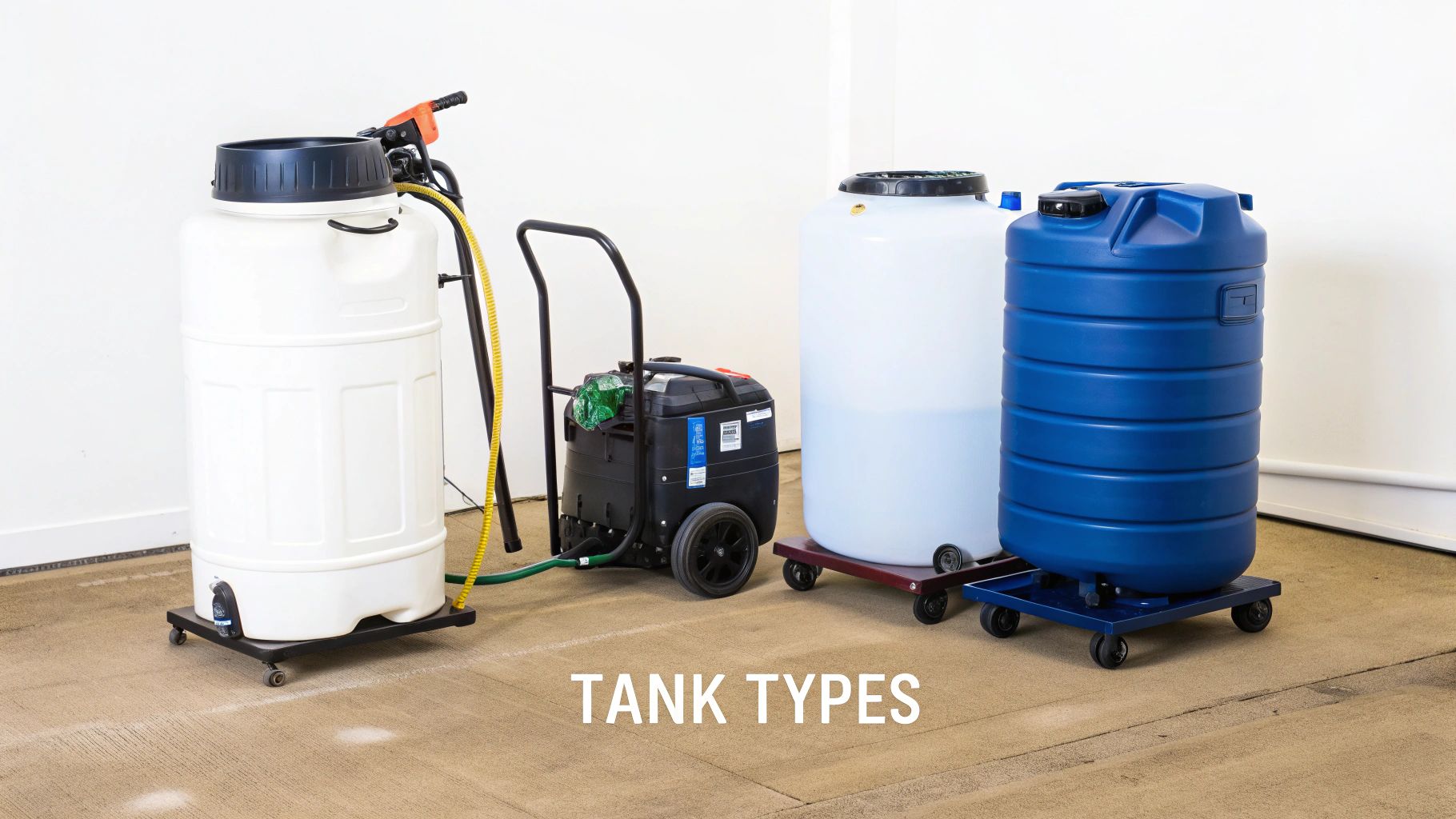
Here’s a quick comparison to help you weigh up the options.
Comparing Window Cleaning Water Tank Types
Choosing between tank types often comes down to your specific vehicle and how you've organised your setup. This table breaks down the common choices.
| Tank Capacity | Best Suited For | Typical Vehicle Type | Key Consideration |
|---|---|---|---|
| 250L | Sole traders on residential routes | Small vans (e.g., Berlingo, Caddy) | Lightweight and compact, but may require mid-day refills on busy days. |
| 400L-500L | Busy sole traders or small two-person teams | Medium vans (e.g., Transit Custom) | A great all-rounder, balancing capacity with manageable weight. |
| 750L | Commercial work or teams needing all-day capacity | Large vans (e.g., Sprinter, Master) | Heavy when full; vehicle payload must be a primary concern. |
| 1000L+ | Large-scale commercial contracts; fleet operations | Flatbed trucks or large vans | Maximises work time but requires a vehicle with a high payload capacity. |
Ultimately, it’s a trade-off. For instance, a cleaner I know with a Ford Transit Custom swears by his upright 400L tank because it leaves him plenty of room for his ladders and other gear. Another with a bigger Renault Master opted for a 750L flat tank to keep the van’s handling spot on. Have a proper look at your van’s layout and check its payload capacity before you pull the trigger.
Installing Your Van-Mounted System Safely and Securely
Getting your new tank system bolted down and plumbed in properly is one of the most important jobs you'll do. A solid installation isn't just about making sure everything works—it's about keeping you safe on the road. Take your time here, because getting it right from the start will save you a world of grief later on, from annoying leaks to seriously dangerous handling problems when you're driving.
The absolute number one priority is making sure that tank isn't going anywhere. Think about it: even a small tank full of water becomes a massive, deadly projectile if you have to slam on the brakes. You must bolt it directly to the chassis of your van. This means using high-tensile bolts and load-spreading plates to stop the bolts from ever tearing through the van floor in an accident.
Weight distribution is a very close second. You want to place the tank over, or slightly in front of, the rear axle. This keeps the van's handling predictable and prevents the front wheels from getting light, which absolutely kills your steering and braking. Before you do anything, check your van’s gross vehicle weight (GVW) and make sure a full tank of water doesn't push you over the legal limit.
Plumbing for a Leak-Free Operation
Once the tank is rock solid, it's time to connect everything up. A logically laid-out plumbing system makes your day-to-day work so much easier, and it’s a lifesaver if you ever need to track down a problem. The end goal is a clean, professional setup inside your van that you can rely on.
Before you even think about drilling, map out where your main bits of kit will live:
- Pump and Controller: Find a dry, easy-to-reach spot for these. The pump needs to be near the tank to pull water effectively, and you'll want the controller somewhere you can get to without any fuss to tweak the flow.
- Hose Reel: This obviously needs to be near a door—usually the rear or side—so you can pull the hose out smoothly. Make sure the hose has a straight run out of the van to stop it from kinking and restricting your water flow.
A Pro's Tip: Get yourself a roll of PTFE tape and use it on every single threaded connection. It might seem like a tiny leak is no big deal, but it can easily drain your entire tank overnight and leave you with a soggy, damaged van floor.
Finally, run your hoses and wiring neatly and use plenty of cable ties or clips to hold them in place. A tidy setup isn't just for show; it stops hoses from getting caught on other gear or getting worn through. This little bit of organisation is what turns a van full of equipment into a proper mobile workstation.
Mastering Water Purification for Spotless Results
The secret to a flawless, streak-free window isn't just about technique; it all comes down to the water. Your standard tap water is packed with minerals and impurities, which we measure as Total Dissolved Solids (TDS). When this water dries on the glass, it leaves behind a chalky, spotty residue – the very thing you were hired to get rid of. To get that professional, crystal-clear finish, you need to get your water’s TDS reading right down to 000 ppm.
Pure water is an incredible cleaning agent all by itself. It's naturally aggressive, acting like a magnet for dirt and grime. It actively pulls dirt from the glass and rinses it away completely, leaving absolutely nothing behind. This is the science that makes the water-fed pole method so effective, delivering amazing results without a drop of detergent.
Deionisation Versus Reverse Osmosis
When you're setting up your purification system, you'll find there are two main ways to do it on a commercial scale: Deionisation (DI) and Reverse Osmosis (RO). Which one you go for really depends on the water hardness in your area and what you're looking to spend.
- Deionisation (DI): This is the most straightforward approach. Water flows through a vessel filled with special ion-exchange resin beads that grab and trap impurities. DI systems are cheaper to buy upfront and produce pure water on demand, but you'll be replacing the resin regularly. This can get quite expensive if you're in a hard water area with a high TDS reading to start with.
- Reverse Osmosis (RO): This is a more involved process. Water is forced through a series of incredibly fine membranes that filter out the vast majority of impurities before the water ever gets to a final DI polishing stage. The initial investment is higher and it takes longer to produce the water, but it massively extends the life of your DI resin. In the long run, this makes it far more cost-effective, especially for anyone working in a hard water region.
For most professionals I know, a multi-stage system that combines both RO and DI is the gold standard. The RO unit does all the heavy lifting, stripping out over 95% of the gunk, and the smaller DI vessel gives it that final polish to bring the TDS down to an absolute zero.
You’ll want to get a handheld TDS meter to keep a close eye on your water quality. As soon as that reading starts to creep up past 010 ppm, you know it’s time to change your DI resin.
Of course, if you'd rather skip the hassle of filtering your own water, you can always fill up with ultra-pure water from specialised providers at 24-hour self-service filling stations. It's a great way to guarantee perfect results every single time.
Making Your On-the-Job Workflow Pay
Having the right gear is a solid start, but making that gear work harder for you is what truly boosts your bottom line. It’s all about efficiency. A slick workflow turns a good day into a great one, letting you fit in more jobs and earn more money. And it all begins with how you manage your water on-site.
Don't just crank your pump up to full blast and leave it there. Get familiar with your flow controller. You only need just enough water to loosen the grime on the first pass, then maybe dial it up a touch for that final, streak-free rinse. This simple habit can make a single tank of water last so much longer, which means fewer trips back to base for a refill.
Staying Ahead with Proactive Maintenance
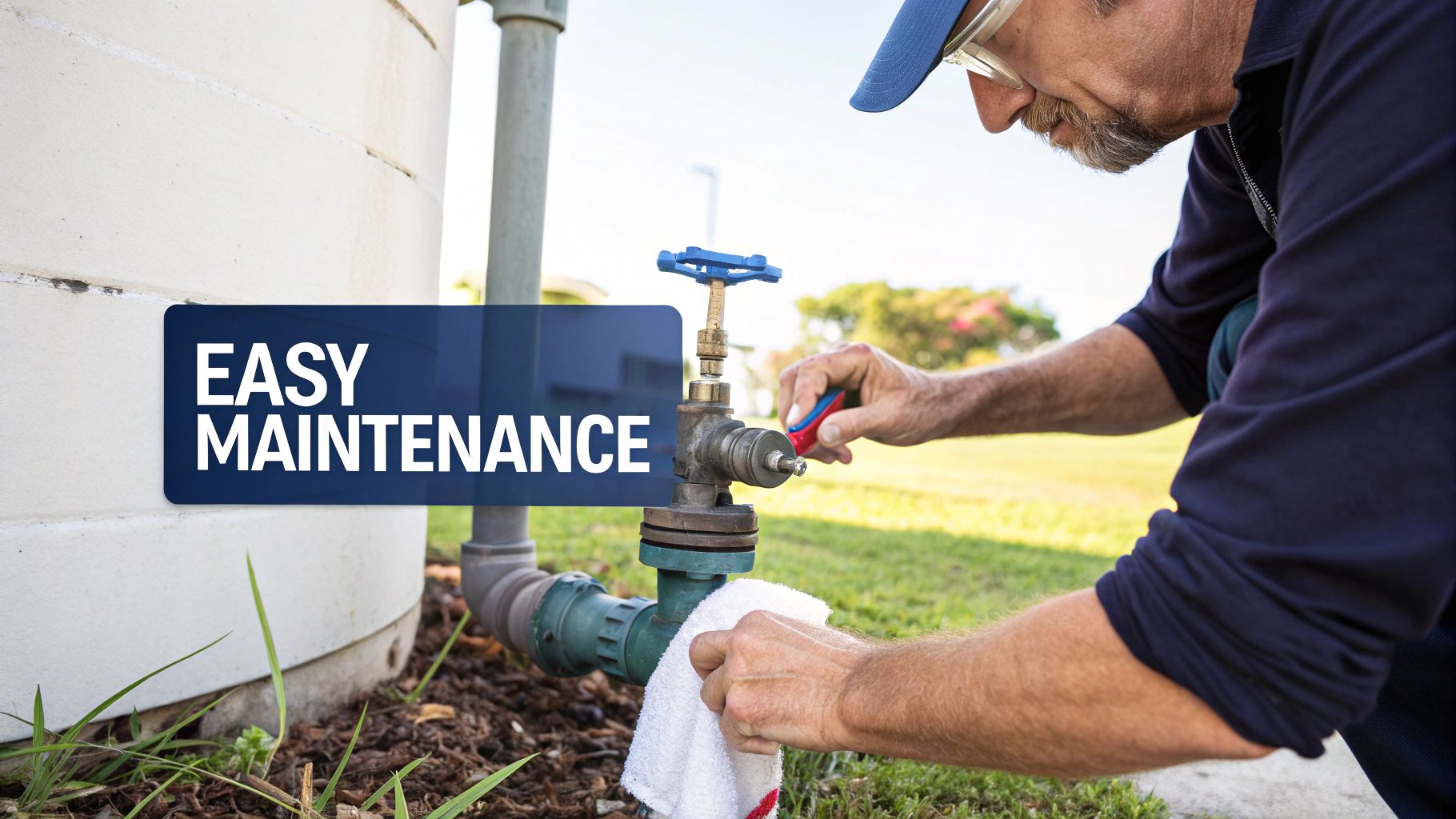
A system you can rely on is a system that's been looked after. The absolute last thing you need is your gear failing you halfway through a big commercial job. To make sure that doesn't happen, get into the habit of running a few quick, regular checks.
Here’s what I’d focus on:
- Keep Algae Out: In the warmer months, algae loves to grow inside water tanks. Giving it a good clean twice a year with a proper tank-cleaning solution will stop it from clogging up your filters and jets.
- Check Your Power: Before you head to your first job, just give your pump connections a quick look and check the battery’s charge. It’s a five-minute job that can save you hours of lost work.
- Inspect Hoses and Fittings: Keep an eye out for any scuffs or wear on your hose and make sure all the connectors are snug. This stops those annoying little drips that waste your precious pure water.
The most profitable window cleaners are those who have systemised their day. From the moment they arrive on-site to when they pack up, every action is efficient, practiced, and designed to save time and resources.
This kind of operational focus is crucial, especially now. The UK window cleaning market is booming, hitting £301.8 million with a 5.9% annual growth rate in the five years leading up to 2023. That’s a lot of demand to meet.
If you want to really get your business operations in order, it's worth looking into tools like commercial cleaning management software to keep everything running smoothly.
Got Questions About Your Water Tank System?
Even with the best gear, you're bound to have questions. Let's run through some of the most common things we hear from window cleaners out in the field.
One of the biggest worries, especially here in the UK, is the winter frost. How do you stop your tank from freezing solid? A submersible aquarium heater can do the trick, particularly if your van has some insulation. But honestly, the safest, most foolproof method is to just drain the system completely if a heavy frost is on the way.
Why Baffled Tanks are a Must-Have
You'll hear the term 'baffled tank' thrown around a lot, and it's for a very good reason. These tanks have internal walls that stop hundreds of litres of water from sloshing about while you're driving. It's a massive safety feature that makes your van so much more stable and predictable on the road.
For any professional setup, a baffled tank isn't just a good idea—it's essential.
Keeping Your Tank Clean and Your Water Pure
To keep your water pristine and your equipment running smoothly, give your tank a good clean twice a year. This simple habit prevents nasty surprises like algae or biofilm building up, which can quickly clog your expensive filters. All it takes is a proper tank cleaning solution and a thorough flush with pure water afterwards.
A quick thought on filling up: while it might seem convenient to filter water at a customer's house, it's far more professional to arrive fully prepared. Filtering on-site is slow, depends on their water pressure, and ultimately eats into your time on the job.
If you have more specific queries, we've probably answered them already. You can dive into our full list of frequently asked questions about pure water systems.
Ready to guarantee a perfect finish every time? Find your nearest 24-hour filling station and top up with ultra-pure water from 24 Pure Water. Learn more and get started at https://24purewater.co.uk.