From precision manufacturing to everyday cleaning tasks, deionised water offers a level of purity that standard tap water simply cannot match. By removing nearly all mineral ions, such as calcium, sodium, and chloride, it becomes a uniquely powerful solvent and cleaning agent. This purity is precisely why its applications are so widespread and varied, providing a critical advantage in countless professional and industrial settings. Understanding the diverse uses for deionised water is key to unlocking its full potential, whether you are seeking a spot-free finish in automotive detailing or ensuring the absolute sterility required in pharmaceutical production.
This guide moves beyond theoretical concepts to provide a comprehensive, practical look at how deionised water is used across ten different sectors. We will explore its role in everything from the meticulous processes of electronics and cosmetics manufacturing to the specific requirements of laboratory research and solar panel maintenance. For professionals like window cleaners, mobile car valeters, and aquarium specialists, this resource offers actionable insights to improve quality, efficiency, and final results. We will detail exactly why removing mineral content is so crucial in each scenario, providing real-world examples and clear implementation advice. Discover how this highly purified water can elevate your standards, prevent equipment damage, and deliver consistently superior outcomes in your specific field.
1. Laboratory and Scientific Research
In the highly controlled environment of a scientific laboratory, precision is everything. One of the most fundamental uses for deionised water is as a pure solvent and reagent, where its lack of mineral ions ensures that experimental results are not skewed by unwanted chemical reactions or contaminants. Standard tap water contains a variety of dissolved salts and minerals, such as calcium, magnesium, and chloride, which can interfere with sensitive analyses and invalidate research data.
Deionised water is the unsung hero in countless scientific applications. Its high purity makes it indispensable for preparing solutions, calibrating instruments, and cleaning critical laboratory glassware. The absence of charged ions means it has very low electrical conductivity, a property that is essential for many analytical techniques.
Common Applications in Research
This purified water is a cornerstone in various specialised fields:
- Pharmaceutical Development: Used to create sterile solutions and ensure that active pharmaceutical ingredients are not contaminated during drug formulation.
- Environmental Testing: Essential for preparing 'blank' samples and dilutions when analysing water and soil for pollutants, ensuring measurements are accurate.
- Medical Diagnostics: Laboratories rely on it for preparing reagents used in blood tests, tissue analysis, and other diagnostic procedures where ionic interference would compromise results.
Best Practices for Laboratory Use
To maintain the integrity of deionised water, proper handling and storage are crucial. Its purity makes it an aggressive solvent, ready to absorb impurities from the air and its container.
Key Insight: The quality of deionised water degrades quickly upon exposure to the atmosphere, particularly carbon dioxide, which can lower its resistivity. Therefore, it should be used as soon as possible after production.
For optimal results, follow these tips:
- Storage: Keep it in tightly sealed containers made of inert materials like borosilicate glass or high-purity plastics.
- Verification: Regularly test the water’s conductivity or resistivity to confirm its purity level meets the standards required for your application, such as those defined by ISO 3696. You can learn more about how ultrapure water is crucial for these sensitive environments and differs from standard drinking water in our detailed guide on the topic. For more details, read about ultrapure water and its applications.
2. Electronics Manufacturing and Semiconductor Production
In the micro-scale world of electronics and semiconductors, the smallest impurity can lead to catastrophic failure. Deionised (DI) water is an indispensable resource in this industry, used extensively for cleaning and rinsing microchips, circuit boards, and other sensitive components. Standard water contains dissolved minerals and ions that are conductive; if left on an electronic component, they can cause short circuits, corrosion, and ultimately, device failure.
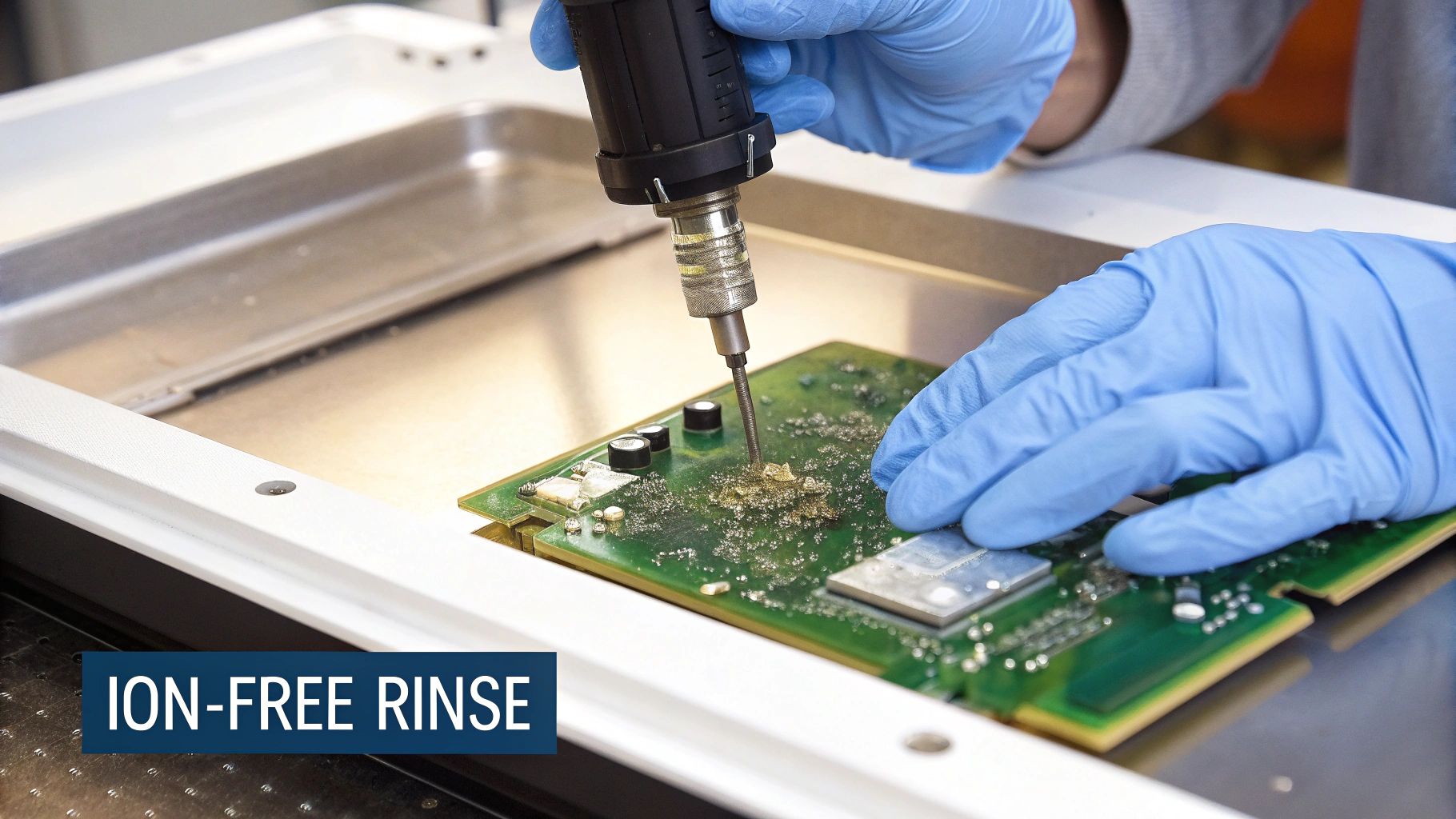
The ultra-high purity of deionised water ensures that no conductive residues are left behind after cleaning processes. This is one of the most critical uses for deionised water, as it directly impacts the performance, reliability, and lifespan of electronic devices, from everyday consumer gadgets to complex industrial systems. Without it, the modern digital world simply could not exist.
Common Applications in Production
This purified water is vital at multiple stages of the manufacturing process for leading global companies:
- Semiconductor Wafer Cleaning: Giants like Intel and TSMC use ultrapure deionised water to rinse silicon wafers between fabrication steps, removing microscopic particles and photoresist residues without leaving any ionic contamination.
- Printed Circuit Board (PCB) Assembly: Companies such as Samsung and Apple rely on DI water to wash PCBs after soldering to remove flux residues, ensuring clean connections and preventing long-term corrosion.
- Automotive Electronics: Manufacturers like Tesla and BMW use deionised water in the production of their advanced electronic control units (ECUs) and sensors, where reliability is paramount for safety.
Best Practices for Manufacturing Use
Maintaining a consistent supply of high-purity water is a non-negotiable requirement for electronics manufacturing. The aggressive nature of DI water means it will readily leach impurities from its surroundings, demanding stringent control measures.
Key Insight: In electronics manufacturing, even a brief dip in water purity can lead to the scrapping of entire batches of high-value components. Real-time monitoring is not just a best practice; it is an essential quality control mechanism.
For flawless production, consider these tips:
- System Redundancy: Install backup or redundant deionisation systems to guarantee an uninterrupted supply of pure water, preventing costly production halts.
- Continuous Monitoring: Implement real-time conductivity and resistivity monitors at critical points of use to detect any decline in water quality instantly.
- Preventive Maintenance: Schedule regular maintenance and resin bed replacements during planned production downtime to ensure the system operates at peak efficiency. You can discover more about how crucial this resource is by reading about 7 important industries that use ultrapure water.
3. Cosmetics and Personal Care Product Manufacturing
In the multi-billion-pound cosmetics and personal care industry, the quality of the base ingredients dictates the final product's safety, efficacy, and shelf life. Deionised water is arguably the most crucial of these, serving as the primary solvent and base for countless formulations, from moisturising lotions and anti-ageing serums to shampoos and conditioners. Standard tap water contains minerals and impurities that can destabilise a product, alter its texture, or even react with active ingredients, compromising performance.
The purity of deionised water ensures that cosmetic formulations remain consistent from batch to batch, a critical factor for global brands. Its use prevents unwanted mineral deposits, ensures clarity in transparent products like gels, and provides a stable, inert base that allows sophisticated active ingredients to perform as intended. This makes it a cornerstone of high-quality manufacturing in this sector.
Common Applications in Manufacturing
This ultra-pure water is an essential ingredient for major brands known for their product consistency and quality:
- Skincare Formulations: Companies like L'Oréal and Estée Lauder rely on it as the main solvent in creams, serums, and toners to ensure active ingredients dissolve properly and the final product has a predictable texture.
- Hair Care Products: In the production of shampoos and conditioners by brands such as Procter & Gamble, it prevents mineral build-up that could leave hair feeling dull or heavy.
- Baby Care Products: For sensitive items like those from Johnson & Johnson, its purity is non-negotiable, ensuring products are gentle and free from potential irritants found in untreated water.
Best Practices for Cosmetics Production
To guarantee product safety and stability, manufacturers must adhere to stringent quality control measures for their water systems. The high purity of deionised water means it can easily become contaminated if not handled correctly.
Key Insight: In cosmetic manufacturing, water is not just a filler; it is an active excipient. Its quality directly impacts microbial stability, product appearance, and the performance of other ingredients.
For superior product formulation, follow these guidelines:
- Quality Standards: Ensure the water meets industry-specific purity standards, such as those defined by the United States Pharmacopeia (USP) or the European Pharmacopoeia.
- Handling: Use deionised water as quickly as possible after purification to minimise the risk of re-ionisation or microbial contamination from the air or storage vessels.
- Quality Assurance: Implement a rigorous batch testing protocol to verify water purity before it enters the production line, ensuring every product meets its exact formulation specifications.
4. Pharmaceutical Manufacturing and Drug Production
In the pharmaceutical industry, the integrity of the final product is non-negotiable, and water is often the most significant single component in drug formulations. Deionised water is a critical ingredient and processing aid, where its purity ensures that medications are safe, effective, and free from contaminants that could cause adverse reactions or degrade the active pharmaceutical ingredients (APIs). Standard water sources are unsuitable as their dissolved mineral ions and microbial content would compromise product stability and violate strict regulatory standards.
The use of highly purified water, often produced through processes including deionisation, is mandated by pharmacopoeial bodies like the European Pharmacopoeia (EP) and the United States Pharmacopeia (USP). This water is used not only as an excipient in liquid drug formulations, such as intravenous solutions and vaccines, but also for cleaning and sterilising equipment, ensuring that every surface contacting the product is free from ionic and microbial contamination. This makes deionised water a cornerstone of Good Manufacturing Practice (GMP) in the sector.
Common Applications in Drug Production
This pharmaceutical-grade water is essential across various stages of manufacturing:
- Injectable Drug Production: Used as the primary solvent in parenteral drugs, like those produced by Pfizer or Merck, where direct introduction into the bloodstream demands the highest level of purity.
- Formulation and Compounding: Serves as a pure diluent and solvent in the creation of syrups, suspensions, and tablets, ensuring consistent and predictable drug efficacy.
- Sterile Cleaning: Indispensable for the final rinsing of manufacturing equipment, vials, and stoppers to remove any residual cleaning agents or contaminants before production begins.
Best Practices for Pharmaceutical Use
Maintaining water purity is a continuous process governed by stringent validation and monitoring protocols to prevent contamination and ensure patient safety.
Key Insight: In a pharmaceutical setting, deionised water systems are not just equipment but critical, validated utilities that require constant monitoring for conductivity, total organic carbon (TOC), and microbial load to meet regulatory compliance.
For optimal and compliant results, follow these practices:
- System Validation: Implement a multi-stage purification process, typically combining reverse osmosis with deionisation and often followed by distillation or ultrafiltration, and fully validate the system's performance.
- Regular Testing: Conduct routine microbial and chemical testing as specified by pharmacopoeial standards to ensure the water consistently meets WFI (Water for Injection) or Purified Water specifications.
- Documentation: Maintain meticulous records of all water quality tests, system maintenance, and sanitisation cycles to provide a clear audit trail for regulatory bodies like the MHRA.
5. Pharmaceutical Autoclaves and Equipment Sterilisation
In medical and pharmaceutical environments, achieving absolute sterility is non-negotiable. One of the critical uses for deionised water is in steam sterilisers, known as autoclaves, where its purity prevents damage to expensive equipment and ensures the sterilisation process is effective. Standard tap water contains minerals like calcium and magnesium, which, when heated to create steam, leave behind hard scale deposits (limescale) and can cause corrosion.
This mineral buildup can insulate heating elements, clog pipes and valves, and ultimately lead to equipment failure. Deionised water, free from these dissolved minerals, produces pure steam that sterilises instruments effectively without leaving any residue or causing long-term damage. This extends the lifespan of the autoclave and ensures it operates at peak efficiency, which is vital for patient safety and regulatory compliance.
Common Applications in Sterilisation
The use of high-purity water is standard practice across various health and research sectors:
- Hospital Operating Theatres: Used to sterilise surgical instruments, ensuring they are free from both microbes and mineral deposits that could compromise a procedure.
- Dental Practices: Essential for sterilising dental tools in tabletop autoclaves, preventing cross-contamination between patients and maintaining equipment integrity.
- Pharmaceutical Manufacturing: Employed to produce pure steam for sterilising bioreactors, filling equipment, and other apparatus used in sterile drug production.
- Veterinary Clinics: Ensures that surgical tools and other medical equipment used for animal care are properly sterilised and maintained.
Best Practices for Autoclave Use
To guarantee the efficacy of sterilisation and the longevity of your equipment, the quality of water is paramount. Ensuring your processes adhere to strict standards is a key part of the overall sterilisation framework.
Key Insight: The use of impure water is one of the leading causes of autoclave malfunction and repair costs. Investing in a reliable deionised water source prevents costly downtime and ensures consistent sterilisation results.
For optimal performance, consider these guidelines:
- Confirm Water Purity: Always use distilled or high-purity deionised water that meets the autoclave manufacturer’s specifications for water quality, typically regarding conductivity and mineral content.
- Regular Maintenance: Implement a routine maintenance schedule to inspect the autoclave chamber, pipes, and sensors for any signs of scale or corrosion, even when using pure water.
- Monitor Performance: Consistently check that the steam quality, temperature, and pressure cycles are meeting the required parameters for effective sterilisation. For those in the medical field, understanding the full scope of medical device sterilization validation is crucial for compliance and safety.
6. Automotive Manufacturing and Cooling Systems
In the high-stakes world of automotive manufacturing, every component must perform flawlessly, and the longevity of a vehicle's engine is paramount. One of the critical uses for deionised water is in vehicle cooling systems and manufacturing processes, where it prevents the build-up of mineral scale and corrosion. Standard tap water contains ions like calcium and magnesium that precipitate out at high temperatures, forming insulating scale on engine surfaces and radiator passages, which severely compromises cooling efficiency.
Deionised water is fundamental to protecting the intricate network of channels within a modern engine. Its purity ensures that coolants and antifreeze additives work at their maximum potential without reacting with dissolved minerals. This prevents blockages and corrosion, safeguarding the engine from overheating and extending its operational life. Major manufacturers like BMW, Toyota, and Ford rely on this purified water to ensure quality from the assembly line to the open road.
Common Applications in Automotive Processes
This pure water is a key fluid in several stages of vehicle production and maintenance:
- Engine Cooling Systems: Used as the base for antifreeze mixtures to prevent limescale build-up and corrosion in radiators, water pumps, and engine blocks.
- Dynamometer Testing: Essential for engine testing and validation, where it provides consistent and efficient cooling, ensuring that performance metrics are accurate and not skewed by overheating.
- Paint Application: In the pre-treatment and rinsing stages before painting, deionised water ensures a completely clean, spot-free surface, leading to a flawless and durable paint finish.
Best Practices for Automotive Use
To guarantee optimal performance and prevent premature system failure, the quality of the water used in cooling systems must be carefully managed. Its purity is its greatest asset but also makes it susceptible to contamination.
Key Insight: Deionised water is naturally aggressive and will try to leach ions from its surroundings. It must be mixed with a correctly formulated corrosion inhibitor and antifreeze package before being added to any automotive cooling system.
For best results, adhere to these guidelines:
- Quality Control: Regularly test the conductivity of the water used in closed-loop systems to ensure it remains free from ionic contaminants that could cause corrosion.
- Inhibitor Formulation: Always combine deionised water with the vehicle manufacturer's recommended coolant or antifreeze concentrate. This introduces essential additives that protect metals like aluminium, copper, and cast iron.
- System Integrity: Implement closed-loop cooling systems in manufacturing and testing environments to maintain water purity, reduce waste, and ensure consistent thermal management.
7. Power Plant Operations and Boiler Systems
In the demanding environment of a power generation facility, equipment reliability and operational efficiency are paramount. Deionised water is critical for use as boiler feedwater and in cooling systems, where its purity prevents the costly and dangerous issues caused by standard water. Dissolved minerals in untreated water, like calcium and magnesium, lead to limescale formation on heat-transfer surfaces, which drastically reduces thermal efficiency and increases fuel consumption.
The absence of ions in deionised water makes it an essential component for protecting high-pressure steam systems. It prevents scale, corrosion, and the build-up of deposits that can obstruct pipework, damage sensitive turbine blades, and ultimately lead to catastrophic equipment failure. This is why its use is one of the most important applications for deionised water in heavy industry, safeguarding multi-million-pound assets and ensuring consistent power output.
Common Applications in Power Generation
This highly purified water is fundamental to the safe operation of various types of power stations:
- Nuclear Power Plants: Regulatory bodies often mandate its use in both primary and secondary loops to prevent mineral deposits and corrosion, which could compromise the integrity of the reactor system.
- Coal and Gas-Fired Power Stations: It is used as makeup water for high-pressure boilers, preventing scale that would insulate boiler tubes and lead to overheating and potential ruptures.
- Geothermal Power Stations: Essential for steam turbines and cooling towers, where mineral deposits from geothermal steam can quickly cause blockages and reduce performance.
Best Practices for Industrial Use
Maintaining stringent water quality is a continuous process in power generation. The aggressive nature of deionised water means it can readily absorb impurities, requiring a robust management system.
Key Insight: In a high-pressure boiler, even trace amounts of mineral contaminants can form hard, insulating scale on tube surfaces, leading to dangerous hotspots and a significant loss of energy efficiency.
For optimal system protection, follow these recommendations:
- Monitoring: Implement a comprehensive, real-time water quality monitoring system to continuously check conductivity, pH, and dissolved oxygen levels.
- Treatment Systems: Employ a multi-stage purification process, often starting with reverse osmosis followed by deionisation and ion-exchange resin beds, to achieve the required purity.
- Record Keeping: Maintain detailed logs of water chemistry and treatment activities. This is often a requirement for regulatory compliance and essential for preventative maintenance.
8. Humidification and HVAC Systems in Clean Rooms
In critical environments such as semiconductor fabs and pharmaceutical clean rooms, maintaining stable humidity is vital for product quality and process reliability. Deionised water in humidification systems prevents mineral deposits and stops contaminants entering critical airflows. This level of purity is indispensable in settings where even small fluctuations can compromise yields or sterility.
Standard tap water contains calcium and magnesium that can scale humidifier nozzles and steam injectors, leading to blockages and inconsistent humidity. By contrast, deionised water’s lack of ions supports precise humidification without frequent descaling, extending runtime between maintenance cycles. Cleanroom operators report smoother humidity control and reduced downtime when they switch to DI water.
Common Applications in Clean Room Humidification
This method is widely adopted in highly regulated facilities:
- Semiconductor Manufacturing: Intel and Samsung employ DI water in class-1 and class-100 clean rooms to prevent particulate generation from mineral scales.
- Pharmaceutical Production: Class-100 production suites rely on deionised water to maintain sterility and avoid product contamination.
- Healthcare Operating Theatres: Hospital HVAC systems use DI water to reduce microbial growth and safeguard patient environments.
- Data Centre Environment Control: Critical computing centres implement DI-based humidification to protect servers from electrostatic discharge.
Best Practices for Humidification with DI Water
Proper integration and upkeep are essential to maximise the benefits of DI water humidification systems.
Key Insight: The absence of mineral ions in deionised water significantly reduces maintenance costs by eliminating scale formation in humidifier components.
For optimal performance, follow these tips:
- Humidifier Compatibility: Verify that your steam or spray humidifier model is rated for deionised water.
- Filter Maintenance: Change filters and replace cartridges according to manufacturer specifications.
- Humidity Monitoring: Use calibrated sensors to track setpoints and prevent over- or under-humidification.
- Choose Steam Humidification: Prefer steam humidifiers over ultrasonic models for superior purity control.
- Supply Line Integrity: Use sealed supply lines and fittings to prevent recontamination.
Learn more about Humidification and HVAC Systems in Clean Rooms on 24purewater.co.uk.
9. Aquarium and Hydroponic Systems
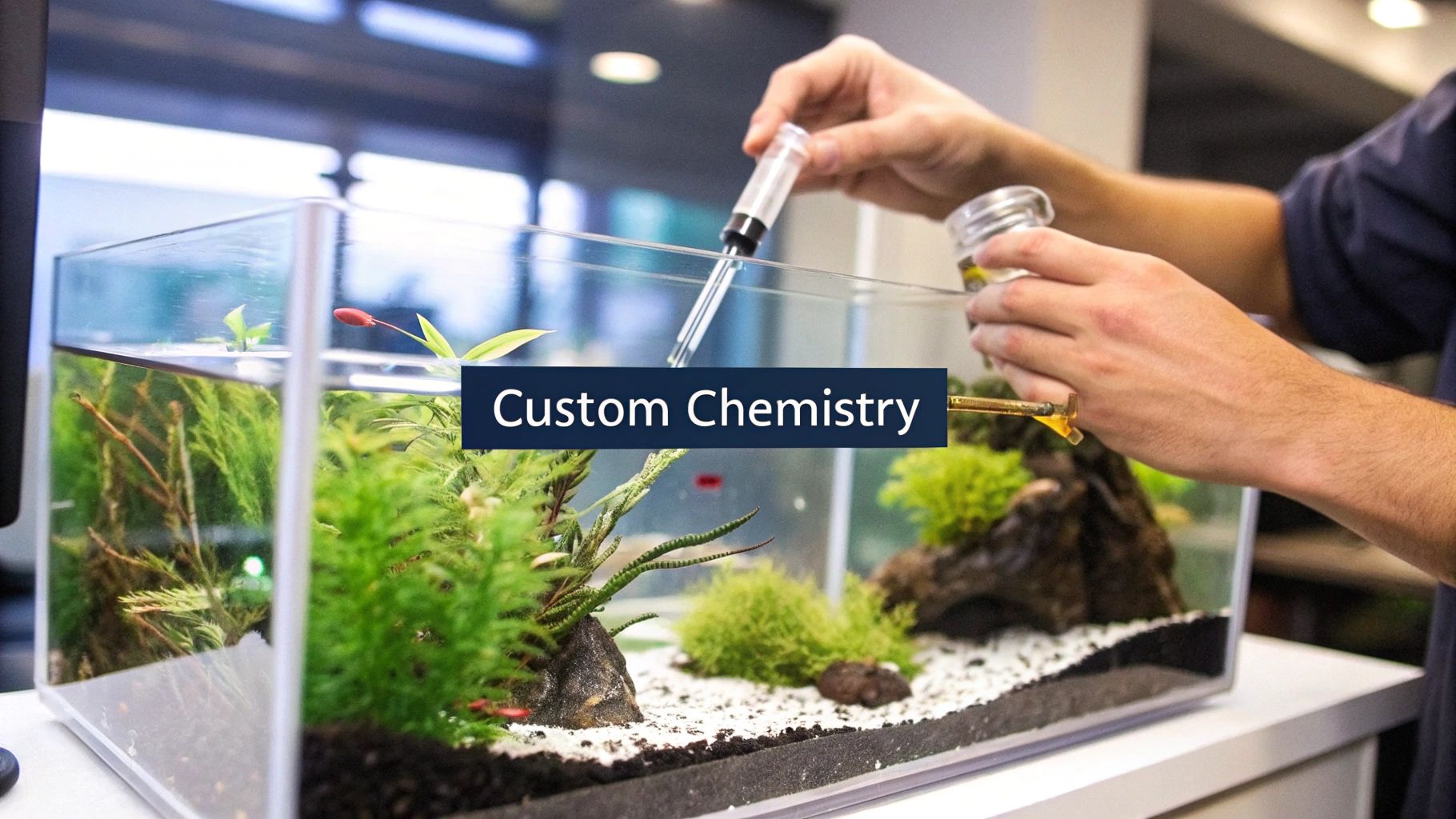
For dedicated aquarium enthusiasts and hydroponic growers, creating the perfect aquatic environment is a science. Deionised (DI) water provides the ideal blank slate, allowing for complete control over water chemistry. Unlike tap water, which contains a variable mix of minerals, chlorine, and other contaminants, DI water is stripped of all ionic content, ensuring that the only elements present are those you add intentionally.
This level of control is crucial for delicate ecosystems where precise parameters are non-negotiable. By starting with a pure H₂O base, hobbyists and commercial growers can meticulously remineralise the water to meet the specific needs of sensitive fish species or nutrient-hungry plants, guaranteeing optimal health and vibrant growth.
Common Applications in Aquatic Systems
Using DI water as a base is a common practice in specialised growing and aquatic fields:
- Sensitive Fish Species: Enthusiasts keeping delicate species like Discus fish use it to create soft, acidic water (pH 5.5-6.5) that mimics their native Amazonian habitat.
- Marine Reef Aquariums: Saltwater tank owners rely on DI water to mix synthetic sea salts, ensuring no unwanted trace elements or algae-promoting phosphates and nitrates from tap water are introduced.
- Commercial Hydroponics: Large-scale operations growing vegetables or high-yield crops use it to formulate precise nutrient solutions, preventing nutrient lockout and maximising growth efficiency.
Best Practices for System Use
Successfully using deionised water requires careful management to reintroduce the necessary elements for life to thrive. Its purity means it lacks the buffering capacity and essential minerals found in natural water sources.
Key Insight: Deionised water alone is unsuitable for most aquatic life. It must be carefully remineralised with specific additives to create a stable and healthy environment for fish or plants.
For the best results, adhere to these guidelines:
- Remineralisation: Always use high-quality mineral supplements or buffers specifically designed for aquariums or hydroponic systems to re-establish essential parameters like general hardness (GH) and carbonate hardness (KH).
- Cost Management: For less sensitive setups, consider mixing DI water with treated tap water (often a 50/50 ratio) to lower costs while still reducing the concentration of unwanted contaminants.
- Regular Testing: Consistently monitor water chemistry- including pH, ammonia, nitrite, nitrate, and hardness- with reliable test kits to ensure parameters remain stable and within the ideal range for your specific application.
10. Dental Practice Equipment Sterilisation and Irrigation
In a dental practice, patient safety and equipment longevity are paramount. One of the critical behind-the-scenes uses for deionised water is in maintaining the sterile environment required for procedures. Standard tap water is rich in minerals like calcium and magnesium, which, when heated in sterilisers or run through fine tubing, leave behind limescale deposits that can damage or destroy expensive dental equipment.
Deionised water is the superior choice for autoclaves, ultrasonic cleaners, and patient rinsing systems because it is free of these mineral ions. Using it prevents the formation of scale build-up on delicate instruments and inside the complex internal workings of dental chairs and sterilisers. This not only extends the life of the equipment but also ensures that sterilisation processes are effective and that the water used for irrigation during procedures is free from contaminants.
Common Applications in Dentistry
This purified water is a non-negotiable standard in various dental settings to ensure both safety and operational efficiency:
- Autoclave Sterilisation: Used to create pure steam that effectively sterilises instruments without leaving mineral residue that can insulate bacteria or corrode metal surfaces.
- Ultrasonic Cleaners: Acts as a pure medium for cleaning instruments before sterilisation, ensuring no mineral spots are left behind.
- Dental Unit Waterlines: Flushed through the system and used for patient rinsing and irrigation, preventing biofilm and scale formation in the fine tubes that run to handpieces.
Best Practices for Dental Use
Maintaining the purity of water systems is essential for regulatory compliance and patient care. Its aggressive nature means it can easily become contaminated if not handled correctly.
Key Insight: The use of deionised water is not just a best practice; it is often a requirement specified by the manufacturers of autoclaves and other dental equipment to maintain the product warranty.
For optimal and safe implementation, follow these guidelines:
- Sourcing: Utilise either commercially bottled deionised water or install a small, dedicated deionisation system in the practice to ensure a fresh, consistent supply.
- Equipment Care: Always adhere to the dental equipment manufacturer’s specific recommendations regarding water quality to prevent damage and ensure effective operation.
- Maintenance: Regularly change filters in dental unit waterlines and conduct quarterly tests for bacterial levels to ensure patient safety and compliance with healthcare standards.
Deionised Water Uses: 10-Item Comparison
| Application | Implementation complexity | Resource requirements | Expected outcomes | Ideal use cases | Key advantages |
|---|---|---|---|---|---|
| Laboratory and Scientific Research | Medium — lab-grade DI systems and routine QC | Moderate volume; conductivity testing; controlled storage | Reproducible, contamination-free measurements | Analytical labs, university research, diagnostics | Prevents ionic interference; meets ISO/ASTM standards |
| Electronics Manufacturing and Semiconductor Production | High — continuous on-site generation and real-time monitoring | High volume; redundant DI units; cleanroom integration | Lower defect rates; reliable electrical performance | Wafer cleaning, PCB rinsing, cleanroom assembly | Eliminates conductive ions; reduces corrosion and failures |
| Cosmetics and Personal Care Product Manufacturing | Medium — GMP pipelines and contamination controls | Moderate-large volume; stainless storage; batch testing | Consistent texture and shelf stability | Skincare, shampoos, lotions, cosmetic formulations | Stable base for formulations; prevents discolouration and spoilage |
| Pharmaceutical Manufacturing and Drug Production | Very high — multi-stage purification and strict documentation | High purity systems (RO, DI, distillation); microbial monitoring | Regulatory-compliant, safe drug products | Injectable formulations, sterile drug production, compounding | Ensures patient safety; meets USP/EP and FDA requirements |
| Pharmaceutical Autoclaves and Equipment Sterilisation | Low–Medium — integration with sterilisers and maintenance regimes | Steady DI supply; storage; following equipment specs | Reduced scaling and corrosion; reliable sterilisation | Hospital autoclaves, dental sterilisers, research facilities | Improves steam quality; extends equipment lifespan |
| Automotive Manufacturing and Cooling Systems | Medium — plant-scale systems and coolant integration | Large volumes; on-site generation; corrosion inhibitors | Improved cooling performance; reduced corrosion | Engine testing, paint lines, cooling systems | Prevents scale; improves test accuracy and finish quality |
| Power Plant Operations and Boiler Systems | Very high — large-scale purification and strict monitoring | Massive volumes; ion-exchange/RO towers; continuous logs | Higher thermal efficiency; fewer failures and outages | Nuclear, coal, gas, geothermal boiler feedwater | Prevents scale/corrosion; extends equipment life; energy savings |
| Humidification and HVAC Systems in Clean Rooms | Medium — compatibility checks and regular maintenance | Ongoing DI supply; humidifier-specific systems; filter changes | Stable humidity; reduced particulate and deposits | Semiconductor fabs, pharma cleanrooms, data centres | Prevents white dust; lowers humidifier maintenance |
| Aquarium and Hydroponic Systems | Low — basic DI units with remineralisation knowledge | Small-to-moderate volumes; mineral supplements; testing kits | Precise water chemistry; improved plant/fish health | Reef tanks, discus aquaria, hydroponic cultivation | Allows custom mineral profiles; reduces algae and stress |
| Dental Practice Equipment Sterilisation and Irrigation | Low–Medium — small in-office units or bottled supply | Modest volumes; periodic cartridge changes; staff training | Longer instrument life; better infection control | General dentistry, orthodontics, dental schools | Prevents scale in handpieces; improves patient safety |
Putting Pure Water into Practice
From the pristine environments of semiconductor fabrication plants to the critical sterilisation processes in dental surgeries, the applications for deionised water are as diverse as they are essential. We have explored ten distinct sectors where this ultra-pure liquid is not just a preference but a fundamental requirement for achieving precision, safety, and operational excellence. The common thread weaving through all these uses for deionised water is its remarkable capacity to act as a blank canvas, free from the dissolved mineral ions that cause contamination, scaling, and unpredictable chemical reactions.
Whether you are a car valeting professional aiming for a flawless, spot-free finish or a cosmetics formulator seeking product stability, the principle remains the same. The absence of calcium, magnesium, and other ions allows deionised water to be a perfect cleaning agent and a stable solvent, ensuring that the only active ingredients are the ones you intentionally add. This control is paramount in everything from pharmaceutical manufacturing, where purity directly impacts patient safety, to power plant operations, where mineral deposits can lead to catastrophic equipment failure.
Key Takeaways for Immediate Application
To truly leverage the benefits discussed, it is crucial to move from understanding to implementation. Here are the core principles to remember:
- Purity Prevents Problems: The primary value of deionised water lies in what it lacks. By removing ions, you eliminate the root cause of mineral deposits, water spots, corrosion, and unwanted chemical interactions. This preventative quality saves time, reduces maintenance costs, and enhances the final product's quality.
- Context is Crucial: The grade of deionised water required can vary significantly. While a car wash may achieve excellent results with standard DI water, a laboratory conducting sensitive experiments will need Type I or Type II ultrapure water. Always match the purity level to the specific demands of your application.
- Handling and Storage Matter: Deionised water is an aggressive solvent precisely because it is so pure; it will actively try to leach ions from any material it touches. Using improper storage containers can quickly re-contaminate the water, undoing the purification process. Effective storage is vital for maintaining the purity of deionised water. For insights into selecting appropriate containers, explore a complete guide to plastic water storage tanks.
Embracing a Higher Standard of Operation
Integrating deionised water into your processes is more than just a technical upgrade; it's a commitment to a higher standard of quality and reliability. For businesses, this translates into superior results that build customer trust, whether it's through a gleaming, streak-free solar panel that operates at maximum efficiency or a cosmetic product that maintains its intended texture and efficacy. For hobbyists, such as aquarium enthusiasts, it means creating a stable, controlled environment where delicate aquatic life can thrive. The initial investment in sourcing and using deionised water is consistently repaid through improved outcomes, reduced equipment wear, and streamlined workflows. The journey from tap water to pure water is a transformative one, unlocking a new level of precision across countless industrial, commercial, and personal pursuits.
Ready to elevate your standards with consistently pure water? 24 Pure Water provides convenient, on-demand access to high-quality deionised water through our network of self-service filling stations across the UK. Visit 24 Pure Water to find your nearest station and discover how easy it is to integrate the power of purity into your operations today.