When it comes to cleaning solar panels, the best approach is surprisingly simple: use purified, deionised water and a soft-bristle brush. The trick is to do it on a cool, overcast day. This prevents the water from evaporating too quickly, which is what leaves behind those pesky mineral streaks and spots that hinder performance.
Why Keeping Your Solar Panels Clean is a Must for UK Homes
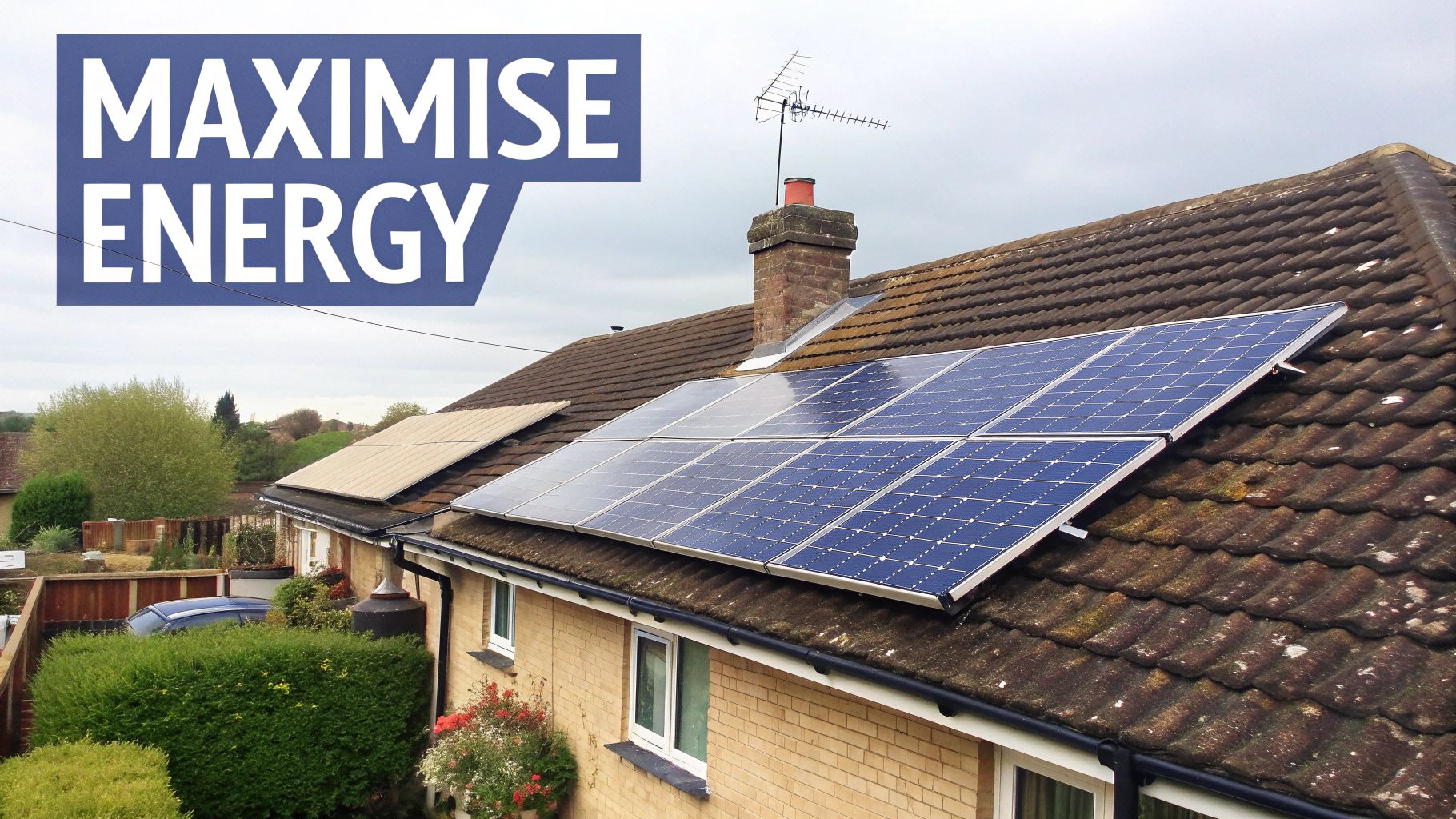
Getting solar panels installed is a smart move for any UK homeowner wanting to cut their energy bills and shrink their carbon footprint. But the job isn't finished once they're on the roof. To really get the most out of your investment, regular maintenance is absolutely key.
It’s a common—and costly—misconception that a bit of British rain will do the trick. The reality is that rainwater is full of dust and airborne pollutants. When it dries, it leaves behind a thin, grimy film that blocks sunlight from reaching the photovoltaic cells.
How Dirt and Grime Sabotage Your System's Performance
Over time, this build-up of dirt, pollen, bird droppings, and city pollution can seriously drag down your system's output. A dirty panel is an inefficient panel, and even a slight drop in efficiency adds up to a big loss in energy generation—and financial savings—over the years.
Believe it or not, dirty solar panels can lose anywhere from 5% to over 20% of their efficiency. For an average UK home, that could easily mean missing out on hundreds of pounds in energy savings each year, which defeats the whole purpose of getting them in the first place.
The Growing Importance of Proper Maintenance
As the UK’s solar market continues to boom, keeping panels clean has become more important than ever. By May 2023, the country hit a capacity of 15.1 GW from over 1.33 million solar installations—that’s a 6.4% jump in just one year. With the government pushing for 70 GW by 2035, every single panel needs to perform at its best to help meet our national energy goals. You can find more details on these trends by exploring the latest UK solar panel statistics.
This is precisely why knowing how to clean your panels properly is so vital. A proactive approach ensures your system is always working at its peak, protecting your investment and making a real contribution to the grid.
A simple, consistent cleaning schedule brings three huge benefits:
- Maximum Energy Output: Clean panels soak up more sunlight, which means more electricity and bigger savings on your bills. Simple as that.
- Longer Lifespan: Getting rid of corrosive stuff like bird droppings and acidic grime prevents long-term damage to the panel's surface and seals.
- Warranty Protection: Some manufacturer warranties actually require you to prove you've been looking after your panels. Neglecting them could void your cover if something goes wrong.
Ultimately, cleaning your solar panels isn't just about making them look good. It's an essential part of owning a solar system that directly impacts your wallet and how long your hardware lasts.
Getting Your Solar Panel Cleaning Kit Together
Before you even think about getting a streak-free shine on your panels, you need to gather the right gear. It's not just about doing a good job; using the wrong tools can permanently damage your investment or, even worse, put you at risk. A proper kit is the foundation of cleaning your solar panels correctly and safely from the ground up.
Lots of people are tempted to just grab a bucket of soapy water and a hosepipe, but that’s a recipe for a bad finish. Tap water, especially in the hard water areas we have all over the UK, is full of minerals like calcium and magnesium. When that water evaporates on a warm panel, it leaves behind a chalky, white film that’s just as bad for performance as the dirt you were trying to wash off.
This mineral build-up doesn't just block sunlight; it actually attracts more dirt, creating a cycle where you have to clean your panels more and more often. The real solution is to start with the right kind of water in the first place.
The Core Essentials: Water and a Brush
For a safe and effective clean, the absolute gold standard is a water-fed pole system. Honestly, for most homeowners, this is a non-negotiable piece of equipment. It lets you work safely from the ground, getting rid of the serious risks that come with climbing ladders. These telescopic poles can easily reach panels on most two-storey homes or those in awkward spots.
Attached to the pole, you'll need a soft-bristle brush head. It's vital that the brush is made specifically for solar panels or professional window cleaning. The bristles need to be gentle enough that they won't scratch the delicate anti-reflective coating on the glass, but firm enough to shift stubborn grime like bird droppings or baked-on pollen. Using anything too abrasive will create tiny scratches that add up over time and reduce your system's output.
And now for the most important part: the water. For that perfect, professional finish, deionised water is the only way to go. This 'pure' water has had all of its mineral ions stripped out. This process turns it into a surprisingly effective cleaning agent, as it naturally wants to grab onto and dissolve dirt particles from the panel surface.
The real magic of deionised water is what happens when it dries. Since there are no dissolved minerals, it simply evaporates without leaving a single spot or streak behind. That's the secret to getting a top-tier clean that keeps your system running at its best.
Safety Gear and Other Bits You'll Need
While the pole and pure water are the stars of the show, you can't forget about your own safety. Even when your feet are firmly on the ground, a few basic precautions go a long way.
Here’s a quick checklist of the other essentials:
- Non-Slip Footwear: A good pair of sturdy, closed-toe boots or shoes with excellent grip is a must. The ground will get wet, and slips are a real risk.
- Gloves: Decent waterproof gloves will keep your hands dry and improve your grip on the pole, which is especially welcome on a chilly British morning.
- Hose and Connectors: You'll need a good quality garden hose that’s long enough to move around freely, plus the right fittings to connect it all up to your deionisation system and the water-fed pole.
What You Must Never Use
Knowing what to use is only half the battle; knowing what to leave in the shed is just as important. Using the wrong tool can easily void your warranty and lead to some very costly repairs.
Under no circumstances should you use:
- Pressure Washers: The intense jet of water can get past the seals on the panels, causing moisture to get inside and leading to serious electrical faults. It can also damage the surface of the panel itself.
- Harsh Chemicals or Abrasive Cleaners: Things like bleach, washing-up liquid, or scouring powders will wreck the anti-reflective coating. They often leave a sticky residue that just attracts more dirt. Just as important as the tools is the cleaning solution itself. For a professional, streak-free result on your solar panels, refer to a comprehensive guide to cleaning solutions for exterior surfaces.
- Stiff Brushes or Scourers: Anything too harsh will scratch the glass, which permanently reduces the amount of sunlight your panels can capture.
Putting together the right kit is your first real step. It protects your system, keeps you safe, and guarantees a fantastic result that will have your panels working at peak efficiency.
The Safe and Effective Cleaning Process
Once you've got your kit ready, it's time to actually clean the panels. This is where a bit of thought and the right technique pay off, giving you that perfect, streak-free finish you're after. Knowing the best way to clean solar panels isn't just about the tools; it's about the method, timing, and most importantly, safety. Let’s walk through it from start to finish.
The first, and probably biggest, decision is picking the right day. You might think a bright, sunny day is perfect, but it’s actually the worst time to get the job done. Direct sun heats the glass so quickly that water evaporates almost instantly. This is exactly what leaves behind mineral deposits and creates those annoying streaks, undoing all your hard work.
Instead, always try to pick a cool, overcast day. Early morning or late afternoon, when the sun is low in the sky, works just as well. These conditions keep the panels cool, giving the deionised water enough time to lift the grime before it dries on the surface.
Preparing for a Safe Clean
Before a single drop of water hits the panels, spend a few minutes on some crucial safety checks. Nothing is more important than your personal safety and the integrity of your solar system. Don't rush this part.
First, have a good look around the area. Make sure your workspace on the ground is clear of any trip hazards like garden tools, kids' toys, or uneven paving slabs. You'll be using water, so the ground is going to get wet—make sure you've got stable, level footing.
Next, look up at the panels themselves. Are there any obvious signs of damage, like cracked glass or loose wiring? If you spot anything that doesn't look right, stop what you're doing and call your original installer or a qualified solar technician. Trying to clean damaged panels can be extremely dangerous.
Safety First: Always shut down your solar panel system before you start cleaning. Check your user manual for the correct shutdown procedure. This gets rid of any risk of electrical shock and is an absolutely non-negotiable part of the process.
Finally, get your gear assembled. Extend your water-fed pole to a comfortable length so you can easily reach the whole surface of the panels without overstretching. Connect your hose to the deionisation system and then to the pole, making sure every connection is tight to prevent leaks.
Mastering the Cleaning Technique
With all your prep work done, you can get started. The aim here is to be gentle but methodical, letting the pure water and soft brush do the real work.
Start by pre-rinsing the panels with a steady flow of deionised water. This first rinse loosens the top layer of dust and dirt, making the main scrubbing part much more effective. Think of it as prepping the canvas.
Once the panels are wet, it's time for the brush. It's best to work in small, manageable sections, starting at the top of the array and moving downwards. This systematic approach ensures dirty water runs off areas you've already cleaned, so you're not making more work for yourself.
Apply gentle but firm pressure with the brush, using overlapping, circular motions. This technique is fantastic for lifting stubborn grime like bird droppings or baked-on pollen without scratching that delicate anti-reflective coating. Just let the soft bristles and the pure water work their magic together.
This infographic shows the simple but effective combination of tools needed for a professional clean.
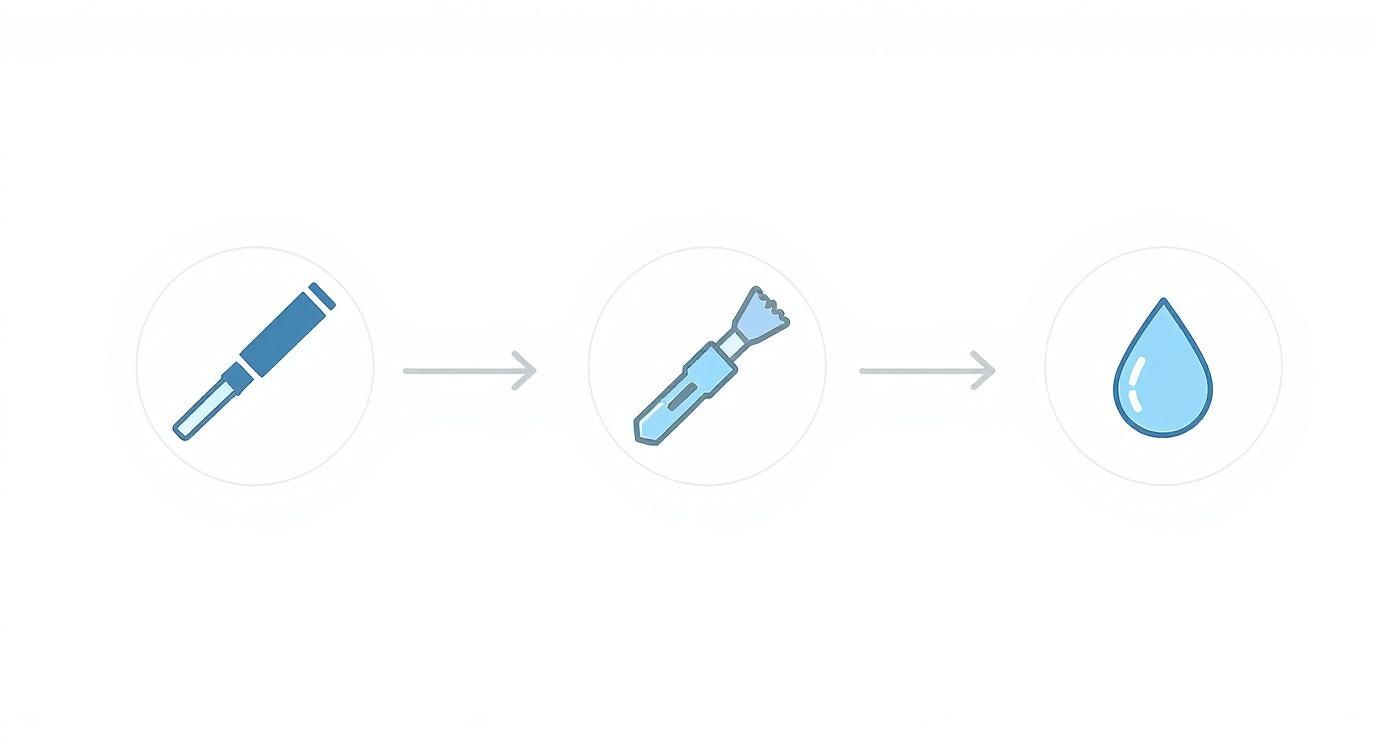
As you can see, success really just comes down to three things: the pole for reach, the brush for gentle agitation, and pure water for a perfect finish.
The Final Rinse for a Flawless Finish
After scrubbing a section, the final rinse is what truly delivers that spot-free result. This is where the deionised water really proves its worth.
Give the entire array one last, thorough rinse from top to bottom. Make sure you flush away all the dirt and debris you've just dislodged. Because the water is completely pure, with zero dissolved minerals, you can just let it air dry. It will evaporate without a trace, leaving nothing but a crystal-clear, gleaming surface ready to soak up the maximum amount of sunlight.
There's no need to faff around with squeegees or drying cloths, which can just reintroduce dirt or even scratch the panels. The pure water does it all for you. For anyone looking for more hands-on advice, this DIY guide for cleaning solar panels offers some great additional tips.
By following these steps, you can confidently and safely clean your own solar panels, ensuring they operate at peak efficiency and continue to give you an excellent return on your investment for years to come.
The Science Behind Deionised Water
To really get why purified water is the secret to a professional solar panel clean, it helps to understand a bit of the science. The stuff that comes out of your tap, especially in hard water areas across the UK, isn't just H₂O. It’s packed with dissolved minerals.
Think of things like calcium and magnesium. These are the culprits behind those annoying white spots and cloudy films you see on windows or cars after washing them. When tap water evaporates on your solar panel, the water goes, but all those mineral solids get left behind. This mineral residue doesn't just look bad; it creates a slightly rough film that helps new dirt and dust get a grip.
What Makes Deionised Water Different?
This is where deionised water changes the game. It's been through a rigorous filtering process to strip out all those mineral ions, leaving it incredibly pure. If you're curious about the specifics, you can see how this purification process works and turns standard water into a powerful cleaning tool.
This purity gives the water a unique characteristic. Because it’s so clean, it becomes a ‘hungry’ solvent. The water molecules are actively looking for things to bond with and dissolve—in this case, all the dirt, dust, and grime sitting on your panels. It effectively becomes a powerful, natural cleaning agent all on its own, no harsh chemicals needed.
The real magic of deionised water happens when it dries. As it evaporates, it leaves absolutely nothing behind—no mineral deposits, no chalky residue, no streaks. You're left with a perfectly clear, spot-free surface that lets the maximum amount of sunlight through.
Let's break down the practical differences.
UK Tap Water vs Deionised Water for Panel Cleaning
| Feature | UK Tap Water | Deionised Water |
|---|---|---|
| Mineral Content | High in dissolved minerals (calcium, magnesium) | Zero mineral content (ions removed) |
| Cleaning Action | Simply wets and shifts surface dirt | Acts as a 'hungry' solvent, actively dissolving grime |
| Drying Result | Leaves behind white spots and mineral residue | Dries to a perfectly clear, 100% streak-free finish |
| Dirt Attraction | Mineral film can attract new dust and dirt | Leaves a smooth surface that stays cleaner for longer |
| Chemicals Needed | Often requires detergents to combat mineral spots | Cleans effectively with no detergents needed |
Ultimately, this is why the professionals will always reach for deionised water. The principle is simple: if you remove the minerals from the water before you start cleaning, you completely eliminate the source of the problem.
Using regular tap water is a bit like washing your car and leaving the soap suds to dry on the paintwork. Sure, you've shifted some dirt, but you've just created a different problem. Deionised water, on the other hand, gives you a flawless rinse and a perfect finish, every single time.
How Often to Clean Your Solar Panels in the UK
So, what's the magic number for how often you should be cleaning your solar panels? The honest answer is, there isn't one. While a good rule of thumb for most UK homes is once or twice a year, the best schedule is the one tailored to your specific location.
Forget a rigid, one-size-fits-all approach. A house tucked away in a quiet suburb has completely different challenges to one overlooking a busy A-road or sitting a stone's throw from the sea. Your local environment dictates everything.
Factors That Demand More Frequent Cleaning
Your home's surroundings are the single biggest influence on how quickly dirt and grime build up. Some locations will slash the time between cleans and start eating into your system's efficiency much faster than others.
Think about whether your property is exposed to any of these common culprits:
- Heavy Traffic: Live near a busy road? Your panels are getting a daily dose of traffic film and exhaust particulates. This fine, greasy layer is a real performance killer.
- Agricultural Areas: Out in the countryside, you'll be dealing with dust from ploughing, harvesting, and other farming activities. It’s not just dirt; it's a constant blanket of fine particles.
- Coastal Homes: That lovely sea breeze brings with it a fine mist of saltwater. When the water evaporates, it leaves behind a stubborn, corrosive film of salt crystals that blocks sunlight.
- Abundant Trees: Overhanging trees mean a steady supply of leaves, pollen, sticky sap, and the ever-present problem of bird droppings, which can bake on hard in the sun.
If your home fits into one of these categories, you’ll likely find that a clean every six months is a better bet to keep your panels working at their best.
Becoming Your Own Maintenance Expert
Instead of just blindly marking a date on the calendar, the best strategy is to learn what to look for. This way, you clean the panels when they actually need it, saving you from doing it too often or, worse, letting them get so dirty you lose out on generating power.
It all comes down to a bit of observation. You have two fantastic tools at your disposal: a simple visual check and your system’s performance data.
On a bright day, take a look at your panels from the ground. Can you see a noticeable film of dust? Are there obvious splatters of bird droppings? If they've lost that deep, dark, uniform look and appear hazy or patchy, it’s probably time for a wash.
Your system’s monitoring app is your best friend here. Get into the habit of checking your energy generation figures. If you see a slow but steady dip in output that isn’t just down to a few cloudy days, that’s a massive clue that a layer of grime is starting to block the light.
By combining a quick visual check with a peek at your performance data, you can stop guessing. You'll develop a smart, practical maintenance rhythm that keeps your system in peak condition and protects your investment for the long run.
When to Call in a Professional Cleaning Service
While cleaning your own solar panels can be a great way to keep them in top shape, it’s vital to know when to step back. The best way to clean your panels is always the safest way, and sometimes, that means calling in the experts. Your personal safety and the integrity of your system have to be the top priority.
For most people, the real challenge is simply getting to the panels. If your roof is particularly steep, or the panels are on a second storey or perched above a fragile conservatory, the risks shoot up. A DIY job just isn't worth a serious fall.
When Professional Expertise Is Non-Negotiable
Some situations are simply not cut out for a DIY approach. Trying to tackle them yourself can lead to a poor job, damage to your property, or worse.
Here are some clear signs it's time to hire a professional service:
- Extreme Grime or Staining: If your panels are caked in stubborn, baked-on dirt—think years of lichen growth, thick tree sap, or corrosive salt deposits from living near the coast—a standard water-fed pole might not cut it. Professionals have access to specialised, panel-safe cleaning solutions and the right techniques to remove it all without scratching the glass.
- Difficult Access and Safety Concerns: Any job that requires more than a simple pole from the safety of the ground is best left to the pros. They’re equipped with the correct safety harnesses, access equipment, and, crucially, the insurance to work at height. This is especially true for multi-storey homes or properties with tricky roof layouts.
- Suspected System Damage: Noticed a crack in the glass, some loose wiring, or a sudden, unexplained drop in your energy output? Don't even think about cleaning them. A professional can assess the situation, spot underlying issues you might miss, and clean the system without aggravating the problem.
One of the biggest advantages of hiring a professional service is the peace of mind their insurance provides. If anything accidentally gets damaged—your panels, your roof, your property—their liability insurance has it covered. That’s a safety net you simply don’t have when you do it yourself.
This need for expertise is driving a fast-growing industry. In the UK, the solar panel cleaning market is set to grow at a compound annual rate of about 10.5% from 2025. This growth is a direct result of more solar installations and the realisation that wet cleaning methods, which hold a massive 56.3% of the market share, are incredibly effective at shifting stubborn dirt. For more details, you can explore the full solar panel cleaning market analysis on futuremarketinsights.com.
At the end of the day, professionals bring more than just fancy equipment; they bring experience. They can deliver a more thorough, longer-lasting clean that helps you get the most out of your investment. If you're thinking about professional cleaning for other parts of your home, our guide on professional glass cleaning services offers some great insights.
Common Solar Panel Cleaning Questions
To round things off, let's tackle some of the questions that pop up time and time again from homeowners across the UK. Getting these straight will give you the confidence to get the job done right.
Can I Just Use Washing Up Liquid?
This is a big one, and the answer is a firm no. It's incredibly tempting to reach for the washing-up liquid or a bottle of window cleaner, but please don't. These household detergents are bad news for your panels.
Most contain harsh chemicals or even tiny abrasive particles that can slowly eat away at the crucial anti-reflective coating. Worse, they almost always leave behind a thin, sticky film. This residue is a magnet for fresh dust and dirt, making your panels get grimy again even faster than before. Stick to pure water.
Doesn’t the Rain Clean Them Anyway?
If only it were that simple! While a good downpour can wash away some of the loose surface dust, it’s far from a proper clean. It’s a bit like rinsing a dinner plate without scrubbing it – you’ll get some of the mess off, but the stubborn bits remain.
Rainwater itself isn't pure; it picks up dust and pollutants from the air. When it dries, it can leave a grimy film. More importantly, rain stands no chance against things like baked-on bird droppings, stubborn tree sap, or salty residue in coastal areas. These need a bit of gentle persuasion with a soft brush to shift.
Is It Safe to Walk on My Panels?
Absolutely, unequivocally not. You should never walk, stand, or lean on your solar panels. Ever. They simply aren't built to take the weight of a person, and trying is a recipe for disaster for both you and your system.
Walking on a panel can create micro-cracks in the solar cells. You won't see them, but these tiny fractures can seriously hamper your system's output and dramatically reduce its lifespan. It’s a huge safety risk, too.
The only safe way to clean your panels is from the ground with a water-fed pole system, or from a properly secured platform like scaffolding. Never from on top of the panels themselves. For a deeper dive into other common queries, have a look at our full solar panel cleaning FAQs.
Ready to get that professional, streak-free finish and boost your panel's efficiency? Find your nearest 24 Pure Water self-service filling station for ultra-pure deionised water, available 24/7. Just tap, fill, and see the difference for yourself at https://24purewater.co.uk.