Before you can learn how to get rid of hard water stains for good, you need to know exactly what you’re up against. In short, those chalky, milky marks are mineral deposits—mostly calcium and magnesium—that get left behind when water evaporates. This simple fact is why purified water is the secret weapon for a truly spotless, streak-free finish.
So, What Exactly Are Hard Water Stains?
Ever seen those stubborn, cloudy spots on your glass shower door or a crusty white film building up around your kitchen taps? That’s limescale, the all-too-common calling card of hard water stains. These blemishes are a direct result of the water that comes out of your taps.
As rainwater makes its way through the ground, it flows over and through rocks like limestone and chalk, picking up minerals along the journey. The more minerals the water absorbs, the "harder" it becomes. When that water splashes onto your car, windows, or solar panels and then dries, the H₂O evaporates, but the mineral solids—mainly calcium carbonate—stay put. Layer by layer, these deposits build up into the tough, unsightly stains that your usual cleaning sprays just can't seem to shift.
And this isn't just a minor inconvenience; it's a huge issue across the country. In fact, roughly 60% of UK water supplies are considered hard. This is especially true for homes in areas like London, Kent, and throughout East Anglia, where the ground is naturally rich in limestone. People in these regions are constantly fighting a losing battle against limescale, and it comes with a real financial cost.
It’s been shown that UK households in hard water areas can spend an extra £218.76 each year on specialised cleaning products. On top of that, appliance repair bills can average £311.87 over a five-year period, all thanks to limescale build-up. For more details on the costs associated with the UK's hard water, mrcentralheating.co.uk offers some great insights.
Why Are These Stains So Tough to Remove?
Knowing a bit about the science behind these marks is the key to finally beating them. The minerals don't just sit on the surface; they form a stubborn crystalline structure that chemically bonds to glass, metal, and paintwork. This is why a quick wipe with a wet cloth barely makes a dent. To actually remove the stain, you need something that can get in there and dissolve those mineral bonds.
The real issue with hard water goes beyond the ugly stains you can see. The hidden danger is the gradual build-up inside your pipes, kettle, and washing machine. This limescale clogs everything up, making your appliances work harder, use more energy, and eventually fail, costing you a fortune in the long run.
Understanding Water Hardness Across the UK
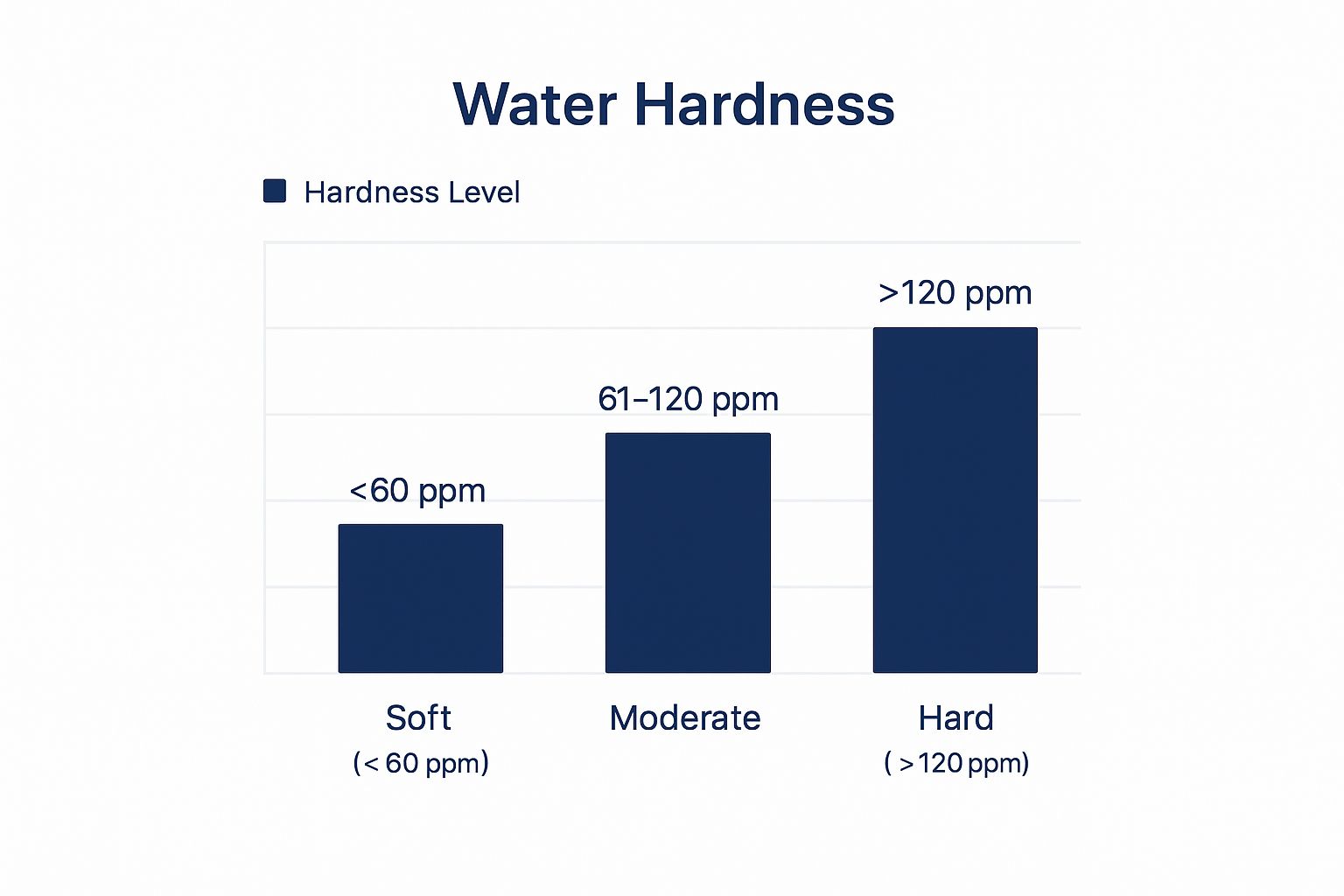
How bad your limescale problem is comes down to where you live. The concentration of minerals in water is measured in Parts Per Million (PPM), and the UK has a wide spectrum of water hardness levels.
This table gives a clear picture of how water is classified and what that means for your cleaning routine.
UK Water Hardness Levels and Their Impact
| Hardness Level | PPM (Calcium Carbonate) | Common UK Regions | Expected Impact on Surfaces |
|---|---|---|---|
| Soft | 0 – 60 PPM | Scotland, Wales, South West | Minimal to no limescale. Surfaces are easy to clean. |
| Moderately Hard | 61 – 120 PPM | Parts of North West, Midlands | Some spotting on glass and chrome. Requires regular cleaning. |
| Hard | 121 – 180 PPM | Midlands, Yorkshire, North East | Obvious limescale build-up. Stains form quickly. |
| Very Hard | 181+ PPM | London, East Anglia, South East | Aggressive, thick limescale. Stains are very difficult to remove. |
As you can see, once the mineral levels climb past 120 PPM, the water is officially "hard," and that’s when you really start to see those frustrating stains appear on everything.
This is precisely why getting a perfect, residue-free clean is so difficult with tap water in many parts of the country. Understanding the fundamental difference between your tap water and truly purified water is the first step. To dig deeper, you can find out more about why ultrapure water is not your drinking water in our detailed guide. Armed with this knowledge, you can start choosing cleaning methods that actually work.
Your Essential Hard Water Cleaning Toolkit
Before you can get stuck into removing those chalky white marks, you need to get your kit together. The good news? You can forget about spending a fortune on harsh, chemical-heavy products. The most effective solutions are probably already sitting in your kitchen cupboards. These simple, natural cleaners are easy on the wallet and surprisingly powerful.
It all comes down to some basic science. The limescale in hard water stains is alkaline, which means a mild acid is your best friend for dissolving it. This is exactly why common household items work so well—they break down those stubborn mineral bonds without damaging the surfaces underneath.
Natural Cleaning Agents
Your primary weapons in this fight are simple acids and a gentle abrasive. These three household staples are the foundation of your cleaning arsenal.
- White Vinegar: The acetic acid in plain old white vinegar is fantastic for dissolving the calcium and magnesium deposits left by hard water. It's incredibly versatile, cheap, and works wonders on glass, chrome, and ceramics.
- Lemon Juice: Just like vinegar, the citric acid in lemon juice cuts right through limescale. As a bonus, it leaves behind a much fresher scent.
- Bicarbonate of Soda: Think of this as your gentle but firm abrasive. Mixed with a bit of water to form a paste, it gives you just enough scrubbing power to lift stains without scratching delicate surfaces.
A great trick I've used for years is combining bicarbonate of soda with vinegar. That satisfying fizzing reaction you see isn't just for show—it's actively helping to loosen and lift the most stubborn mineral deposits, doing a lot of the hard work for you.
Essential Hardware for the Job
Of course, the right cleaning solutions are only half the battle. You need the right tools to apply them properly and get that perfect, streak-free finish. Whether you're using homemade solutions or even some of the dedicated hard water spot removers for really tough jobs, your equipment makes all the difference.
Here’s what your basic hardware should look like:
- Microfibre Cloths: These are non-negotiable for wiping and polishing. Their unique weave is brilliant at trapping residue and buffing surfaces to a streak-free shine without leaving any lint behind.
- A Reliable Spray Bottle: Absolutely perfect for applying your diluted vinegar or lemon juice solution evenly over large areas like shower screens, windows, or car bodywork.
- Non-Abrasive Scourers: For those really caked-on, built-up areas, a gentle scourer provides that extra bit of friction you need without causing any scratches.
Tackling Limescale on Different Household Surfaces
Limescale doesn't play favourites; it builds up on pretty much any surface it can find. The trick is knowing that what makes your shower screen gleam might be a disaster for your shiny chrome taps. To win the battle against hard water stains, you have to tailor your approach to the surface you're cleaning.
This is where a simple, natural toolkit really comes into its own. While you’ll need slightly different techniques for different materials, the core principle is always the same: safely and effectively dissolving those stubborn mineral deposits.
Getting Shower Screens and Glass Crystal Clear
Glass shower screens are a notorious magnet for hard water spots, quickly becoming cloudy and streaked. Because glass is transparent, every single mineral deposit stands out like a sore thumb. You need a method that cuts through the grime without just creating new streaks.
Your best bet here is a simple solution of 50% white vinegar and 50% water in a spray bottle. Give the entire glass surface a generous spritz, making sure it’s completely covered. Now, let it sit for at least 15-20 minutes. This gives the acetic acid in the vinegar a chance to get to work dissolving the calcium carbonate. If you're dealing with really tough, built-up stains, don't be afraid to leave it for up to an hour.
Once it's had time to soak, grab a non-abrasive sponge or a microfibre cloth and scrub the glass in circular motions. You should feel the mineral deposits starting to break down. To finish, rinse the screen thoroughly with water and—this is the most important part—dry it completely with a clean microfibre cloth or a squeegee. This final step is what stops new water spots from forming right away.
Restoring the Shine to Taps and Showerheads
Chrome and stainless steel fixtures quickly develop a chalky, white film that completely dulls their shine. It’s tempting to grab a harsh, abrasive cleaner, but that’s a huge mistake. You can easily scratch the finish, causing permanent damage. A much gentler touch is needed here.
For taps, I find the best method is to soak a microfibre cloth in undiluted white vinegar and wrap it right around the stained areas. Leave it there for about an hour. The direct contact lets the vinegar concentrate its power on the limescale. Afterwards, just remove the cloth, use an old toothbrush to gently scrub any lingering spots, then rinse and buff it dry with a clean cloth.
Showerheads are a bit more fiddly because the little water jets get clogged. Here’s how I handle them:
- Take it off: If you can, unscrew the showerhead from the pipe. It makes the next step much easier.
- Give it a vinegar bath: Submerge the entire showerhead in a bowl or a plastic bag filled with white vinegar. Let it soak for a few hours. For really severe blockages, leaving it overnight is best.
- Scrub and reattach: After the soak, use an old toothbrush to scrub away all the loosened gunk from the nozzles. Give it a good rinse under the tap and then screw it back on.
A word of caution: many people reach for bleach when they see limescale, but it's the wrong tool for the job. Bleach is a disinfectant; it does absolutely nothing to dissolve minerals. When you're fighting hard water stains, acid is your only true ally.
Getting Rid of That Stubborn Toilet Bowl Ring
Ah, the dreaded ring inside the toilet bowl. It’s caused by standing hard water and can be one of the most persistent stains in the whole house. The secret to shifting it is getting your acidic cleaner in direct contact with the limescale without it being instantly diluted by the water in the bowl.
Start by pouring a good amount—at least 250ml—of white vinegar straight into the bowl. Let it sit overnight; this gives it plenty of time to work on the stains below the waterline. The next morning, add about a cup of bicarbonate of soda to the bowl. You’ll get a satisfying fizzing reaction, which helps to mechanically lift the stains. Now, grab your toilet brush and give that ring a vigorous scrub before you flush.
If you’re up against a particularly stubborn ring, you might need to repeat the process. In extreme cases, a pumice stone can work wonders, but always make sure the stone is wet before you start scrubbing to avoid scratching the porcelain. Tackling hard water stains in the UK is perfectly manageable with things you already have, like white vinegar and bicarb, which are cheap and chemical-free. For more ideas on how Brits are dealing with this common problem, check out the insights from Hart Water and see why these simple methods have become so popular.
Getting Limescale Off Your Car and Windows
Hard water issues aren't just confined to your kitchen and bathroom; they can seriously spoil the look of your car's paintwork and your home's windows. Those chalky white spots, often from a misplaced garden sprinkler or a quick rinse with the hose, are more than a simple nuisance. If you leave them be, the minerals can actually etch into the surface, causing permanent damage that’s impossible to just scrub away.
Tackling these delicate surfaces calls for a different game plan than you'd use on your shower screen. The real trick is to dissolve the mineral deposits without stripping the sensitive clear coat on your car or damaging the special coatings on modern, energy-efficient window glass. Thankfully, a simple, carefully prepared natural solution is just the ticket.
This map drives home just how common hard water is across the UK, particularly in the South and East. It's no wonder that limescale on cars and windows is such a persistent headache for so many of us. Knowing how hard the water is in your area helps you understand why being proactive is so important.
A Gentle Approach for Paint and Glass
For both car paint and exterior windows, your safest bet is starting with a diluted acidic solution. You want something that can gently break down the mineral bonds without being harsh enough to harm the finish.
Here's what I've found works best:
- Mix your cleaning solution: Get a clean spray bottle and mix one part plain white vinegar with one part distilled or de-ionised water. It’s absolutely crucial to use mineral-free water here, otherwise, you’re just putting more mineral deposits back onto the surface you're trying to clean.
- Application is key: Always work on a cool surface, out of direct sunlight. If the surface is hot, the mixture will evaporate too quickly, which can actually make the staining worse. Spray your solution onto a clean microfibre cloth, not directly onto the paint or glass.
- Wipe, don't scrub: Gently wipe the affected area with your damp cloth. You want to let the vinegar solution sit for a minute or so to do its work, but don't let it dry on the surface.
- Buff it clean: Follow up with a separate, clean, and dry microfibre cloth to gently buff the area, lifting away any leftover residue.
A bit of wisdom from professional car detailers: never apply firm pressure when wiping. You need to let the vinegar dissolve the minerals. If you rub too hard, you risk grinding those abrasive mineral crystals into your car's clear coat, which is how you get those fine scratches and swirl marks.
Why the Final Rinse is Everything
After you’ve treated the stains, this next step is arguably the most important for getting that perfect, crystal-clear finish. Rinsing with tap water is the classic mistake—it just puts a fresh layer of minerals right back on, undoing all your careful work. This is where purified water really proves its worth.
Professional car valeters and window cleaners have sworn by this for years. A final rinse using 100% pure, de-ionised water is the secret weapon. When it evaporates, it leaves absolutely nothing behind. No minerals, no residue, and definitely no streaks. Just a flawless, showroom-worthy shine. It's this professional method that underpins effective window cleaning services that guarantee spotless results and it’s the only way to be sure of a perfect finish, every single time.
Of course, knowing how to get rid of hard water stains is handy, but the real win is stopping them from forming in the first place. If you can shift from constantly reacting and scrubbing to proactively preventing, you’ll save yourself a ton of time and keep your surfaces looking their best for years to come. It’s mostly about building a few simple habits and, for some, looking at a more permanent fix.
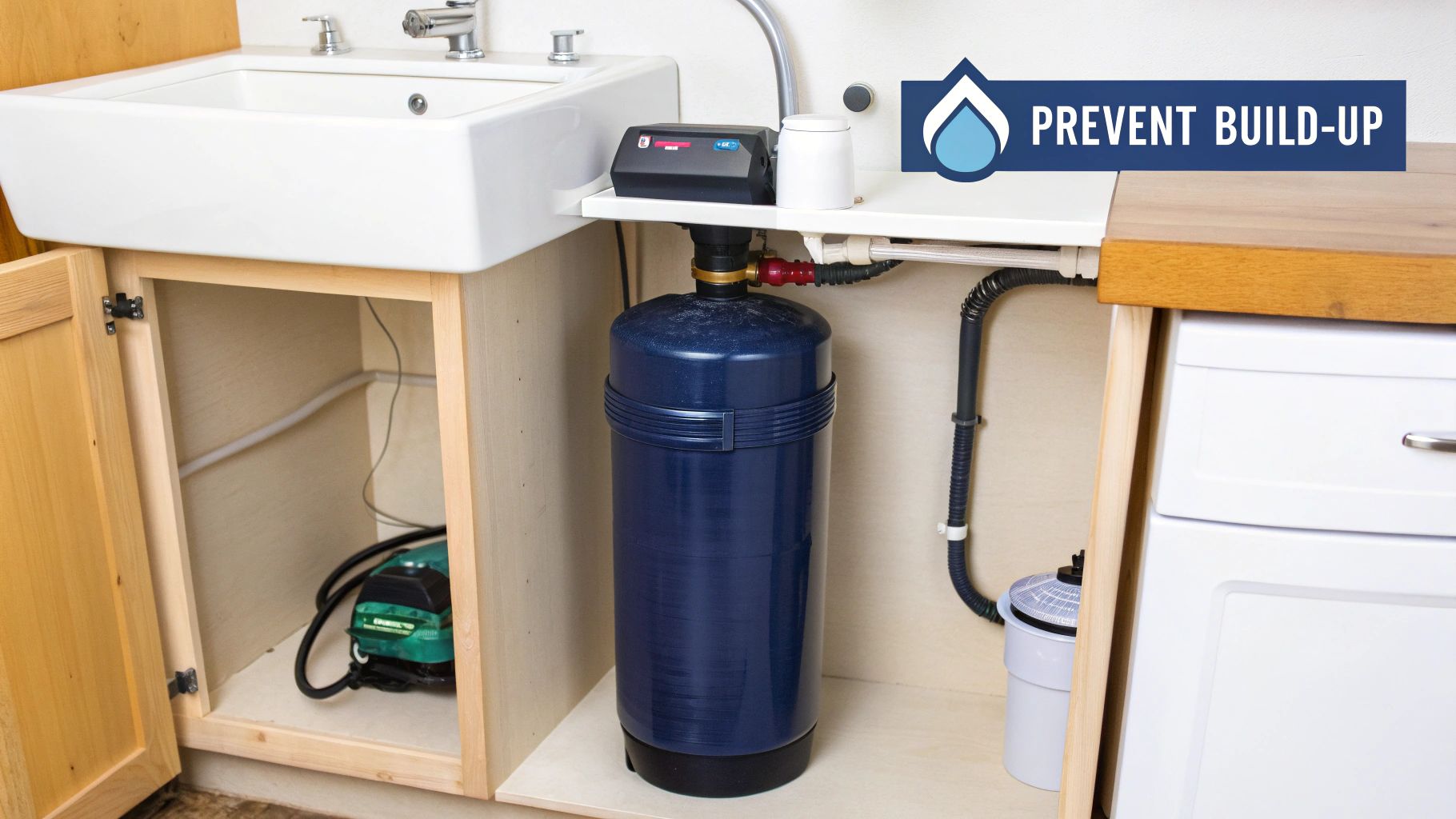
Often, it's the simplest changes that have the biggest impact. The main goal here is to get rid of the water before it has a chance to evaporate and dump all those mineral deposits. It might sound like a chore, but once you work these little actions into your routine, they become second nature.
- Squeegee After Showers: After every shower, just take 30 seconds to run a squeegee over the glass door and tiles. It makes a world of difference.
- Wipe Down Taps and Sinks: Keep a dedicated microfibre cloth handy in the bathroom and kitchen. A quick wipe of the taps and sink after you use them stops spots from setting in.
- Don't Let Water Pool: Give your draining board and kitchen worktops a swift wipe to stop puddles from sitting around.
Playing the Long Game
Little habits are fantastic, but if you live in one of the UK’s really hard water areas, you might need a more heavy-duty solution. The severity of hard water changes massively depending on where you are, which naturally affects the best way to tackle it. In cities like Norwich or Luton, for example, hardness can be around 359–360 mg/L, making limescale a relentless problem.
For a permanent solution, it's worth investing in a water softener system. These units are plumbed in where the mains water supply enters your house, effectively 'softening' every drop you use. Yes, there's an upfront cost, but the payoff is huge: no more stains, plus your appliances will last longer and run much more efficiently.
A water softener works by swapping out the "hard" minerals like calcium and magnesium for sodium ions. This doesn't just put a stop to limescale; many people notice they have softer skin and hair, and you'll definitely find you use far less soap and detergent.
Looking After Your Appliances
Your appliances are especially at risk from limescale build-up. It clogs them up, makes them less efficient, and can seriously shorten their lifespan, so protecting them should be a key part of your strategy.
For your dishwasher, always make sure you're using a rinse aid. It works by making the water "sheet" off your dishes instead of forming droplets, which is what prevents those annoying spots on your glassware.
When it comes to your kettle and coffee machine, get into the habit of descaling them every month or two. This simple bit of maintenance keeps them functioning properly, saves energy, and stops them from failing prematurely. It all comes back to the core principle of prevention—understanding how it works shows that starting with mineral-free water is the only guaranteed way to get a perfectly spotless finish every time.
Answering Your Questions on Hard Water Stains
Even when you've got the right kit for the job, hard water can still throw a few curveballs. Let's tackle some of the common questions we hear from UK homeowners who are battling limescale and mineral spots.
Getting these basics down is the key to really understanding how to get rid of hard water stains for good.
Can Hard Water Stains Actually Become Permanent?
In a word, yes. It's a frustrating reality, but if you let mineral deposits sit on surfaces like glass or chrome for too long, they can begin to etch into the material itself. This isn't just a surface stain anymore; it's physical damage that creates a pitted or cloudy look that no amount of scrubbing can fix.
We see this most often on things like shower screens and car paintwork. The minerals kick off a chemical reaction with the surface, causing damage that goes deeper than the stain. This is precisely why getting into a regular, preventative cleaning routine is always the best defence.
Is White Vinegar Safe to Use on Everything?
White vinegar is a brilliant natural cleaner, but it's not a one-size-fits-all solution. Because it's acidic, you have to be a bit careful where you use it. It's generally safe and incredibly effective on ceramics, chrome, and most types of glass.
However, you must avoid using it on natural stone. This is a big one. Keep it away from materials like:
- Marble
- Granite
- Travertine
- Limestone
The acid in the vinegar will react with the stone, eating away at the finish and causing damage you can't undo. It's also a bad idea for cast iron or aluminium. If you're ever in doubt, just test a tiny, hidden spot first. It’s a simple check that can save you a lot of grief.
How Do I Know How Hard the Water Is in My Area?
The easiest way to get an accurate answer is to pop over to your local water supplier's website. Almost every water company in the UK has a simple online tool. You just type in your postcode and it'll give you a precise reading for your home.
You'll find out if your water is classified as 'soft', 'moderately hard', 'hard', or 'very hard'. Knowing this helps you figure out how often you need to clean and whether investing in a water softener for your property makes sense in the long run.
I've spoken to so many people who finally check their water hardness and have a lightbulb moment. Realising you live in a 'very hard' water zone explains why shop-bought sprays never seem to cut it. It’s not your cleaning technique that's the problem; it's the sheer amount of mineral you're fighting every day.
Will a Water Filter Get Rid of Hardness Minerals?
Not usually, no. The standard filters you find in water jugs or the ones you attach to your tap are mostly designed to make your water taste and smell better. They're great at removing things like chlorine.
But they don't remove the minerals—calcium and magnesium—that cause limescale. For that, you'd need a proper water softener system installed where the mains water enters your house, which treats every tap in your home.
Stop letting mineral deposits ruin all your hard work. For a guaranteed, gleaming streak-free finish on windows, cars, and solar panels, it's time to switch to purified water.
With 24 Pure Water, you can get your hands on ultra-pure, deionised water 24/7 from our self-service filling stations across the UK. It’s what the pros use to get a perfect clean, every single time. Find your nearest station and see the difference for yourself at https://24purewater.co.uk.