If you’ve ever spotted that stubborn, chalky film clouding up your shower door or windows, you're dealing with limescale. It’s a classic issue in countless UK homes, and it’s not a sign you’re slacking on the cleaning – it’s simply a result of the water coming out of your taps.
So, what is it? That unsightly build-up is mainly calcium carbonate, the mineral residue left behind when hard water evaporates. Hard water is packed with dissolved minerals, especially calcium and magnesium. When a droplet of water dries on a glass surface, the water itself vanishes, but the minerals stay put, creating those frustrating white spots and streaks.
Why Is Hard Water So Common in the UK?
The root of the problem lies deep within UK geology. In many areas, especially across the South and East of England, the ground is rich in chalk and limestone. As rainwater trickles through these porous rocks, it dissolves these minerals and becomes ‘hard’.
This geological lottery is why the problem is so much worse in some places than others. Roughly 60% of the UK is classified as having hard or very hard water, with calcium carbonate levels often topping 200 mg/L. In towns like Swindon and Milton Keynes, that figure can climb to 300 mg/L or more, which means limescale builds up incredibly fast. You can even check out a detailed map of the UK's water hardness to see what you're dealing with locally.
Once you understand what you're up against, tackling it becomes much easier.
Limescale is an alkaline mineral deposit. The secret to removing it is to use a mild acid to neutralise it. This chemical reaction breaks down the limescale, lifting it from the glass so you can simply wipe it away.
This is exactly why some of the best tools for the job are probably already in your kitchen cupboard. Instead of resorting to harsh scrubbing, which can easily scratch your glass, a bit of basic chemistry is far more effective. Realising you’re fighting a chemical deposit, not just everyday grime, is half the battle. This simple shift in thinking paves the way for the specific removal methods we’ll cover next, helping you get your glass back to a crystal-clear shine.
Your Limescale Removal Toolkit and Solutions
Before you even think about tackling those chalky white marks, you need to have the right gear. Knowing how to get limescale off glass is just as much about having the right tools and products as it is about elbow grease. Your options really boil down to two camps: simple, surprisingly effective household remedies you’ve probably already got, and more powerful commercial cleaners designed for the tough stuff.
The best choice for you will depend on how bad the build-up is and what you're comfortable using. For everyday maintenance and lighter stains, a natural approach often works wonders.
The Power of Everyday Household Solutions
The secret to beating limescale isn't brute force; it's a bit of basic chemistry. Since limescale is alkaline (it's mostly calcium carbonate), a mild acid is its kryptonite. This is exactly why some of the best weapons in your arsenal are likely hiding in your kitchen cupboards.
- White Vinegar: This is the undisputed champion of home cleaning. The acetic acid in vinegar works by reacting with the calcium carbonate, dissolving it into a soluble substance you can just wipe away. Simple, effective, and cheap.
- Lemon Juice: Working on the same principle as vinegar, lemon juice uses its natural citric acid to break down mineral deposits. It’s a great alternative if you prefer a fresher, citrusy scent.
- Bicarbonate of Soda: While it isn't an acid, bicarb of soda is a fantastic gentle abrasive. Mix it with a little water or lemon juice to create a paste, and it will help you physically lift stubborn scale without any risk of scratching the glass.
These everyday items are brilliant as a first line of defence. They’re inexpensive, easy to find, and much gentler to handle than heavy-duty chemical cleaners.
As the infographic below shows, the root of the problem is the water itself, which picks up minerals as it travels through the ground—a particularly common issue across the South and East of England.
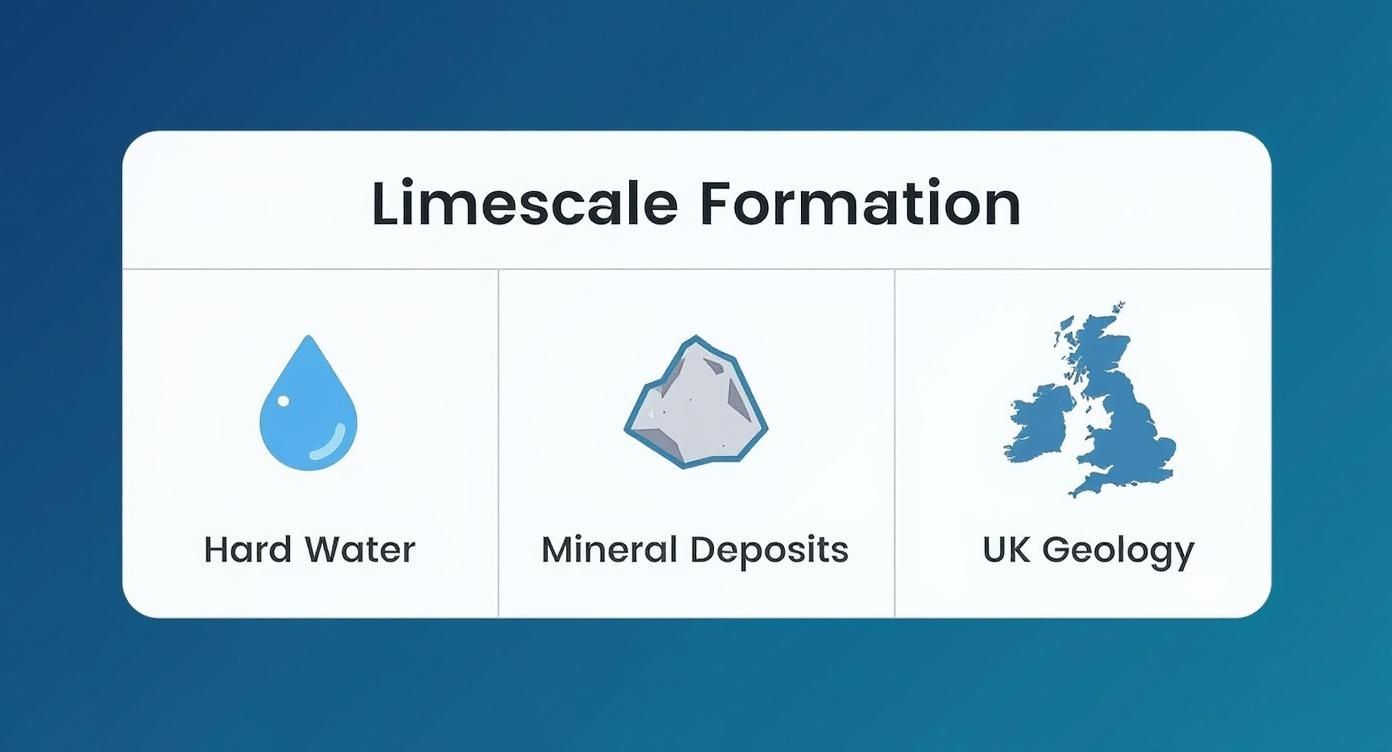
This just goes to show you’re fighting geology as much as you are a cleaning problem!
Choosing Your Limescale Cleaning Agent
To help you decide what's best for your situation, here's a quick comparison of the most common options. This table breaks down their effectiveness, ideal uses, and potential downsides.
| Cleaning Agent | Primary Active Ingredient | Best For | Pros | Cons |
|---|---|---|---|---|
| White Vinegar | Acetic Acid | Light to moderate build-up, shower screens, windows. | Inexpensive, non-toxic, readily available. | Can take longer to work on heavy scale; strong smell. |
| Lemon Juice | Citric Acid | Light stains, taps, small glass areas. | Pleasant smell, natural, mild. | Less potent than vinegar; can be sticky if not rinsed well. |
| Bicarbonate of Soda Paste | Sodium Bicarbonate | Stubborn spots when used as a gentle scrub. | Non-scratching, good for lifting residue. | Not a dissolver on its own; requires manual effort. |
| Commercial Descalers | Sulphamic/Phosphoric Acid | Heavy, old, and stubborn limescale deposits. | Very fast and effective, formulated for the job. | Can be harsh, requires good ventilation and gloves. |
Ultimately, for minor, regular cleaning, vinegar or lemon juice is fantastic. But if you're facing a serious, long-term build-up, a dedicated commercial product will save you a lot of time and effort.
Specialised Commercial Cleaners
When the home remedies just aren't making a dent, or you're dealing with years of neglect, it's time to bring in the professionals. Specialised commercial cleaners contain stronger acids, like sulphamic or phosphoric acid, which are formulated to dissolve thick scale in a fraction of the time.
When you're at the shop, make sure to read the label carefully. You're looking for something explicitly sold as a 'limescale remover' or 'descaler'. Don't just grab a generic bathroom spray, as many are designed for soap scum and won't have the acidic punch needed for hard water minerals.
A Crucial Word of Warning: Stay well away from gritty abrasive powders or harsh scouring creams. It might be tempting to try and scrub the limescale off by force, but you'll almost certainly end up with fine scratches all over the glass, which will permanently dull its finish. The goal is to dissolve the scale, not sand it off.
Your Essential Cleaning Kit
No matter what cleaning solution you go for, having the right tools makes all the difference. A little preparation means you can work more safely, quickly, and get a much better result.
Here's what you'll want to have on hand:
- Microfibre Cloths: Essential for applying solutions and, more importantly, for polishing the glass to a perfect, streak-free shine at the end. They grab every last bit of residue without leaving lint behind.
- Non-Scratch Scouring Pads: For those really caked-on areas, a non-scratch pad gives you that extra bit of friction to help lift the scale after it’s been softened by the acid.
- A Spray Bottle: Perfect for getting an even coating of your cleaning solution across large surfaces like shower doors or windows.
- Rubber Gloves: This is non-negotiable. Protect your hands from the drying effect of acidic cleaners and from being in water for too long.
- A Squeegee: Your best friend for preventing limescale is also your best tool for finishing the cleaning job. A good squeegee is the only way to guarantee a flawless, streak-free dry.
With this kit ready, you're all set to tackle any limescale challenge and bring your glass back to its sparkling best.
Getting Crystal Clear Shower Screens and Doors
The shower is the primary battleground against limescale in most homes. Its constant exposure to hard water creates the perfect environment for that cloudy, chalky film to build up, turning a sparkling clean space into a dull, frustrating eyesore. But don't worry, you can absolutely win this fight with the right techniques.
I'll walk you through some practical, hands-on methods to get your shower glass looking like new again. We’ll cover everything from gentle, natural solutions for regular upkeep to the correct way to handle more powerful commercial products for those really tough jobs.
The Classic White Vinegar Method
White vinegar is the go-to for a reason—its acetic acid is brilliant at dissolving the alkaline mineral deposits that make up limescale. For a standard clean, just mix equal parts white vinegar and water in a spray bottle.
Spray the solution liberally over the entire glass surface, making sure you don't miss a spot. You need to give the acid time to work its magic, so let it sit for at least 15-20 minutes. For more stubborn areas, you can even leave it for up to an hour.
Once it has soaked in, grab a non-scratch pad and gently scrub the glass in a circular motion. You should feel the limescale deposits starting to give way. Finally, rinse the glass thoroughly with clean water and, for a perfect streak-free finish, dry it completely with a squeegee and a microfibre cloth.
Pro Tip for Vertical Surfaces
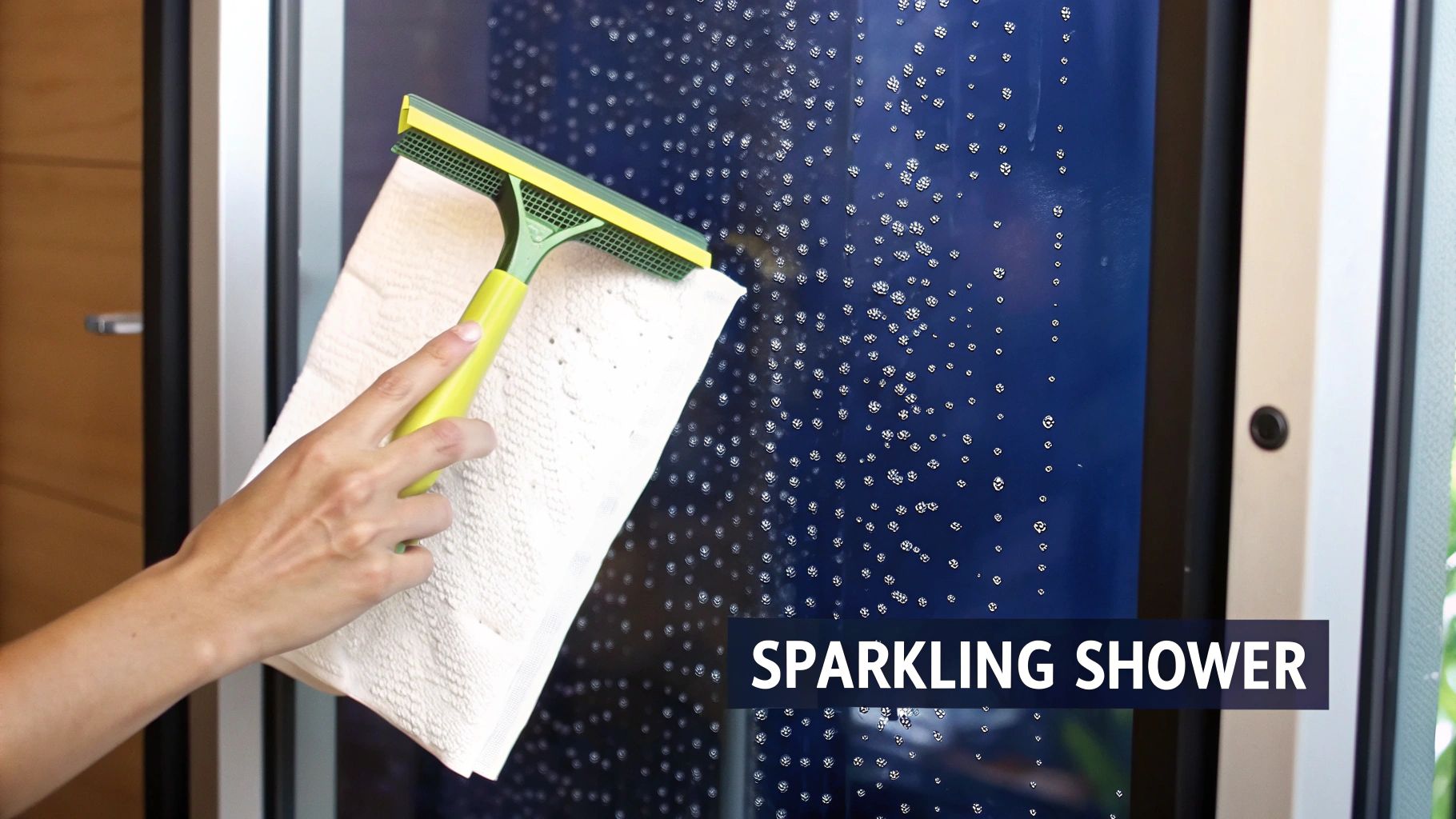
The biggest challenge with shower doors is keeping the vinegar in contact with the glass long enough to work before it all drips down. A simple trick is to soak a few sheets of kitchen roll in your vinegar solution and press them directly onto the glass. They'll cling to the surface, ensuring the acid stays exactly where it's needed most.
Tackling Tougher Buildup with a Gentle Paste
Sometimes, a simple spray just won’t cut it, especially with thick, layered limescale that has built up over months or even years. When you need a bit more oomph without reaching for harsh chemicals, a simple paste made from lemon juice and bicarbonate of soda is an excellent next step.
The citric acid in the lemon juice starts dissolving the scale, while the bicarb acts as a very fine, gentle abrasive to help lift the loosened deposits. This combination gives you both a chemical and a mechanical clean.
Here's how to make it:
- Start by spooning a few tablespoons of bicarbonate of soda into a small bowl.
- Gradually add fresh lemon juice, stirring as you go, until you have a thick, spreadable paste—think toothpaste consistency.
- Using a sponge or your gloved fingers, apply this paste directly to the problem areas on your shower screen.
Let the paste sit and fizz for about 15 minutes. Then, use a non-scratch pad to gently scrub the area before rinsing it all off with warm water. This method works especially well on the lower parts of the shower door where water tends to pool and limescale gets really concentrated. To broaden your understanding of tackling these mineral deposits, you can explore other effective strategies for removing hard water spots that apply to many different glass surfaces.
Using Commercial Limescale Removers Safely
When you’re faced with extremely stubborn or long-neglected limescale, a specialised commercial cleaner might be your only option. These products contain stronger acids designed to cut through thick deposits quickly. However, that extra power means you must use them correctly and safely.
Whether you need these stronger solutions often depends on your local water supply. UK water hardness varies a lot, with the South East and Greater London frequently reporting hard water levels between 200 and 300 mg/L CaCO3. In these regions, acid-based household products are usually effective, but the worst cases may need that commercial boost.
Before you get started, always take these safety precautions:
- Ventilate the Room: Open a window and turn on the bathroom extractor fan. The fumes from powerful cleaners can be potent, so good airflow is essential.
- Wear Protective Gear: Always wear rubber gloves to protect your skin. Safety goggles are also a very wise move to prevent any accidental splashes from getting in your eyes.
- Follow the Instructions: This is critical. Read the product label carefully and follow the manufacturer's directions to the letter. Pay close attention to how long you should leave the product on the glass—leaving it too long could potentially damage the glass or surrounding fixtures.
Apply the cleaner as directed, let it work for the specified time, and then rinse it away completely. A final wipe with a squeegee will reveal a brilliantly clear, restored shower screen, proving that even the most formidable limescale can be defeated.
Tackling Limescale on Windows and Glassware
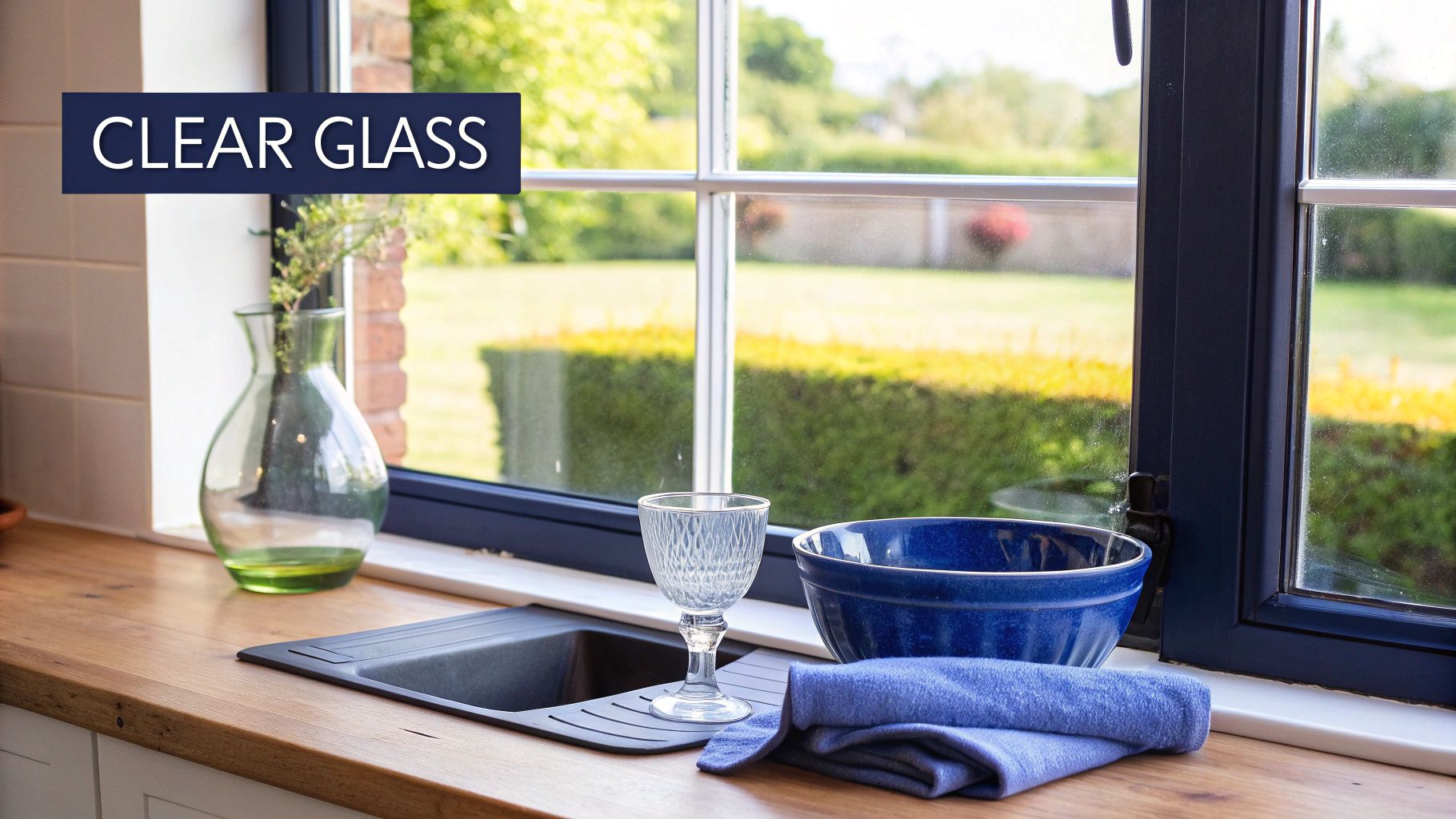
Limescale isn't just a bathroom problem. You'll find it on any glass surface that gets a regular dose of hard water. Think about your windows getting hit by the garden sprinkler, or that cloudy film that builds up on glasses from the dishwasher. These are classic signs of mineral deposits, and while the approach is similar to cleaning a shower screen, you need to be a bit more careful to protect what's around the glass.
It's a particular headache for external windows. Rainwater running off brickwork or stone sills can be loaded with minerals, leaving behind stubborn white streaks that completely spoil the view. The trick is to dissolve these deposits without stripping paint from your window frames or leaving nasty chemical residues behind.
Getting Your Windows Crystal Clear Again
If your windows are plagued by hard water spots, the best place to start is with a simple 50/50 mix of white vinegar and water. Pop it in a spray bottle and apply it directly to the glass, really focusing on the areas with the worst build-up. You’ll want to let it sit for at least 15 minutes; this gives the acetic acid in the vinegar a chance to get to work and break down the limescale.
Once it's had a good soak, a soft microfibre cloth is all you need to gently rub the stains away. If you’ve got some really stubborn patches, don't be afraid to give it a second application or just let it soak for a bit longer. When the limescale is gone, give the window a thorough rinse. For a deeper dive into this, you can find more proven methods to get rid of water spots on windows.
A quick word of warning for anyone with wooden frames: vinegar can be harsh on painted or varnished surfaces. To avoid damage, try spraying the solution onto your cloth first, not directly onto the glass. It gives you much better control over where the mixture goes.
To get that perfect, streak-free finish like the pros, do a final rinse with deionised water and dry it off with a squeegee. This is a game-changer because it stops new mineral spots from forming as the water evaporates. If you're chasing that flawless result every time, our guide on professional window cleaning techniques has more detailed advice.
Bringing Cloudy Glassware and Vases Back to Life
Those same mineral deposits can make your drinking glasses, coffee pots, and vases look perpetually grubby, no matter how many times you wash them. That cloudy film is the tell-tale sign of hard water build-up, but the good news is, it's completely reversible.
For smaller items like glasses, a simple soak does wonders. Here’s how I do it:
- Mix the solution: Fill your sink or a basin with warm water and add about one cup of white vinegar for every four cups of water.
- Submerge everything: Pop your cloudy glasses, vases, or carafes into the vinegar solution. Make sure they're completely covered.
- Let it soak: Leave them for at least an hour. If the build-up is really bad, you can leave them for a few hours or even overnight without any issue.
- A gentle scrub for leftovers: If any stubborn spots remain, a little paste made from bicarbonate of soda and water, rubbed on with a soft cloth, will shift them.
- Rinse and dry properly: This last part is key. Rinse each piece under clean running water to get rid of any vinegar traces, then dry them immediately with a lint-free microfibre cloth. This is what stops new water spots from forming and leaves them sparkling.
This soaking method is completely food-safe and a fantastic way to restore the shine to your glassware without reaching for harsh chemicals. It just goes to show that with a bit of patience, even the most stubborn limescale can be beaten with simple household ingredients.
Advanced Tactics for Stubborn Limescale Build-up
When a standard vinegar soak and a bit of elbow grease just aren't cutting it, you know you’re up against some serious, well-established limescale. This is common in homes with very hard water or on surfaces that haven’t seen a deep clean in years. The temptation is to just scrub harder, but that's a surefire way to scratch the glass. It’s time to escalate your approach.
These next-level methods combine targeted chemical action with a bit of gentle mechanical force, giving you the power to break down and lift away even the most stubborn mineral deposits without damaging the surface.
Creating a Mild Abrasive Paste
For those really caked-on patches, especially at the bottom of a shower door where water tends to pool, a simple spray just won't do. This is where a mild abrasive paste works wonders. By mixing bicarbonate of soda with a small amount of water or white vinegar, you can create a thick, effective slurry.
Slather this paste directly onto the worst of the limescale. If you've used vinegar, you'll see it start to fizz—that's the chemical reaction breaking down the calcium carbonate. The fine bicarb particles add just enough friction to help scrub away the loosened scale without harming the glass. Let it sit for 10-15 minutes, then work it with a non-scratch pad in a firm, circular motion to lift the residue.
Using a Plastic Scraper After an Acid Soak
After letting an acidic solution do its thing for at least an hour, a lot of the limescale will have softened up but might still be clinging stubbornly to the glass. To get rid of these weakened layers, a simple plastic scraper or even an old credit card can be incredibly effective.
Hold the edge at a shallow angle to the glass and use steady, firm pressure to gently push the scale away. Whatever you do, never use a metal blade; it will gouge the glass in a heartbeat. This technique is brilliant for those thick, crusty patches that have built up over a long time.
A Crucial Note of Caution: The most persistent limescale might have you reaching for something more aggressive, like steel wool. If you feel you have no other choice, only ever use ultra-fine #0000 grade steel wool. Test it on a small, hidden corner first to be certain it won’t leave micro-scratches. And always use it wet, with very light pressure.
When to Consider Stronger Commercial Descalers
If home remedies still aren't getting the job done, it might be time to bring in a more powerful commercial descaler. These products are specifically formulated with stronger acids, like sulphamic or phosphoric acid, designed to dissolve heavy mineral build-up fast.
Before you even open the bottle, remember that safety is absolutely non-negotiable when you're handling chemicals this potent.
- Ventilate the area properly: Open a window and switch on an extractor fan. The fumes can be quite strong.
- Gear up: Rubber gloves are a must to protect your skin, and I’d highly recommend safety goggles to prevent any accidental splashes from getting in your eyes.
- Follow the instructions to the letter: Stick to the manufacturer's directions on application and timing. Leaving a strong chemical on for too long can easily damage surrounding seals, frames, and fittings.
These powerful solutions are really the final step before you might need to call in the experts. For a deeper dive into achieving those perfect, streak-free results, our guide to professional glass cleaning is packed with more expert advice and techniques.
How to Stop Limescale from Coming Back
After winning the battle against stubborn limescale, the last thing you want is for it to creep back. The best defence is a good offence, and thankfully, preventing limescale is a lot less work than scrubbing it off later. It's all about building a few simple habits to keep those glass surfaces gleaming.
Your best friend in the fight against returning limescale is surprisingly simple: a squeegee. Mineral deposits only get left behind when water evaporates, so the trick is to get the water off before it has a chance to dry. Giving the glass a quick wipe-down with a squeegee after every shower takes less than 30 seconds but makes a world of difference. This one habit stops water droplets in their tracks.
Build a Simple Maintenance Routine
To really stay on top of things, a weekly maintenance spray is a brilliant idea. You don't need anything harsh for this. A simple mix of one part white vinegar to three parts water in a spray bottle works perfectly. Once a week, just give your shower screen or windows a light mist and wipe them down with a microfibre cloth.
This quick once-over helps dissolve any minor mineral traces before they can build up into that frustrating cloudy film. It's a small effort that pays off big time in keeping your glass crystal clear. This approach is especially useful for large glass surfaces, and if you're aiming for that flawless, professional finish, understanding the role of pure water is crucial. You can see how the pros use it in advanced solar panel cleaning techniques, where a spot-free result is non-negotiable.
The golden rule of limescale prevention is straightforward: don't let hard water sit on your glass. By drying surfaces promptly and using a weak acidic spray for maintenance, you’re tackling the problem at its source instead of dealing with the stubborn mess later on.
Think About a Long-Term Fix
If you live in a particularly hard water area here in the UK, the daily wiping and weekly spraying can start to feel like a never-ending chore. For a more permanent fix, a water softener is the ultimate solution. These systems are plumbed into your home's main water supply and work by removing the very minerals—calcium and magnesium—that cause limescale in the first place.
By softening the water at its source, you stop limescale from ever forming on your shower screens, windows, taps, and even inside your kettle. It's a bigger investment up front, but it delivers a genuinely limescale-free home and saves you countless hours of cleaning in the long run.
Got a Question About Tackling Limescale on Glass?
Even when you know the basics, a few questions always seem to crop up mid-job. Let's run through some of the most common ones we get asked about how to remove limescale from glass, so you can get the job done right.
How Long Should I Leave Vinegar on Glass?
For a bit of light, fresh limescale, you don't need long. A good 15-30 minute soak with a vinegar solution is usually enough for the acid to work its magic and dissolve those pesky mineral spots.
But what about that thick, chalky build-up that's been there for ages? For that, you'll need a bit more patience. Plan to leave the solution on for at least an hour. A great trick for vertical surfaces like shower doors is to soak some kitchen roll in your vinegar mix and stick it directly onto the glass. This keeps the acid in constant contact with the scale, doing the hard work for you.
Can I Use Bleach to Remove Limescale?
In a word: no. This is a myth we see all the time. Bleach is a fantastic disinfectant for killing germs and mould, but it’s completely useless against mineral deposits like limescale.
Limescale is alkaline, so you need an acidic cleaner – like vinegar or citric acid – to break it down chemically. What's more, mixing bleach and acid is incredibly dangerous; it creates toxic chlorine gas. Stick to the right tool for the job.
If there's one thing to remember, it's this: for limescale, always grab an acid, never bleach. Using the right chemistry isn't just more effective, it's a whole lot safer.
Will Vinegar Damage Seals or Metal Frames?
This is a smart question. Strong acids, if left for too long, can definitely take their toll on certain rubber seals or coated metal finishes.
The best approach is to be precise. Try to keep your cleaning solution on the glass itself. When it’s time to rinse, give the seals and frames a really thorough wash-down as well to make sure no acid is left behind. For your regular weekly wipe-down, using a much weaker mix (think one part vinegar to two parts water) is a safer bet for everything surrounding the glass.
Want that guaranteed, streak-free finish every single time? The professional's secret is all in the final rinse. Using ultra-pure water is the only way to leave glass spotless, with zero mineral deposits left behind. At 24 Pure Water, our nationwide self-service filling stations give you on-demand access to deionised water, perfect for achieving pristine results on windows, cars, and shower screens. Find your nearest station and discover the difference pure water makes. Learn more at https://24purewater.co.uk.