Using RO water for a fish tank gives you the ultimate blank canvas. It lets you create the perfect aquatic environment from the ground up by taking tap water and purifying it back to its simplest form. This process removes the chlorine, heavy metals, and unpredictable mineral content that can stress sensitive fish or fuel relentless algae growth.
Why RO Water Is a Game-Changer for Aquariums
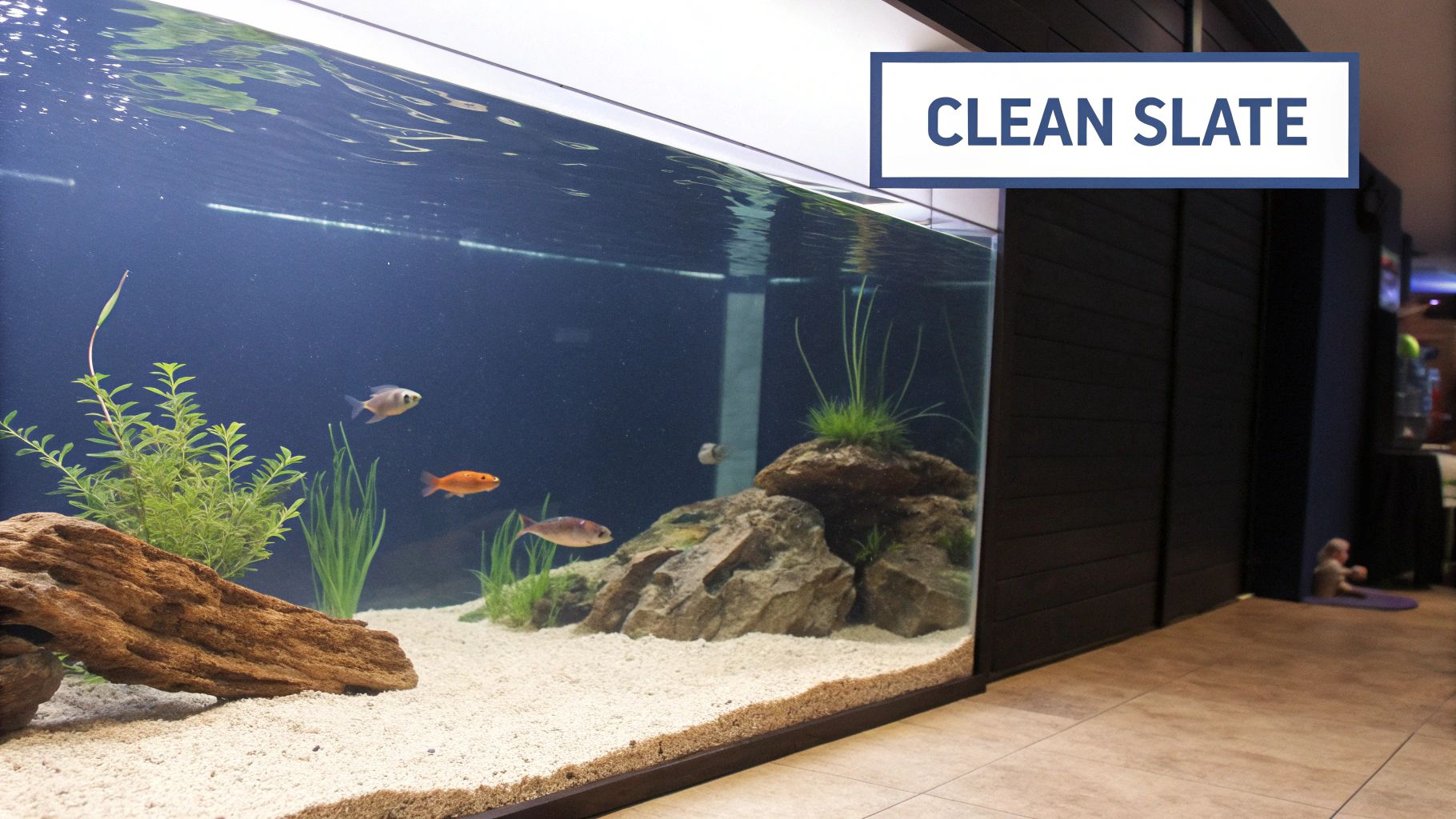
Think of your tap water like a pre-mixed paint. Depending on where you live in the UK, its colour and consistency can be completely different. Some areas have incredibly 'hard' water that’s loaded with calcium and magnesium, while others have naturally 'soft' water. For any fishkeeper, that unpredictability is a constant headache.
Reverse Osmosis (RO) water cuts right through that problem. It works by stripping out up to 99% of all impurities, including the nitrates and phosphates that are notorious for causing algae blooms. What you're left with is a pure, neutral base. This level of control isn't just a nice-to-have; for many delicate species, it's absolutely essential.
By starting with pure, demineralised water, you remove all the guesswork. You are no longer reacting to your tap water's chemistry; you are proactively building the exact water parameters your fish, plants, or corals need to flourish.
This hands-on, precise approach to water management is why so many dedicated hobbyists are making the switch. The UK's aquarium market has seen impressive growth, driven by people committed to providing the best possible care for their aquatic pets. For those looking to dive deeper, you can find further insights into water quality and filtration.
To really see the difference, let’s compare standard tap water with what you get after the RO process.
UK Tap Water vs RO Water: A Quick Comparison
| Parameter | Typical UK Tap Water | Pure RO Water |
|---|---|---|
| Total Dissolved Solids (TDS) | Varies widely (50 – 500+ ppm) | Near zero (0-10 ppm) |
| Hardness (GH/KH) | Ranges from soft to very hard, often unstable | Zero (no mineral content) |
| Chlorine/Chloramine | Present as a disinfectant | Removed during the purification process |
| Nitrates/Phosphates | Often present, fuelling algae | Removed, helping to control algae |
| Heavy Metals & Pollutants | Can be present from old pipework or agricultural runoff | Almost completely removed |
| pH | Typically alkaline (7.0-8.5), but can fluctuate | Naturally acidic (around 6.0-6.5) when pure |
This table shows just how much of a "reset" RO water provides, giving you a completely clean foundation to build upon.
The Power of a Clean Slate
Starting with RO water means you can meticulously build the ideal environment. Instead of constantly fighting with fluctuating pH levels or worrying about unknown contaminants from old pipes, you get to add back only the essential minerals your tank needs. This process, known as remineralisation, puts you in the driver's seat.
This precision is why so many serious aquarists depend on purified water. It helps prevent common issues like sudden pH swings, which can affect up to 40% of standard tap-water setups. You can read more about how to achieve this stability with our ultra-pure water for aquariums.
Ultimately, using RO water is about creating a stable, safe, and predictable home for your aquatic life. It ensures they don't just survive—they thrive. It's the difference between being a water manager and becoming a true habitat creator.
Weighing the Pros and Cons of RO Water
Using RO water in your aquarium can be a game-changer, but it’s not something to jump into without understanding the whole picture. The biggest benefit is having total control. You get a completely pure, stable blank slate to work with, which is non-negotiable for sensitive species like Discus, crystal shrimp, or delicate marine corals. It takes all the guesswork out of dealing with the UK's wildly variable tap water.
This level of control has never been more important. The UK aquarium fish market has seen a drop in imports of 8.26% year-over-year in 2024, largely due to stricter regulations. This means we're relying more on captive-bred fish, which now make up 65% of the market. Sadly, poor water quality—often a direct result of unsuitable tap water—is a massive factor in fish losses, contributing to 30-50% of deaths in new setups. You can see the full picture in the latest UK aquarium market research.
But here’s the crucial catch: pure RO water is an empty canvas. In the process of stripping out all the bad stuff, it also removes every single essential mineral that your fish, plants, and invertebrates need to live.
Understanding the Key Drawbacks
The single biggest danger of using raw, un-remineralised RO water is osmotic shock. Fish have a finely-tuned internal balance of salts and minerals. Plunging them into demineralised water forces their cells to take on too much water, which can be catastrophic and often fatal.
On top of that, pure RO water has absolutely zero Carbonate Hardness (KH). KH is what keeps your pH stable. Without it acting as a buffer, your tank’s pH can crash dramatically with no warning. This is why it's vital to grasp that ultrapure water is not the same as drinking water. You have to treat it as a core ingredient, not the final product.
Think of pure RO water like a bag of plain flour. A baker wouldn't just use flour to make a cake; they need to add eggs, sugar, and butter to turn it into something delicious. In the same way, an aquarist has to add essential minerals back into RO water to create a safe, healthy home for their fish.
Weighing the Practicalities and Costs
Once you decide RO water is the way to go, you’ve got a practical choice to make: invest in your own home unit or use a local filling station.
-
Home RO Units: These are fantastic for the convenience of having pure water on tap. The initial outlay is usually somewhere between £200 to £500. The downside is the ongoing maintenance, like replacing filters, and the fact they produce a fair bit of wastewater to create the pure stuff.
-
Water Filling Stations: For a lot of people, especially those with big tanks or not much space, self-service stations are a much simpler solution. You get consistently pure water without the upfront cost of equipment or any maintenance headaches. You just pay for what you use, which can work out to be a lot friendlier on the wallet.
Ultimately, choosing to use ro water for a fish tank is a commitment. It’s about creating the absolute best environment you can. By understanding the powerful benefits alongside the critical responsibilities, you can make a smart choice that suits your budget, your dedication, and most importantly, the needs of your fish.
Remineralisation: Turning Pure RO into Perfect Aquarium Water
So, you've got your hands on some pure reverse osmosis water. That's the first step, but what comes next is absolutely crucial. You're about to become a bit of a water chemist, carefully adding back the essential minerals your fish and plants need to not just survive, but truly thrive. This process is called remineralisation, and it's how you turn that blank slate of pure RO water into the perfect, customised habitat.
Think of it like being a chef. You've been given the purest, cleanest water possible. You wouldn't just serve it as is; you'd add the precise ingredients needed to create the perfect soup for your specific guests. In this case, your "ingredients" are minerals that create General Hardness (GH) and Carbonate Hardness (KH).
This visual guide shows the core process of preparing your RO water for a fish tank.
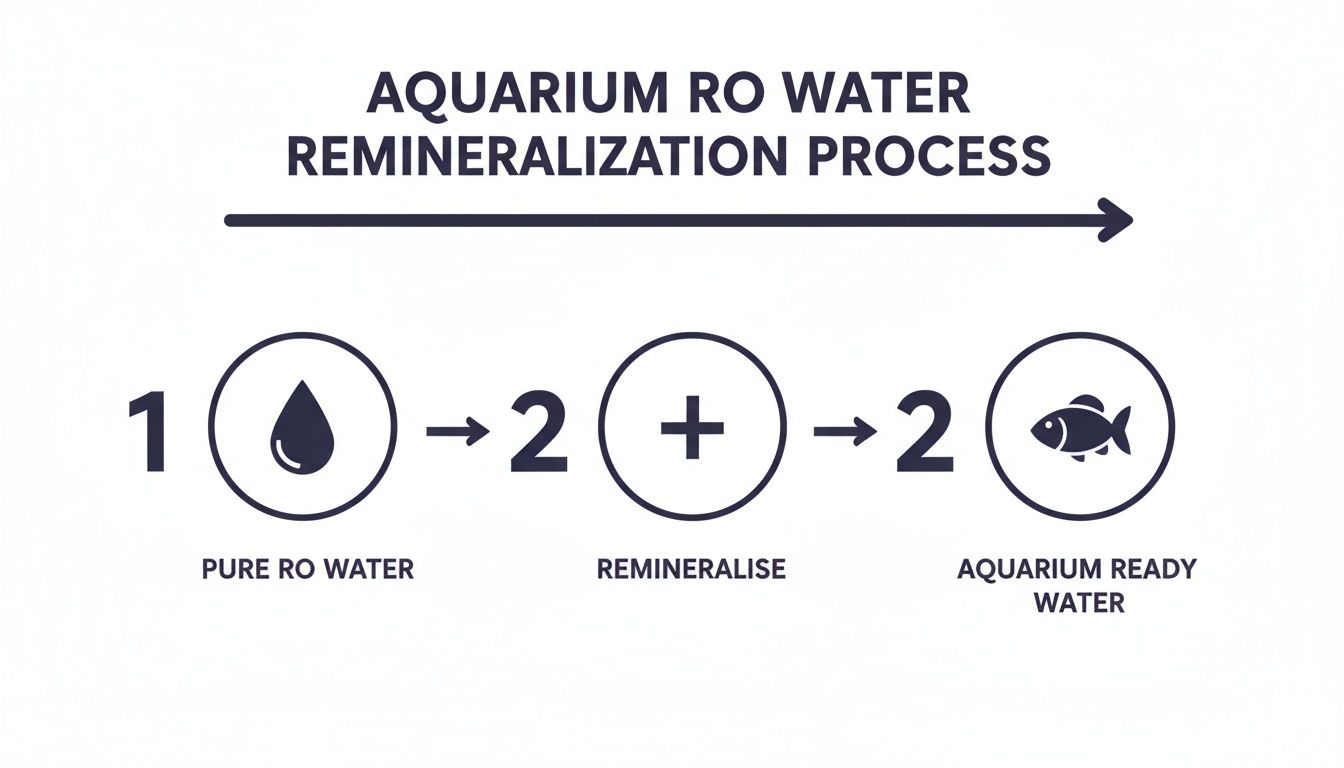
It's a simple flow: start with pure RO, add your specific minerals, and you end up with perfectly stable and safe water for your aquarium.
Getting to Grips with GH and KH
Before you start mixing anything, it's vital to understand what these two parameters actually do. They are the twin pillars holding up stable water chemistry in your tank.
-
General Hardness (GH): This is a measure of the calcium and magnesium in the water. These aren't just fancy extras; fish, shrimp, and snails need them for essential biological functions like developing strong bones and shells, muscle control, and osmoregulation (how they manage their internal water balance). Without enough GH, they can literally fall apart.
-
Carbonate Hardness (KH): Often called alkalinity, KH is all about buffering capacity. It’s the invisible shield that stops your pH from swinging wildly or crashing, which is incredibly stressful for your fish. A stable KH means a stable pH. Simple as that.
If there's one golden rule to remember, it's this: Always remineralise and test your RO water in a separate bucket or container before it ever touches your aquarium. Never, ever add pure RO water or remineralising salts directly into your tank.
A Step-by-Step Guide to Remineralisation
Getting this process right is what makes every water change a success. Stick to these steps, and you'll achieve consistent, safe results every single time.
-
Start with a Clean Slate: Get your RO water from your home unit or a filling station and put it in a clean, food-grade container. A dedicated bucket for water changes is perfect.
-
Pick Your Product: Choose a quality commercial remineraliser made specifically for aquariums. You'll find them in liquid or powder form, and a good one will provide a balanced mix of all the necessary minerals.
-
Dose Carefully: Always read the instructions, but start with a little less than the recommended dose for your target parameters. For instance, if the packet says one scoop for every 20 litres, maybe start with three-quarters of a scoop. It's always easier to add more than it is to take it away.
-
Mix, Mix, Mix: Add the powder or liquid to the RO water and give it a really good stir until it's completely dissolved. A great tip is to drop a small powerhead or circulation pump into the bucket—it does the hard work for you and ensures everything is evenly mixed.
-
Test and Tweak: Let the water settle for about 30 minutes, then grab your liquid test kits and check the GH and KH. Are the numbers where you want them to be? If they're a bit low, add a tiny pinch more of the product, mix again, wait, and re-test. Patience is key here.
-
Match the Temperature: Before you even think about pouring it in, make sure the new water's temperature is the same as your aquarium water. A sudden temperature drop can shock your fish.
-
Perform the Water Change: Once your parameters are spot on and the temperature is matched, you're good to go. You can now safely perform your water change, confident that you're adding perfect water to the tank.
Here’s a quick-reference table to help you dial in the right parameters for your specific setup.
Target Water Parameters for Different Aquarium Setups
This table provides clear, recommended GH, KH, and pH levels for popular types of aquariums, helping you remineralise your RO water accurately.
| Aquarium Type | Target GH (dGH) | Target KH (dKH) | Target pH |
|---|---|---|---|
| Soft Water Community (Tetras, Rasboras) | 4-8 | 2-4 | 6.5-7.2 |
| Shrimp Tank (Crystal Red, Bee Shrimp) | 4-6 | 0-2 | 6.0-6.8 |
| Planted Tank / Aquascape | 6-10 | 3-6 | 6.8-7.4 |
| African Cichlids (Lake Malawi/Tanganyika) | 12-20 | 10-15 | 7.8-8.6 |
| Discus | 3-6 | 1-3 | 6.0-6.5 |
Use these values as your target when you're mixing and testing. It takes the guesswork out of the process and ensures you’re creating the ideal environment for your aquatic inhabitants.
Finding the Best Pure Water Source in the UK
When you need RO water for a fish tank here in the UK, you’ve basically got two main routes to go down. You can either bite the bullet and install your own reverse osmosis unit at home, or you can use one of the self-service pure water filling stations dotted around the country.
Each option has its own set of pros and cons, and the right choice for you will really come down to cost, convenience, and how much faff you're willing to put up with.
Let's start with a home RO unit. There's no denying the convenience of having pure water literally on tap. Many hobbyists opt for under-sink reverse osmosis systems which are great for producing top-quality water whenever you need it.
But that convenience comes at a price. There's the initial outlay for the system itself, plus the ongoing costs of replacing filters and membranes to keep it working properly. You also have to consider the wastewater it produces—it can be quite a shock to learn that several litres of tap water go down the drain for every single litre of pure water you collect. This is a big deal if you're on a water meter or just trying to be mindful of your usage.
The Filling Station Alternative
For a lot of fishkeepers, popping out to a self-service pure water filling station is a much more practical solution. This approach completely sidesteps any need for plumbing, installation, or maintenance at home. It’s an absolute game-changer if you have large tanks that need big water changes, if you're renting and can't modify the plumbing, or if you simply don't have the space.
These stations work on a simple pay-as-you-go basis. You can find places offering ultra-pure, deionised water for as little as 4p per litre, and you know you're getting consistent, lab-grade quality every single time. There's no hefty upfront investment, and you'll never have to worry about changing a filter again.
Using a filling station transforms water collection from a home maintenance chore into a quick and simple errand. You get all the benefits of perfectly pure water without the long-term commitment and upkeep of owning your own system.
This "water on demand" model gives you total flexibility. You can find out more about a reliable network of 24-hour pure water filling stations that operate across the UK. Ultimately, the best source really depends on your situation, forcing you to weigh the convenience of a home unit against the simplicity and cost-effectiveness of a filling station.
Putting It All Together: Your Practical Checklists
Knowing the theory behind using RO water for a fish tank is a great start, but the real confidence comes from putting it into practice. Think of these checklists as your step-by-step guides for turning complex water chemistry into simple, repeatable tasks that you'll soon be doing without a second thought.
This hands-on approach is more important than ever. In the UK, the aquarium hobby is booming, with 25% of pet owners now keeping fish. But getting it right matters. For marine tanks, some studies show a staggering 55% fail within the first year, often due to unstable water chemistry—a problem RO water is designed to solve. If you're curious, you can read more about the growing aquarium market in Europe on Fortune Business Insights.
Let's walk through a couple of common scenarios. These will help you build your muscle memory and make sure every litre of water you prepare is a step towards a healthier tank.
Checklist for a New 60-Litre Shrimp Tank
Setting up a home for delicate species like Crystal Red Shrimp means getting the water perfect from day one. They need soft, acidic water, so we're aiming for a specific GH and almost zero KH. Here's how to do it.
-
Source Your Water: Get your hands on 60 litres of pure RO water. Before you do anything else, check it with a TDS meter—you're looking for a reading between 0 and 10 ppm.
-
Get a Mixing Bucket: Find a clean, food-grade bucket that's big enough for the full 60 litres. Critically, never mix your minerals directly in the aquarium itself. Always do it separately.
-
Dose the Remineraliser: You'll want a GH-only remineraliser designed specifically for bee shrimp, like Salty Shrimp Bee Mineral GH+. The goal is a GH of 5 dGH. To start, add a little less than the manufacturer suggests for your water volume. It's always easier to add more than to take it away.
-
Mix, Mix, Mix: Add the powder to the bucket and pop in a small powerhead or circulation pump to get the water moving. Let it run for at least 30 minutes to ensure everything is completely dissolved.
-
Test and Tweak: Now grab your liquid test kit and measure the GH. Is it below 5 dGH? Add a tiny bit more powder, let it mix for another 15 minutes, and test again. Repeat this process until you hit your target. Your KH should stay right down at or near 0 dKH.
-
Temperature Match: Once your parameters are spot on, put a heater into the mixing bucket and bring the water up to the tank's target temperature (around 22°C for these shrimp).
Checklist for a 20% Water Change on a 200-Litre Reef Tank
In a reef tank, stability is the name of the game. A water change should support that stability, not rock the boat. This process ensures your new water is an identical match to what's already in the tank.
-
Measure Out the RO Water: For a 20% change on a 200-litre tank, you'll need 40 litres. Pour this into a dedicated, scrupulously clean mixing container.
-
Bring it to Temperature: Place an aquarium heater in the water and set it to your tank's temperature, which is usually around 25-26°C.
-
Add Salt and Get it Moving: Carefully weigh out your chosen reef salt mix. Follow the instructions on the tub to reach a target specific gravity of 1.025. Add a powerhead to the bucket to create vigorous water movement—this is crucial for dissolving the salts properly.
-
Check Salinity: Let the water mix for a few hours. Then, use a calibrated refractometer to check the specific gravity. If it's not quite 1.025, you can adjust by adding a tiny bit more salt or a splash of RO water.
-
Test the Big Three: Before that water goes anywhere near your display tank, test it. You need to confirm that the Alkalinity (KH), Calcium, and Magnesium levels of the new water match your tank's established parameters. This is a non-negotiable step.
-
Make the Swap: Once everything matches perfectly, you're ready. Slowly siphon 40 litres of old water out of your aquarium, and then gently pump or pour the new, perfectly prepared saltwater in.
By following these checklists, you're guaranteeing that every drop of ro water for a fish tank you introduce is safe, stable, and precisely what your inhabitants need to thrive.
Got Questions About RO Water? We've Got Answers
Even with the best plan, you're bound to have a few questions when you first start using RO water for your fish tank. Let's tackle some of the most common queries we hear from aquarists across the UK. Getting these sorted will help you feel more confident and set you up for success.
Think of this as your go-to troubleshooting guide, covering those last few details and making sure everything we've discussed is crystal clear.
Can I Just Tip Pure RO Water Straight into My Tank?
In a word: no. This is one of the most important rules to remember, and getting it wrong can be disastrous. Pure, unadulterated RO water is incredibly dangerous for fish, shrimp, and other aquatic life.
It has zero General Hardness (GH) and zero Carbonate Hardness (KH), which are minerals your tank’s inhabitants rely on for basic biological functions like osmoregulation. What's more, the complete lack of KH means there's no buffer, leaving it vulnerable to a sudden, catastrophic pH crash. You must always remineralise RO water to the right levels before it ever touches your aquarium.
How Often Should I Test My Remineralised Water?
Every. Single. Time. You need to test every batch of water you mix up before it goes into the tank for a water change. Even if you think your measurements are perfect, tiny variations can happen. It's not worth the risk, so make testing a non-negotiable step.
A good liquid test kit for GH and KH is an absolute must-have. If you want to take it a step further, a TDS (Total Dissolved Solids) meter is a fantastic tool. It gives you a quick way to check the purity of your RO water straight from the source (you're aiming for 0-10 ppm) and then confirm the mineral level of your finished, remineralised water.
Think of testing as your pre-flight check. A pilot wouldn't dream of taking off without checking their instruments, and an aquarist shouldn't add new water without verifying its parameters. This simple habit is the cornerstone of a stable, healthy tank.
Isn't Deionised Water the Same as RO Water?
For our purposes as fishkeepers, yes, they are functionally identical. The science behind how they're made is different – Reverse Osmosis pushes water through a super-fine membrane while Deionisation (DI) uses special resins to pull out impurities – but the result is the same: ultra-pure water with virtually no dissolved solids.
In fact, many of the best home units are RO/DI systems, using both methods to get the purest water possible. The water you'll find at self-service filling stations is often deionised and is perfect for aquarium use. Just treat it exactly like you would RO water: it's a blank slate that needs remineralising.
Do I Really Need RO Water for Hardy Fish like Guppies?
It's true that tough-as-nails fish like guppies and platies can handle a pretty wide range of water conditions. But using remineralised RO water gives you one huge advantage: absolute consistency. UK tap water can change throughout the year, sometimes without any warning from your local water company.
These sudden shifts can be a hidden source of stress for your fish, even the hardy ones. By starting with RO water, you create a perfectly stable and predictable world for them, which leads to better health, more vibrant colours, and less stress all around. It's especially useful if your tap water is rock hard or has nitrates already in it. You stop reacting to your water and start controlling it.
Ready to take full control of your aquarium’s water chemistry? With 24 Pure Water, you can access ultra-pure, deionised water from our nationwide network of 24/7 self-service filling stations. It’s the simplest, most cost-effective way to get the perfect blank canvas for your tank, with prices from just 4p per litre. Find your nearest station and start creating the ideal environment for your fish today.
Visit us at https://24purewater.co.uk to learn more.