Investing in solar panels is a brilliant step towards energy independence and a greener future. However, to ensure your system operates at peak efficiency and delivers the expected return, proactive maintenance is crucial. Neglecting your panels is like ignoring an oil change on a high-performance car; it leads to gradual decline and costly problems. This is where understanding the benefits of proactive vs reactive maintenance becomes vital for protecting your asset.
This guide provides a comprehensive solar panel maintenance checklist, breaking down the essential tasks that safeguard your investment, ensure safety, and keep the energy flowing. We'll cover everything from simple visual inspections and debris removal to the significant impact of a professional clean using ultra-pure water. Following these steps will give you the knowledge to maintain your system's health and longevity. Let's dive into the key actions to keep your solar array performing flawlessly.
1. Visual Inspection and Damage Assessment
A cornerstone of any effective solar panel maintenance checklist is a thorough visual inspection. This proactive step involves carefully examining your panels to identify physical damage, degradation, or potential hazards before they escalate into costly repairs or significant power loss. A regular, detailed look at your system's condition is the first line of defence in protecting your investment and ensuring optimal performance.
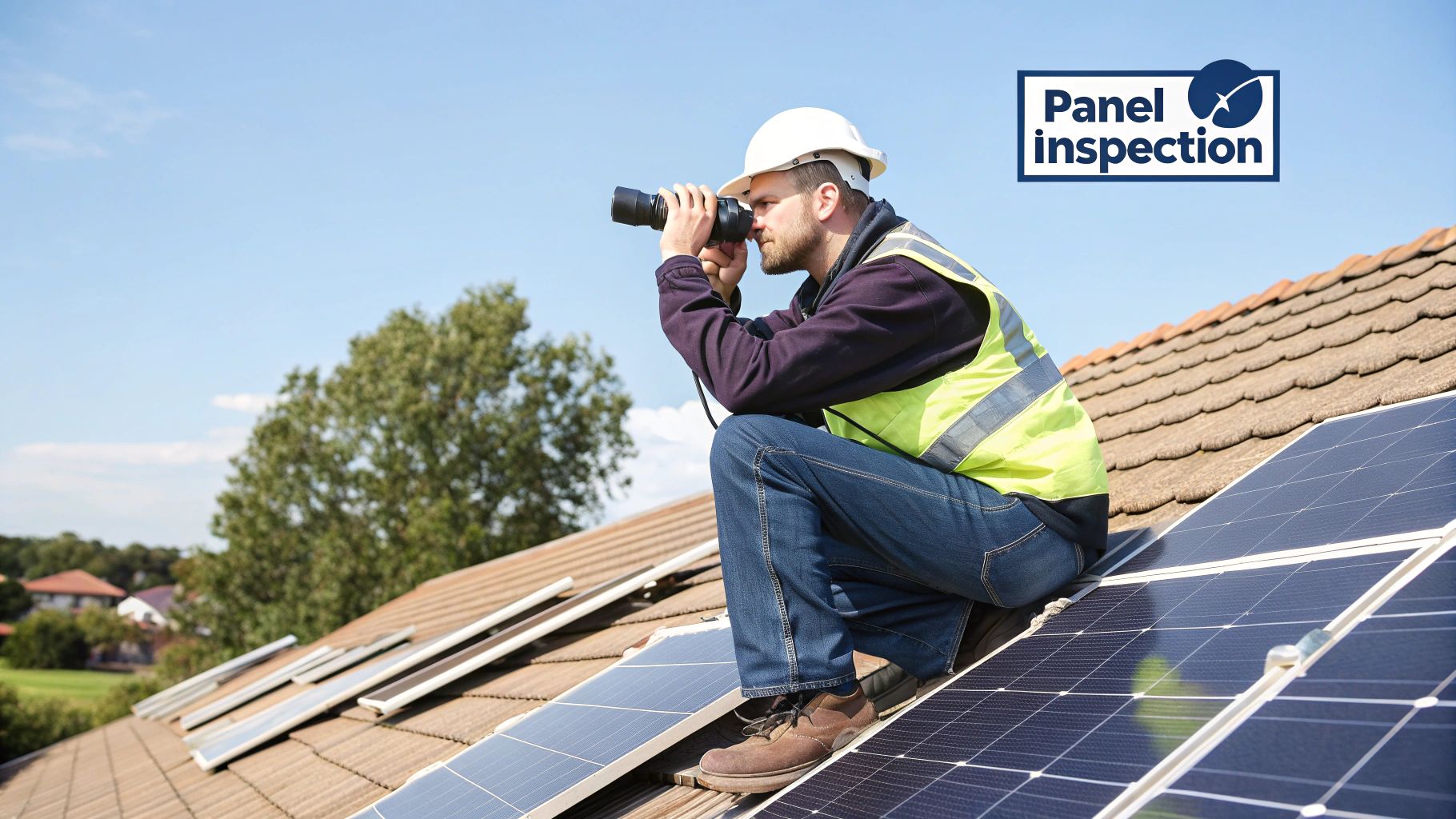
This process goes beyond a quick glance. It means methodically checking for specific issues such as cracks, chips, or scratches on the glass surface. You should also look for signs of discolouration or "hot spots" (localised areas of overheating), which can indicate underlying cell defects. Additionally, inspect the frame for signs of corrosion or warping and ensure all mountings are secure and structurally sound.
Key Implementation Steps
To make your inspection effective, follow a structured approach:
- Schedule Quarterly Checks: Perform a detailed visual inspection at least once per quarter and always after severe weather events like hailstorms or high winds.
- Use Ground-Level Aids: For safety, start your inspection from the ground using binoculars to get a closer look without needing to access the roof.
- Document Everything: Take clear photographs of any potential issues you find. This creates a historical record, helping you track whether a problem is worsening over time and providing clear evidence for warranty claims.
This simple yet crucial task allows you to catch minor problems, such as a loose mounting bolt or a small crack, before they compromise your entire system's safety and efficiency.
2. Panel Cleaning and Debris Removal
A critical component of any solar panel maintenance checklist is the systematic removal of dirt, dust, leaves, and other debris. Clean panels allow maximum sunlight to reach the photovoltaic cells, directly impacting energy production. Over time, accumulated grime can significantly reduce system efficiency, meaning you generate less power and see a lower return on your investment. Regular cleaning is one of the most effective ways to ensure your panels operate at peak performance.
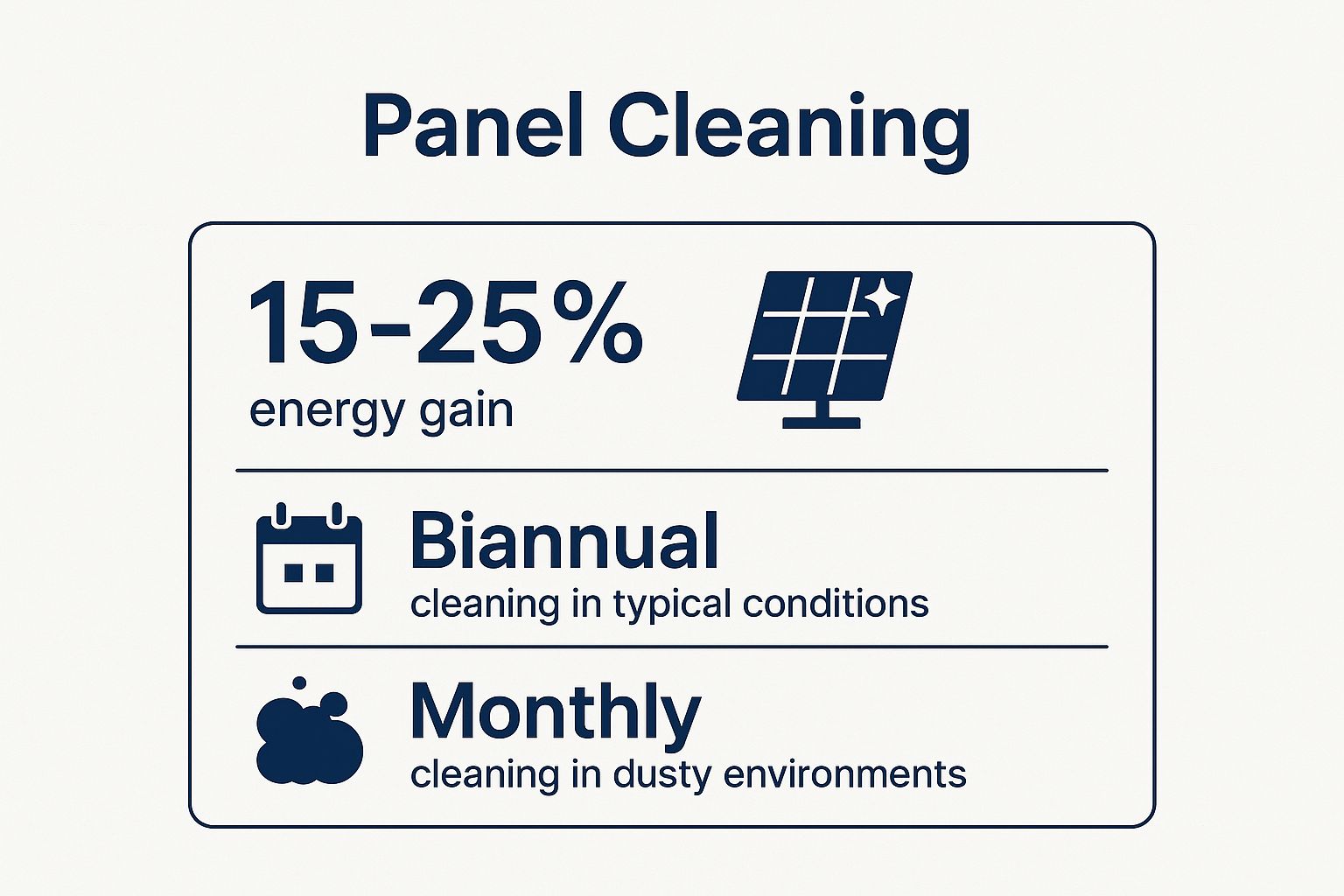
This infographic highlights the significant performance gains from regular cleaning and offers general frequency guidelines. The statistics underscore that a simple cleaning schedule can yield a substantial increase in energy output, especially in environments prone to dust or pollution.
This process involves more than just a quick hose down, which can leave mineral deposits. It requires a careful, methodical approach to wash away contaminants without scratching the panel's surface. For instance, residential systems in dusty areas have reported efficiency gains of up to 30% after a professional clean, demonstrating the tangible benefits of keeping your panels spotless.
Key Implementation Steps
To clean your panels safely and effectively, follow these best practices:
- Time It Right: Clean your panels early in the morning or on an overcast day when they are cool. Applying cold water to hot panels can cause thermal shock and damage the glass.
- Use Soft Materials: Always use a soft brush or microfibre cloth. Avoid abrasive sponges or harsh chemicals that could scratch the anti-reflective coating on the glass.
- Rinse Thoroughly: After washing, rinse the panels completely to remove any cleaning solution residue, which can attract more dirt. Using ultra-pure water is ideal for a streak-free finish. Learn more about the professional solar panel cleaning process.
By integrating regular cleaning into your solar panel maintenance checklist, you can prevent long-term efficiency losses and maximise your system's energy production year-round.
3. Electrical Connection Monitoring
Beyond the physical panels, the integrity of your system's electrical network is paramount for safety and efficiency. Electrical connection monitoring is a critical part of any solar panel maintenance checklist, focusing on the unseen components that transport energy. It involves regularly inspecting all wiring, connections, and electrical components to prevent power loss, system failures, and potential fire hazards, ensuring your installation operates safely and at peak performance.
This essential check involves more than just a quick look. It means a systematic review of DC and AC connections, grounding systems, and junction boxes for any signs of corrosion, physical damage, or loosening. Over time, exposure to the elements and temperature fluctuations can cause connections to degrade or become insecure. Identifying these issues early is vital for maintaining the long-term health and safety of your solar power system.
Key Implementation Steps
To ensure your electrical system remains in top condition, follow these steps:
- Schedule Annual Professional Checks: While you can look for obvious damage, have a qualified electrician or solar technician perform a detailed electrical inspection annually. This is crucial for safely assessing connections inside junction boxes.
- Use Thermal Imaging: A professional can use thermal imaging cameras to identify "hot spots" in your wiring or connections. These indicate high resistance and potential failure points that are invisible to the naked eye.
- Prioritise Safety: Always follow correct lockout/tagout procedures before any hands-on inspection. Never attempt to tighten or adjust electrical components unless you are a certified professional and the system is fully de-energised.
This diligent monitoring protects against immediate risks like electrical fires and also prevents gradual performance degradation, ensuring you get the maximum return on your solar investment.
4. Inverter Performance Monitoring
A vital, yet often overlooked, part of any solar panel maintenance checklist is monitoring your inverter's performance. The inverter is the brain of your solar system, converting the direct current (DC) electricity your panels produce into alternating current (AC) electricity for your home or the grid. Since inverters are a common point of failure, regularly tracking their functionality is crucial for maintaining system efficiency and catching problems early.
This process involves more than just checking if the system is on; it requires analysing data on energy conversion and output. Leading manufacturers like SMA and Fronius provide sophisticated monitoring platforms that allow you to track real-time and historical performance. A sudden drop in efficiency or frequent shutdowns can signal an internal fault, overheating, or a grid-related issue that needs immediate attention.
Key Implementation Steps
To effectively monitor your inverter, integrate these practices into your routine:
- Set Up Performance Alerts: Configure your monitoring software to send you an alert if energy production drops by more than a pre-set threshold, such as 5%, compared to expected output.
- Analyse Historical Data: Regularly review performance trends. A gradual decline in efficiency over several months can indicate component degradation, allowing for proactive maintenance before a complete failure occurs.
- Ensure Proper Ventilation: Periodically check that the inverter's cooling vents are clean and free from obstructions like leaves or debris. Overheating is a primary cause of reduced performance and long-term damage.
By actively monitoring your inverter, you ensure this critical component is working correctly, safeguarding your system’s overall energy yield and financial returns.
5. Mounting System and Structural Integrity Check
A fundamental part of any solar panel maintenance checklist is verifying the system's structural foundation. This involves a comprehensive inspection of all mounting hardware, including rails, clamps, and bolts that secure your panels. This critical safety check ensures the array remains firmly attached, capable of withstanding environmental stresses like high winds and heavy snow, and prevents potential damage to your roof or property.
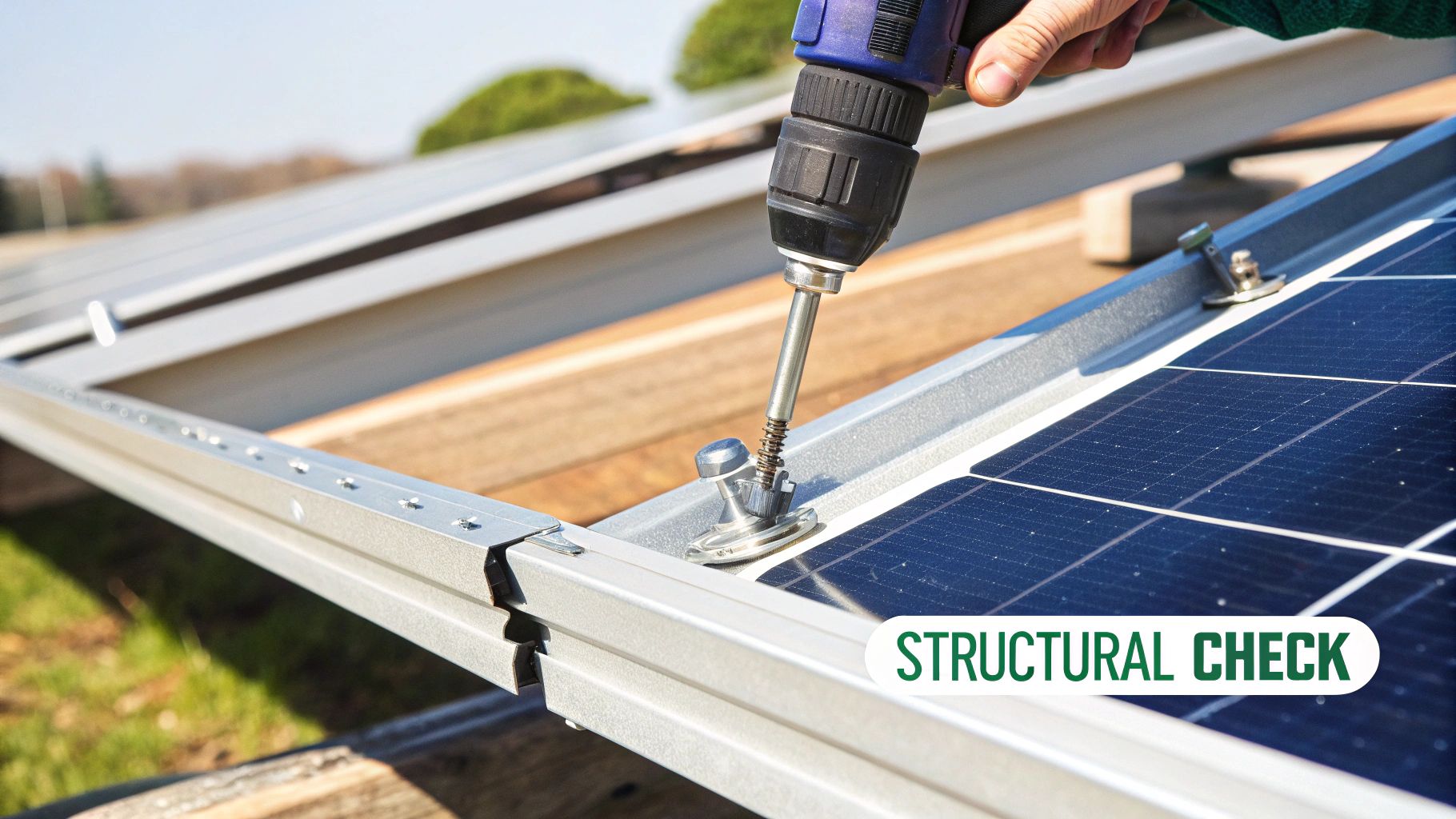
The inspection goes beyond simply checking if the panels are still in place. It requires a detailed look at the condition of each component, searching for signs of corrosion, metal fatigue, or loose fittings. Ensuring the mounting system maintains its integrity is vital not only for the safety of the installation but also for maintaining the optimal tilt and orientation of the panels, which directly impacts energy production and long-term performance.
Key Implementation Steps
To ensure your mounting system is secure and functioning correctly, follow these structured steps:
- Perform Annual Torque Checks: At least once a year, verify that all bolts and clamps are tightened to the manufacturer's specified torque settings. This is especially important after the first year of installation as components can settle.
- Conduct Post-Weather Inspections: Always inspect the mounting system immediately following severe weather events, such as gale-force winds or unusually heavy snowfall, to identify any shifting or damage.
- Document and Monitor: Keep a detailed log of your inspections, taking photographs of any corrosion, loose parts, or potential stress points. This record helps in tracking wear over time and is invaluable for any warranty claims.
Regularly confirming the structural soundness of your solar array provides peace of mind and safeguards your investment against catastrophic failure.
6. Performance Analysis and Energy Output Tracking
A critical element of any solar panel maintenance checklist is the ongoing analysis of your system's energy production. This involves systematically tracking your energy output and comparing it against expected performance levels. By monitoring this data, you can quickly identify inefficiencies, diagnose underlying problems, and ensure your investment is delivering the promised return. This data-driven approach moves maintenance from being purely reactive to proactively optimising your system's health.
This process is more than just checking your electricity bill. It requires using dedicated monitoring software, often provided by manufacturers like SolarEdge or Enphase, to analyse daily, monthly, and yearly production figures. This allows you to spot downward trends that could indicate issues like excessive soiling, shading from new obstructions, or component degradation. Comparing your actual output with historical weather data provides the context needed to understand if a dip in production is normal or a sign of trouble.
Key Implementation Steps
To effectively track your system's performance, implement these practices:
- Establish a Baseline: During the first year of operation, establish a clear performance baseline. This initial data will serve as the benchmark for all future comparisons.
- Account for Degradation: Remember to factor in a natural annual degradation rate, typically around 0.5-0.7%, when assessing long-term performance. A gradual decline is normal, but a sudden drop is not.
- Utilise Monitoring Tools: Regularly log into your system's monitoring platform or mobile app to review production graphs and alerts. Set up notifications for any significant performance dips.
Consistent performance tracking ensures your solar array operates at peak efficiency, maximising your energy savings and validating the system’s long-term value.
7. Pest and Wildlife Management
An often-overlooked aspect of a complete solar panel maintenance checklist is managing pests and wildlife. Birds, rodents, and insects can find the sheltered space beneath your panels an ideal location for nesting, but their presence can lead to significant problems. This proactive step involves implementing strategies to prevent animals from causing damage to wiring, creating fire hazards, or reducing your system's overall efficiency.
This process involves more than just shooing away the occasional bird. It means installing physical deterrents and regularly checking for signs of animal activity, such as droppings, nesting materials, or chewed cables. For example, many UK solar installations in both rural and urban areas require squirrel guards to protect wiring. Similarly, preventing pigeons from nesting is a common necessity, as their acidic droppings can corrode components and their nests can obstruct airflow, leading to overheating.
Key Implementation Steps
To effectively manage wildlife, a structured and humane approach is essential:
- Install Exclusion Barriers: The most effective strategy is to fit professional-grade mesh guards or "bird proofing" around the perimeter of your array during the initial installation. This creates a physical barrier that prevents access without harming animals.
- Conduct Regular Inspections: At least twice a year, specifically check for signs of animal activity. Look for chewed wires, nests, or debris collected under the panels. This is especially important for ground-mount systems.
- Maintain Clear Surroundings: Trim back any overhanging tree branches that provide easy access for squirrels and other climbers. Keep the area around ground-mounted panels clear of vegetation that could offer shelter to rodents.
Addressing potential pest issues before they arise protects your system’s wiring and structural integrity, ensuring it operates safely and at peak performance for years to come. For further insights into maintaining your system, you can explore more resources about solar panel care and management.
8. Weather-Related Damage Assessment and Mitigation
A crucial part of any solar panel maintenance checklist involves assessing and mitigating damage from severe weather. This proactive process includes evaluating your system's resilience to local climate risks like hail, high winds, snow, and extreme temperatures. By preparing for weather-related impacts, you can minimise downtime, prevent costly repairs, and ensure your solar installation's longevity and performance.
This goes beyond simple inspections; it requires a systematic approach to both prevention and response. For instance, installations in coastal areas of the UK may require enhanced wind-resistant racking, while systems in Scotland might benefit from panels designed for heavy snow loads. Understanding these risks allows for the implementation of specific protocols, such as pre-storm checks and post-event damage assessments, keeping your system safe and productive year-round.
Key Implementation Steps
To effectively manage weather-related risks, follow a structured protocol:
- Document System Condition: Take detailed photos of your panels and mounting hardware before and after significant weather events. This documentation is invaluable for insurance claims and warranty processes.
- Establish Response Plans: Keep emergency contact information for your installer and insurance provider readily available. For comprehensive strategies, consider consulting a guide on strategic hurricane preparedness for businesses to protect your assets.
- Understand Your Insurance: Familiarise yourself with your insurance policy's coverage for weather-related damage, including any exclusions or specific claim procedures, well before you need to use it.
By integrating weather preparedness into your maintenance routine, you can significantly reduce the risk of catastrophic failure and ensure your solar investment remains secure against the elements.
Solar Panel Maintenance Checklist Comparison
| Maintenance Type | Implementation Complexity | Resource Requirements | Expected Outcomes | Ideal Use Cases | Key Advantages |
|---|---|---|---|---|---|
| Visual Inspection and Damage Assessment | Low to Moderate | Basic tools, safety equipment | Early detection of physical damage and safety hazards | Regular homeowner and commercial inspections | Prevents costly repairs, maintains warranty compliance |
| Panel Cleaning and Debris Removal | Moderate to High | Labour, cleaning materials, water | 15-25% immediate energy production improvement | Dusty or dirty environments, periodic maintenance | Extends panel lifespan, improves energy yield |
| Electrical Connection Monitoring | High | Electrical tools, trained personnel | Prevents electrical hazards, maintains system efficiency | Professional inspections, safety-critical systems | Reduces fire risk, ensures code compliance |
| Inverter Performance Monitoring | Moderate | Monitoring hardware/software | Early fault detection, optimised power conversion | Systems with remote monitoring, technical users | Provides detailed troubleshooting data |
| Mounting System and Structural Integrity Check | Moderate to High | Specialised tools, expertise | Prevents panel detachment, protects building integrity | Following severe weather, periodic structural checks | Ensures safety, maintains structural warranties |
| Performance Analysis and Energy Output Tracking | Moderate | Monitoring software, historical data | Identifies inefficiencies, validates ROI | Long-term system optimisation, commercial use | Enables data-driven decisions, warranty support |
| Pest and Wildlife Management | Low to Moderate | Deterrents, inspection tools | Prevents wire damage and fire hazards | Areas with wildlife activity | Protects wiring, maintains efficiency, humane methods |
| Weather-Related Damage Assessment and Mitigation | Moderate to High | Inspection tools, emergency protocols | Minimises downtime from storms, protects investment | After severe weather events, extreme climates | Enhances system resilience, ensures insurance compliance |
Your Path to Consistent Solar Performance
Transforming your roof into a power-generating asset is a significant investment. This comprehensive solar panel maintenance checklist provides the framework to protect that investment, ensuring your system delivers optimal performance year after year. By moving beyond a simple "set and forget" mindset, you take direct control over your energy future, maximising both your financial returns and your contribution to a greener planet.
The key to long-term success isn't just one action, but the consistent application of several. Regular visual inspections catch potential issues before they escalate, while diligent monitoring of your inverter and energy output provides a clear picture of your system's health. Checking the structural integrity of your mounting system and managing potential pest-related damage are equally crucial steps that safeguard your property and your panel's longevity.
Ultimately, the most tangible and frequent task is cleaning. A clean solar panel is a productive one. Removing the layers of dust, pollen, and grime that accumulate is fundamental to maximising light absorption and, consequently, energy generation. As we've detailed, for a truly professional, streak-free finish that prevents mineral deposits and ensures peak efficiency, using ultra-pure water is the gold standard. By integrating these routine checks and cleaning practices into a disciplined schedule, you ensure your solar array operates not just effectively, but at its absolute best. This proactive approach guarantees peace of mind, consistent energy savings, and the full satisfaction of harnessing the sun's power for decades to come.
Ready to achieve a flawless, professional clean for your solar panels? Locate your nearest self-service filling station and discover the difference ultra-pure water can make. Visit 24 Pure Water at 24 Pure Water to top up your tank today and ensure maximum efficiency for your solar array.