If you're chasing that genuinely streak-free shine on your windows, the secret isn't in the squeegee technique or the brand of soap you use. The real game-changer is the type of water for window cleaning. Those frustrating spots and streaks left behind aren't a sign of poor effort; they're almost always caused by invisible minerals lurking in your tap water.
Let's dive into why this happens and reveal the professional’s choice for getting a flawless finish, every single time.
Why Tap Water Leaves Your Windows Streaky

Have you ever spent a sunny afternoon meticulously cleaning your windows, only to step back and find them covered in milky spots and frustrating streaks? It’s a common experience, and it's not your fault. The culprit isn’t your technique or your cloth—it’s the water coming straight from your tap.
This stubborn problem comes down to something called Total Dissolved Solids (TDS). The easiest way to think of TDS is as invisible dirt. While your tap water looks perfectly clear, it’s actually carrying a cocktail of dissolved minerals like calcium, magnesium, and various salts. When you wash a window with this water and leave it to dry, the pure water (H₂O) evaporates, but all those microscopic solids get left behind on the glass.
In short, washing windows with tap water is like trying to clean a floor with slightly muddy water. You're spreading a thin, invisible layer of mineral residue that only shows up as spots and streaks once it's dry.
Understanding Hard Water and Its Impact
Here in the UK, many areas have what’s known as ‘hard’ water. This just means it has a particularly high concentration of these dissolved minerals. The harder the water, the higher the TDS reading, and the worse the spotting and streaking will be when it dries on your windows.
This is precisely why traditional window cleaning methods have always involved two extra steps to get around the problem:
- Detergents: Soaps are added to help break down and lift grime from the glass.
- Squeegees: A squeegee is then used to physically scrape the dirty, mineral-rich water off the pane before it has a chance to evaporate.
This classic method can certainly work, but it’s labour-intensive and takes real skill to pull off without leaving annoying lines. Even the best squeegee work can miss a few drips, and every single one of those droplets will dry to leave a mineral spot.
For a truly professional, flawless result, the focus has to shift. Instead of just removing the dirty water, we need to improve the quality of the water for window cleaning itself. By starting with pure, demineralised water, you eliminate the very cause of streaks right from the get-go.
The Science of Pure Water for Spotless Results
So, we've established that tap water is the enemy of a perfect finish. What's the professional's secret weapon, then? It’s purified water, and the science behind why it works so well is actually quite straightforward.
When we talk about pure water for window cleaning, we're usually referring to either deionised (DI) or reverse osmosis (RO) water. They’re made using different methods, but the objective is identical: to strip out all the pesky minerals and impurities, known as total dissolved solids (TDS), that are responsible for those frustrating streaks. This purification process essentially resets the water to its most natural, and surprisingly aggressive, state.
The Power of ‘Hungry’ Water
Here’s a simple way to think about it. Water, in its natural state, is a fantastic solvent – it loves to dissolve things like minerals. When we purify it, we’re essentially taking away everything it has already picked up. This leaves the water in what we call a 'hungry' state, desperate to grab onto new particles and get back to its normal, mineral-rich balance.
When you spray this hungry water onto a dirty window, it acts like a magnet for dirt. It aggressively latches onto grime, dust, and pollen, pulling them away from the glass surface with an efficiency that’s hard to beat.
Because it's been stripped of its natural mineral content, pure water becomes an active cleaning agent. Its instinct to bond with impurities is what lifts the dirt from the glass, allowing it to be rinsed away completely without leaving a trace.
The real magic, though, happens when the window dries. Since there are zero dissolved solids in the water, there’s nothing to leave behind as it evaporates. It just vanishes, leaving a perfectly clear, streak-free surface. This is the reason professionals can let windows air-dry without ever touching them with a squeegee. It’s a complete change in thinking – instead of battling mineral spots after the fact, you remove the cause right from the start. This is also why many realise that pure water is far more than just for drinking; its properties make it a powerful cleaning tool. You can learn more about how ultrapure water is different from what we drink.
This pure water method has become the gold standard for modern window cleaning across the UK. Professionals pair it with water-fed pole systems that can safely reach windows over 70 feet high, making the job faster and safer. To guarantee that spotless finish, they need water with a TDS reading below 10 parts per million (ppm), though most pros aim for the 0-7 ppm range for absolute perfection.
Comparing Different Water Types For Window Cleaning
When it comes to getting your windows properly clean, you might think water is just water. But as any seasoned pro will tell you, the type of water you use is arguably the single most important factor in getting a perfect, streak-free finish. It's the difference between a good-enough job and a flawless, crystal-clear result.
Your choice really boils down to what you’re trying to achieve. Are you doing a quick spruce-up, or are you after that professional, invisible-glass look? From your kitchen tap to highly purified solutions, each water source has its own set of pros and cons. Let's look at what really works.
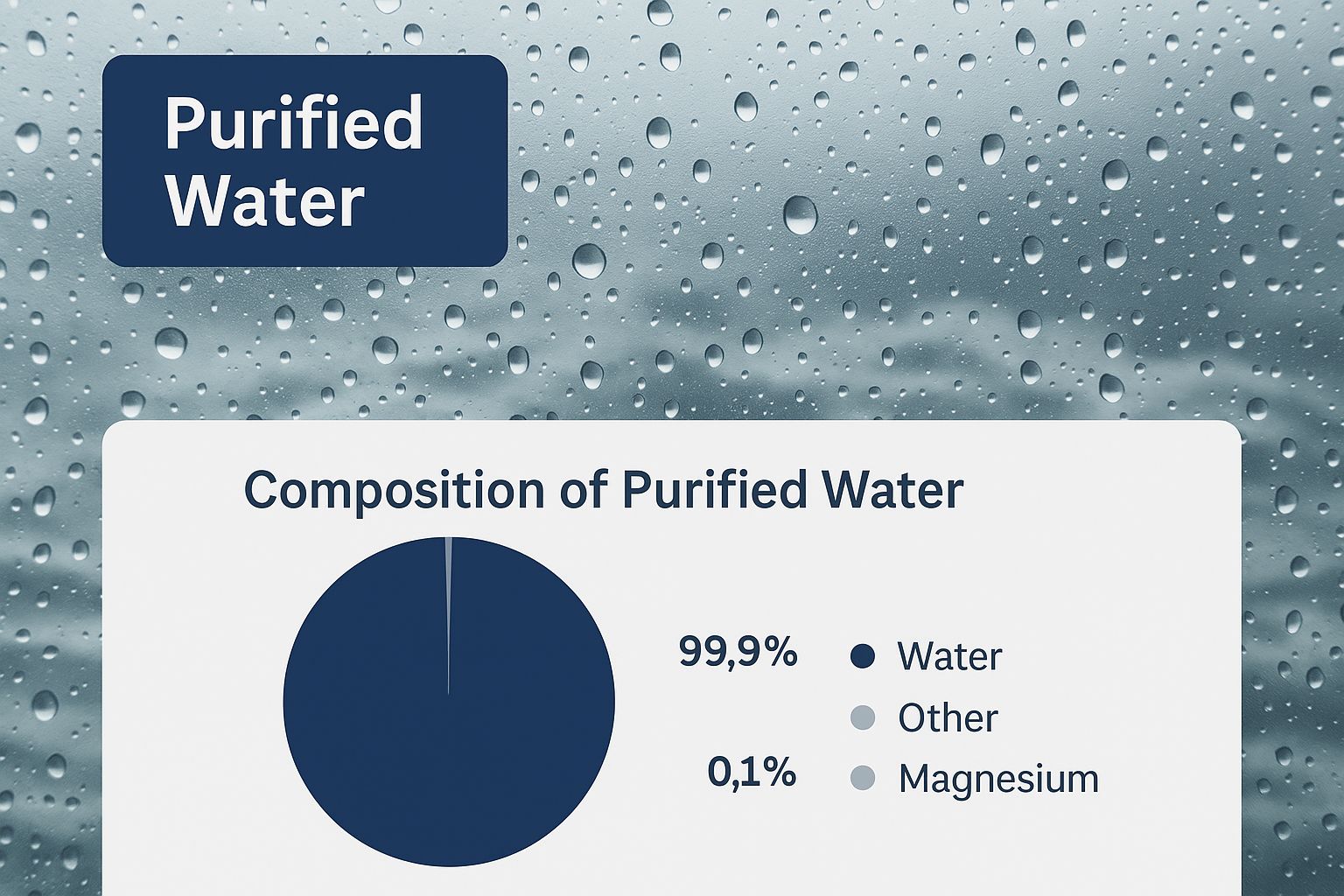
The image below gives you a great visual of why purified water makes all the difference. You can see how it dries cleanly, which is the secret to avoiding those frustrating spots and streaks.
A Practical Comparison
To really get to grips with this, a side-by-side comparison is the best way to see how different water types stack up for window cleaning.
Comparison of Water Types for Window Cleaning
This table breaks down the most common options, weighing them against what matters most: the final result, the cost, and the environmental footprint.
| Water Type | Effectiveness (Streak-Free Finish) | Cost & Accessibility | Environmental Impact | Best For |
|---|---|---|---|---|
| Tap Water | Low: It’s full of minerals (high TDS) that inevitably leave white spots and streaks behind. | Very Low Cost & High Accessibility: Straight from the tap, can't get easier. | Low: Requires little processing, but you'll likely need harsh chemicals to counteract the mineral deposits. | Quick, non-essential cleans where a few streaks aren't a deal-breaker. |
| Rainwater | Medium: It’s naturally soft, but it washes pollutants and dirt from the air and your roof on its way down. | Free & Moderate Accessibility: You just need a water butt or similar collection system. | Very Low: A fantastic sustainable resource. | Eco-friendly homeowners who are prepared to filter out the contaminants before use. |
| Distilled Water | High: The purification process (boiling and condensation) removes most minerals. | Moderate Cost & Accessibility: You have to buy it from a shop. | High: The distillation process uses a significant amount of energy. | Small-scale jobs, like cleaning a glass tabletop or a single feature window. |
| Deionised Water | Very High: Every mineral ion has been removed, guaranteeing a completely spotless, streak-free finish. | Low Cost & High Accessibility: Easily available from self-service filling stations. | Moderate: The deionisation process is far less energy-hungry than distillation. | Professional window cleaners and anyone who wants a flawless finish without the effort of squeegeeing. |
As you can see, one option clearly stands out for serious window cleaning.
Deionised water is the winner for pure performance. Because it contains zero impurities, it simply evaporates off the glass and leaves absolutely nothing behind. This quality makes it the go-to choice for professionals and, increasingly, for homeowners who want that same pristine result without spending hours buffing the glass dry.
This kind of ultra-pure water is so effective that it’s used in many high-tech fields. You can find out more about the important industries that use ultrapure water in this guide. For window cleaning, its purity makes it 'hungry' to bond with and lift away dirt, making your job easier and the results far better.
Right, so you're sold on the idea of using pure water for window cleaning. That’s the easy part. The next question is, where do you actually get it?
Thankfully, you don't need a degree in chemistry or a massive industrial setup. Getting your hands on high-quality pure water is more straightforward than you might imagine. There are really three main ways to go about it, and the best one for you will depend on your budget, how often you'll be cleaning, and how much kit you're willing to handle.
Choosing Your Sourcing Method
Let's break down the options, from the simplest grab-and-go solution to investing in your own gear.
-
Buying Pre-Purified Water: This is by far the easiest way to start. All over the country, you’ll find self-service filling stations specifically for window cleaners. You just turn up with your containers and fill them with ready-made, ultra-pure water. It’s a simple pay-as-you-go system, which is perfect if you’re only cleaning occasionally or you're a pro who just wants to avoid the faff of maintaining your own equipment. With some national networks offering it for as little as 4p per litre, it's incredibly cost-effective.
-
Investing in a Home Unit: If you find yourself cleaning windows regularly, buying your own small purification system starts to make a lot of sense financially. A portable deionisation (DI) tank is a brilliant option. It's essentially a vessel filled with special resin beads. You connect your tap, water flows through the tank, and the resin zaps all the minerals, giving you pure water straight out of the other end. There’s an upfront cost for the tank and you'll need to replace the resin periodically, but the convenience of having pure water on tap is hard to beat.
-
Hiring a Professional Service: Let's be honest, sometimes you just want the job done perfectly without lifting a finger. If that's you, simply hiring a professional window cleaner who uses a pure water system is the way to go. You get the flawless results without any of the investment in time or equipment.
How to Check Your Water Purity
Here’s a golden rule that separates the amateurs from the professionals: never guess, always test. No matter where you get your water from, you absolutely must check its purity. This is done with a cheap and cheerful gadget called a Total Dissolved Solids (TDS) meter.
A TDS meter is a small, handheld pen that instantly measures the amount of dissolved minerals in your water. It gives you a simple reading in parts per million (ppm). For that perfect, streak-free shine, you need your water’s TDS to be 10 ppm or less. Most pros won't even start a job unless it reads 0 ppm.
Using one couldn't be simpler. You just dip the end into a sample of your water, and the reading appears on a little digital screen. It takes seconds, but it’s the single most important check you can do to guarantee a professional finish. For anyone serious about getting spotless windows, this isn't an optional step—it's essential.
Mastering The Pure Water Cleaning Technique

Having the right water for window cleaning is a huge part of the puzzle, but it’s your technique that truly delivers that flawless, streak-free finish. Using pure water with a water-fed pole isn’t just about spraying and hoping for the best. It's a specific method that, once you get the hang of it, means you can say goodbye to the squeegee for good.
At its core, the entire process comes down to two simple actions: agitation and rinsing. You can't just rinse stubborn dirt away; you have to break it up first. That's where the specialist brush at the end of your pole comes into play.
The Agitation And Rinsing Process
First things first, you need to give the entire window a thorough scrub. Use the wet brush to methodically work over the glass, the frames, and the sills. Your goal is to loosen every last bit of dust, grime, and muck that's stuck to the surface. Be systematic and get the brush into every corner to make sure no stubborn spots are left behind.
Once you’ve agitated all that dirt, it’s now suspended in the pure water, just waiting to be washed away. Now for the rinse. With a good, steady flow of pure water, you’ll rinse the entire window from top to bottom. This creates a "sheeting" effect—a continuous curtain of water that flows down the glass, taking all that loosened dirt with it.
The real secret to a perfect, streak-free finish is the final rinse. After scrubbing, you absolutely must rinse the whole pane with fresh pure water, starting right from the top. This guarantees no dirty water droplets are left behind to dry on the glass.
Why You Can Ditch The Squeegee
Here’s the bit that often feels strange if you're used to the old ways: you just let the window air-dry. Because you've used completely pure water with a TDS reading of 0 ppm, there are absolutely no minerals or impurities left to cause spots or streaks. The water simply evaporates, leaving nothing but sparkling clean glass.
This technique is at the heart of why so many UK households use water for outdoor cleaning. Think about it: 81% of households own a hosepipe or bucket for outside jobs, and 52% use them for washing cars—a task that follows similar principles. The widespread use of water for these jobs just shows how much people value effective methods.
If you want to dive deeper, you can explore the essentials of professional glass cleaning in our other guide. Once you master this pure water technique, you'll be getting professional-grade results every single time.
The Future of Water Use in UK Window Cleaning
The conversation around the right water for window cleaning is evolving. It's no longer just a technical debate among professionals; it's becoming part of a much bigger picture here in the UK. With growing environmental awareness and real concerns over water scarcity, the way we clean everything, especially our windows, is changing.
This isn't just about getting a better, streak-free finish anymore. It's about making a responsible choice. As sustainability becomes a core value for both businesses and homeowners, the traditional "bucket and chemical" method starts to look incredibly wasteful and outdated.
The Rise of Water Efficiency
One of the biggest drivers behind this shift is the rollout of water meters across the UK. When you pay for every litre you use, you suddenly become very aware of how much water is going down the drain. This financial reality encourages everyone to find smarter, more efficient ways to do things, from watering the garden to cleaning the windows.
This economic push lines up perfectly with the UK's broader conservation goals. The pure water-fed pole system, once seen as a high-end professional tool, is now getting the recognition it deserves for its sheer efficiency. Modern systems are engineered to minimise waste, using just enough purified water to lift the dirt and rinse it away cleanly, leaving nothing behind.
The move towards conscious water consumption is a clear trend. The pure water method isn't just about achieving a flawless finish; it’s about aligning with a future where resource efficiency is standard practice.
You can see this change happening in the numbers. A report from Waterwise noted that approximately 50% of homes in England were already metered, with projections showing that figure climbing to 80% by 2050. In some areas, like Southern Water's region, metering is as high as 88%. That's a powerful incentive to get smart about water usage for everyday jobs like cleaning. You can dive deeper into the data by exploring the full report on water metering trends in the UK.
Ultimately, choosing pure water is more than just a cleaning hack; it's a forward-thinking decision. It’s an investment in a method that not only delivers far superior results but is also the right choice for our wallets and the planet for years to come.
Frequently Asked Questions
We've covered a lot about why pure water is the secret weapon for professional window cleaners, but you probably have a few practical questions buzzing around. Let's get them answered so you can get started with confidence.
Is Pure Water Really Essential For A Streak-Free Finish?
Honestly, you can get a decent result with a squeegee and some elbow grease. But if you're chasing that perfectly flawless, 'is-the-glass-even-there?' look, then yes, it’s essential.
The streaks and spots you see after using tap water aren’t caused by bad technique; they're the mineral deposits left behind when the water evaporates. Pure water has none of that stuff. It dries completely clear, every single time. It's the only way to guarantee a perfect finish without having to manually dry the glass, which is why it's the undisputed standard for the pros.
Is A Pure Water System Too Expensive For Home Use?
Not at all—it really depends on how you approach it. If you’re just doing your own windows a couple of times a year, buying pre-filtered deionised water from a local filling station is by far the cheapest and easiest route. No gear, no fuss.
For the serious home enthusiast who cleans more often, a small, portable deionisation tank is a fantastic investment. Sure, it costs more upfront than a bucket, but think of the time you’ll save. You won't need to climb ladders, and the results will blow your old method out of the water. Many homeowners find it pays for itself in convenience alone.
Is Purified Water Safe For All My Window Frames And Sills?
Absolutely. In fact, it's one of the safest things you can use. Because there are no chemicals, detergents, or abrasive minerals, pure water is incredibly gentle. It's completely safe for any material, including:
- uPVC
- Aluminium
- Painted or varnished wood
- Rubber seals
It simply won't cause any fading, damage, or wear. It just cleans. If you've got more questions on your mind, we've got a much bigger list of answers over in our main frequently asked questions section.
For a reliable, affordable, and convenient source of ultra-pure water, look no further than 24 Pure Water. Our nationwide network of 24/7 self-service filling stations means you can get the perfect water for your window cleaning needs anytime. Visit https://24purewater.co.uk to find your nearest station and start cleaning like a pro today.